Brazil model rules out 92% of Amazon when tracing illegal timber
Brazilian scientists are innovating with an isotopic mapping model designed to tackle illegal logging head-on. This novel forensic tool examines atomic signatures within trees, allowing them to trace the origination of timber effectively. Currently, the model can eliminate ninety-two percent of the Amazon rainforest from potential illegal wood sources, utilizing stable isotope analysis for secure…
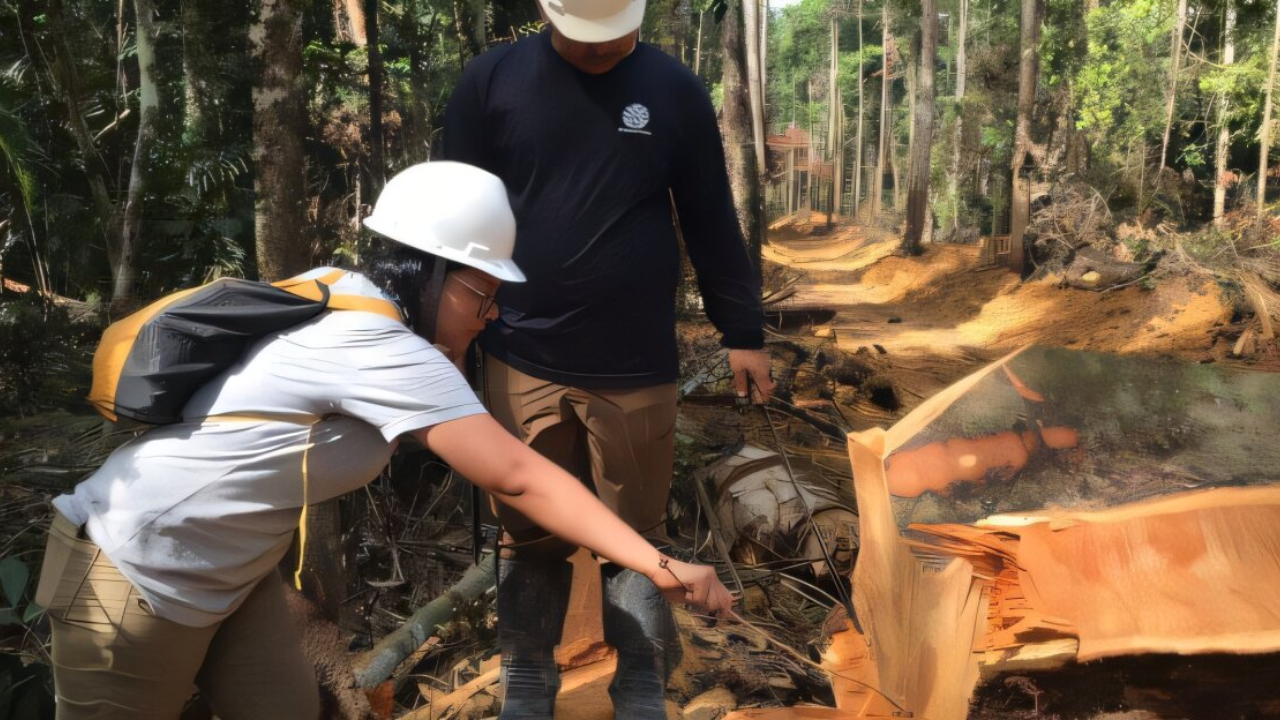
Brazilian researchers have created a groundbreaking isotopic mapping model that can rule out 92% of the Amazon rainforest when tracing suspected illegal timber. Led by Professor Luiz Antonio Martinelli at the Center for Nuclear Energy in Agriculture at the University of São Paulo, the project uses stable isotope analysis to develop a forensic tool for law enforcement.
The research provides Brazilian Federal Police with a chemical fingerprinting method that cannot be forged or altered by loggers attempting to falsify harvesting permits.
The model measures the ratio of different forms of elements in tree cellulose, such as oxygen-18 and oxygen-16, to create an "isoscape" of oxygen stable isotopes in woods of the Amazon. As moist air from the Atlantic Ocean travels inland, rain clouds lose the heavier oxygen-18 isotope, resulting in a lasting isotopic signature in tree wood that varies across different parts of the rainforest.
While the model can eliminate 92% of the Amazon's forest area (3 million square kilometers), it cannot pinpoint the exact location of a cut tree due to the vast size of the rainforest.
The model's accuracy is affected by deforestation, particularly in heavily cleared regions where illegal logging is most common. To improve the model, researchers are adding carbon, nitrogen, and strontium isotope data and plan to include additional trace chemical elements in future "elementalscapes." Enhanced sample collection and chemical mapping are expected to reduce the remaining 240,000-square-kilometer uncertainty, making the system more accurate and reliable for tracking illegally harvested timber.
Written by urgent.news from Times of India's reporting — not their text. Machine-written — may contain errors; check the original before relying on it.