Why China’s JL-3 made waves with first submarine-based missile test in over 40 years
The People’s Liberation Army (PLA) carried out a missile test in the Pacific last month. The July 6 launch – in which a dummy warhead travelled 8,000km (5,000 miles) – was China’s first confirmed submarine-based missile test since 1982, and the first known firing from a nuclear-powered submarine. The type of missile used has not been officially confirmed, but a report in the Global Times – a…
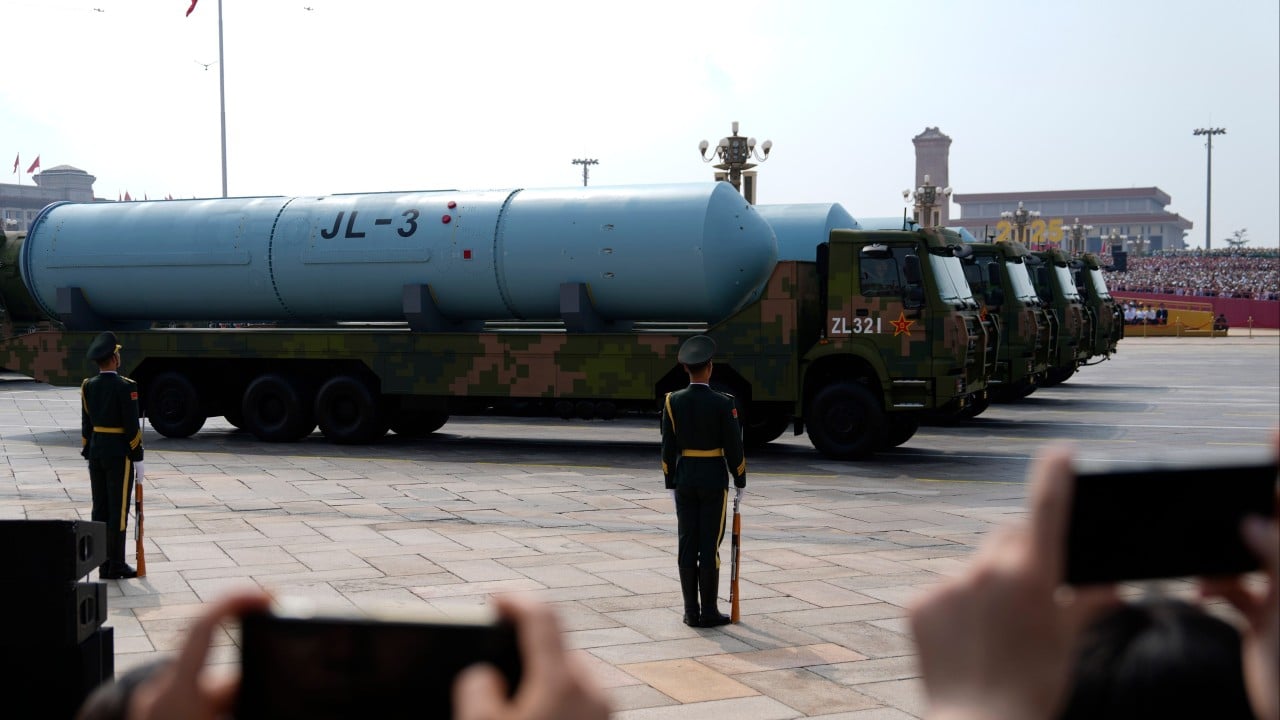
In July, China conducted a submarine-based missile test that was its first since 1982. The test, which sent a dummy warhead 8,000 kilometers, may have been a JL-3 missile, according to a report in the Global Times. The JL-3 is an intercontinental-range ballistic missile, expected to become a crucial component of China's nuclear arsenal.
It was first shown publicly at a military parade in Beijing in September. Developed as part of the Julang or Great Wave program, the first JL-1 missiles were deployed on nuclear-powered submarines in 1986, but their range of 1,770 kilometers was too limited. The JL-2, introduced around 2015, increased range to 7,200 kilometers, still not enough for targeting targets in the continental United States from Chinese waters.
The JL-3 extends this range to 10,000 kilometers, enabling missiles launched from near Chinese coast to hit the US. Testing began in November 2018, with a Type 032 submarine, before a JL-3 test involving a nuclear-powered Type 094 submarine in December 2019. The JL-3 is believed to have entered service in 2022. The missile is a three-stage, solid-fuelled missile, like its predecessor, the JL-2.
It can carry multiple independently targetable re-entry vehicles, each with at least three nuclear warheads, each with a yield of 250 to 1,000 kilotons. China currently has six Type 094 submarines in service, each with 12 launch tubes. The JL-3 is expected to be deployed on the Type 096, due to be completed by the end of the decade, which will be able to carry 16 to 24 long-range missiles.
The JL-3 is a key part of China's nuclear triad, a structure enabling strategic nuclear weapons to be launched by land, sea, or air, enhancing deterrence capabilities.
Written by urgent.news from Reuters Business via SCMP's reporting — not their text. Machine-written — may contain errors; check the original before relying on it.