Shipping in times of crisis: How low water levels are affecting the economy
Drought, sandbanks, bottlenecks - Germany's rivers are carrying less water than usual. Historically low water levels are being reached. The situation highlights just how important the waterways are.
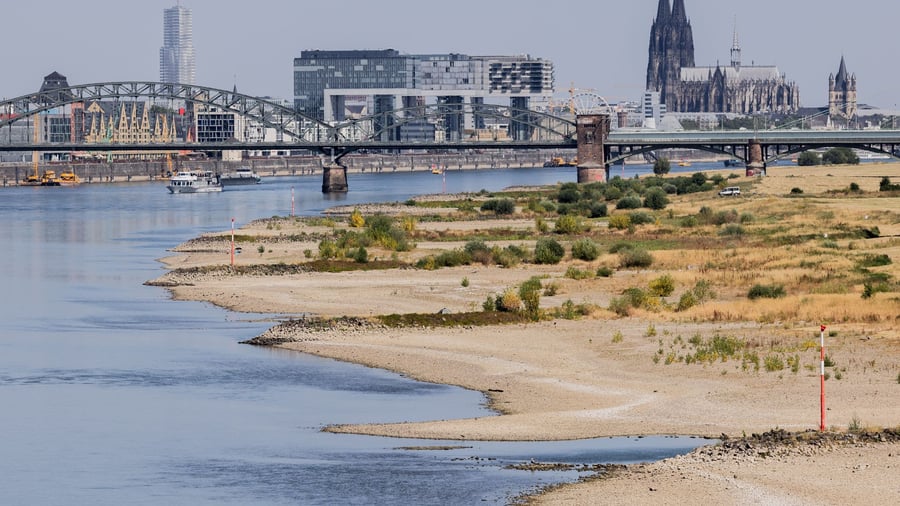
In Germany, the rivers Rhine, Elbe and Danube are experiencing low water levels, causing economic troubles. The drought and heat have resulted in record low water levels, and a recovery is not yet expected. The consequences are already impacting the economy. A report from the Federal Institute for Hydrology states that German rivers are currently experiencing low water levels at many points, with only brief increases in water levels following rain.
According to the Niwis information system, around 44% of Rhine measurement stations showed extremely low water levels, 16% in the Elbe and approximately 78% in the Danube. In Cologne, the lowest water level since records began was measured on Saturday afternoon: 67 centimeters, two centimeters less than in October 2018. In Duisburg-Ruhrort and Düsseldorf, the lowest water levels from October 2018 were again reached.
"The water levels on the Rhine are at a very low level and have fallen further in recent days," says Fabian Spieß, deputy managing director of the Federal Association of Inland Navigation (BDB). Low water events are not unusual, but they usually occur in late summer and autumn. Insufficient rainfall and high temperatures cause water levels to drop.
Climate change long-term causes low water events to become more intense due to increased evaporation. The impact on goods transportation is that there is no shipping ban, as each ship captain decides when it is no longer profitable to proceed. Ships will continue to sail as long as it is physically and safely possible. However, the loading capacity decreases, requiring more ships.
Shipping experts say that sailing with falling water levels is less economically viable. The inland shipping company HGK Shipping operates a fleet of over 300 ships primarily on the Rhine and its tributaries. If August is as warm and dry, it may lead to temporary restrictions on goods transportation on some Rhine sections, according to the president of HGK-Group, Steffen Bauer.
The economic consequences of low water are serious, with higher transport costs being the result. The pressure on roads and railways increases, and only limited alternatives exist. Supply chain bottlenecks and disruptions are possible, affecting industries reliant on large volumes of raw materials and intermediate goods, such as chemicals, steel, and oil.
The Rhine's central role in Germany's freight traffic makes the situation serious. Thilo Schaefer from the Institute of the German Economy (IW) warns that higher transport costs will follow, and supply chain pressures will rise, potentially leading to supply chain disruptions.
Written by urgent.news from Handelsblatt's reporting — not their text. Machine-written — may contain errors; check the original before relying on it.