Nach Abschiebung wegen Anti-Israel-Parole: Bob-Vylan-Frontmann wehrt sich erfolgreich gegen Einreiseverbot
Deutsche Behörden warnten, die Einreise des pro-palästinensischen Musikers könne zur „Radikalisierung einzelner Bevölkerungsgruppen“ beitragen. Er legte Widerspruch ein. The post Nach Abschiebung wegen Anti-Israel-Parole: Bob-Vylan-Frontmann wehrt sich erfolgreich gegen Einreiseverbot appeared first on The Intercept .
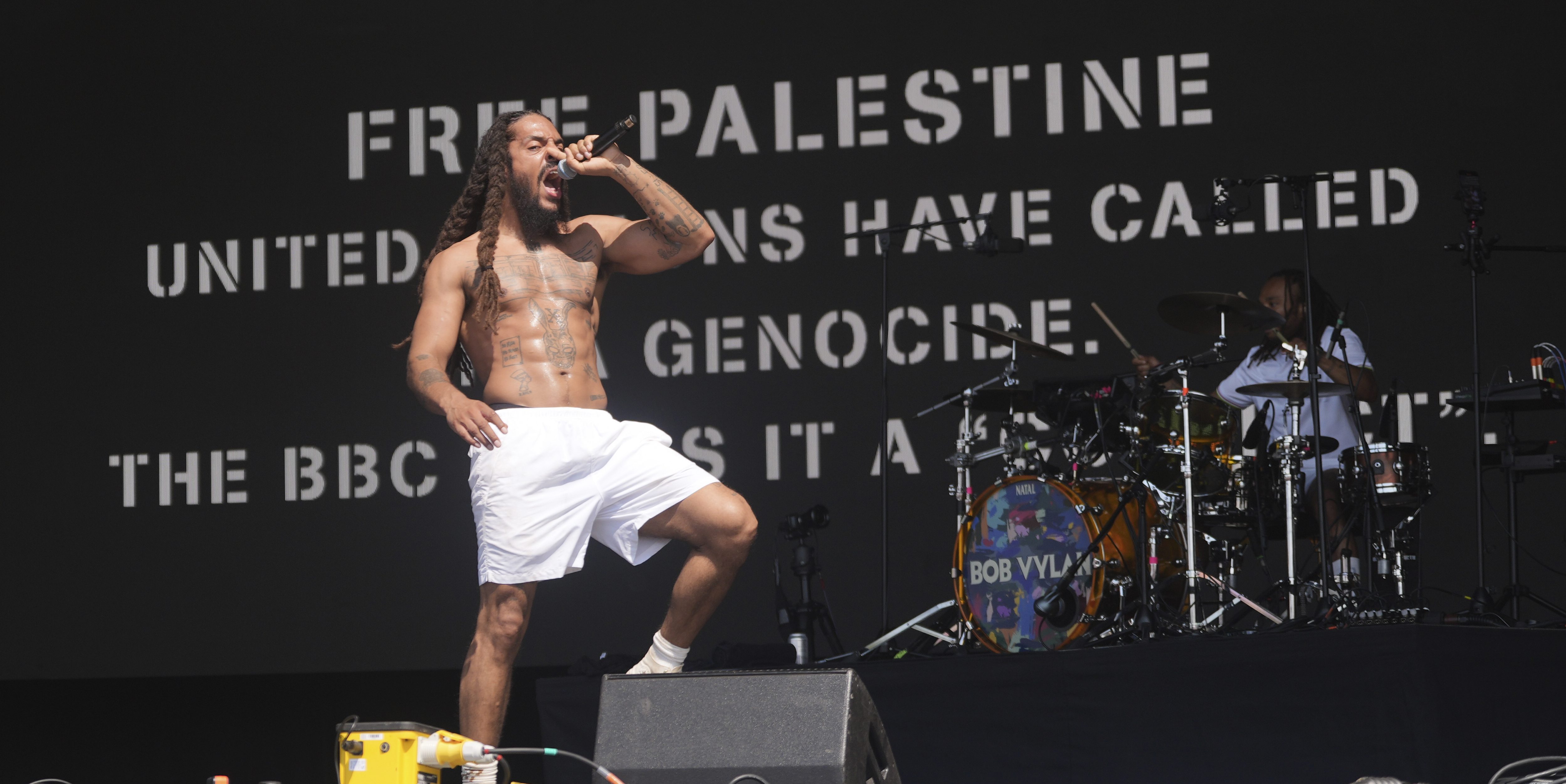
Bob-Vylan frontman Pascal Robinson-Foster was successfully opposed to his entry ban to Germany due to his pro-Palestinian statements. He was detained at Berlin airport and deported back to England. The German police justified the entry ban on June 15th with his performance at the Glastonbury Festival last year, where he encouraged the chorus "Death, death to the IDF" (Death, death to the Israeli Defense Forces).
In late July, the authorities lifted the entry ban in a corresponding letter, but refused to provide any information on why the measure was lifted or how the decision was made. The police file on Robinson-Foster, obtained by The Intercept, accuses him of spreading antisemitic narratives and Hamas propaganda, which could contribute to the "radicalization of certain population groups" and serve as "ideological justification" for terrorist groups or individuals.
It also claims that his entry would cause significant damage to Germany's international reputation and credibility, implying that Germany is not making efforts to "prevent propagated antisemitism and associated calls for violence, especially transnationally". The German police did not answer detailed questions about the decision-making process behind the entry ban, its legal basis, the authorities involved, and the reasons for lifting the entry ban.
When asked if claiming that Robinson-Foster represents a danger to Germany's national security is absurd, Robinson-Foster stated that it is. He also criticized The Intercept for suggesting that they spread propaganda on behalf of any banned organization. British frontman Robinson-Foster said "it is absurd to claim we would spread propaganda in the name of any prohibited organization".
The German band Bob Vylan's performance at Glastonbury Festival gained worldwide attention at a time when more and more cultural figures began publicly opposing the destruction of Gaza by Israel. The performance, especially the chorus "Death, death to the IDF", was strongly condemned by politicians, including then British Prime Minister Keir Starmer, and several pro-Israel Jewish organizations.
Germany's Antisemitism Commissioner Felix Klein called the performance "hate and provocation" and urged German concert and festival organizers to cancel Bob Vylan's concerts. Shortly after the Glastonbury performance, Robinson-Foster and his bandmate Wade Laurence George had their US entry visas revoked. However, Germany is the first country to deny entry and deport a member of the band.
The documents available to The Intercept pertain only to the implementation of the entry ban, not the underlying decision-making process. "Our position is simple," said Alexander Gorski, the German lawyer representing Robinson-Foster. "There is a constitutional right to know the file on which such a decision is based." After Robinson-Foster's deportation, Gorski filed a request with the Federal Police Headquarters in Potsdam for the removal of the entry ban from the national register and access to the underlying files.
Shortly thereafter, the Federal Police lifted the entry ban again, without explaining why. In the two-sided letter sent to The Intercept, it only states that the request has been granted and no further information can be provided. "Of course it is good that the entry ban has been lifted," said Gorski to The Intercept. "However, from a rule of law perspective, it is highly problematic that someone is hindered from entering a country based on a political statement that does not constitute a criminal offense, and then denied access to the underlying files."
Gorski subsequently formally appealed to obtain access to internal files that led to the entry ban. Robinson-Foster has a right to know on what legal basis he was denied entry into Germany, not only to verify the legality of the procedure but also to understand what behavior the German authorities consider a basis for an entry ban in the future.
"If an artist wants to abide by the law, they must know the rules," Gorski said. It is unclear how it came about that a British musician, who is not facing any criminal charges in England or Germany, was classified as a threat to public safety by German authorities. The British police had launched investigations into Bob Vylan's Glastonbury performance at the end of last year and declared there were "insufficient evidence of a realistic chance of conviction".
"There are no evidences, there is no criminal offense," Robinson-Foster told The Intercept. "The BBC broadcasted the performance. You can watch it yourself." For Gorski, the case is paradigmatic for a fundamental issue.
Written by urgent.news from The Intercept's reporting — not their text. Machine-written — may contain errors; check the original before relying on it.