Faisal Islam: Four reasons why Fifa's World Cup plan never stacked up
The actual presentation of FIFA's plan to part-privatise the World Cup raises many more questions than it answers.
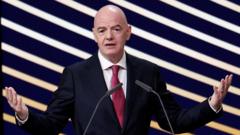
FIFA's plan to part-privatise the World Cup has been called into question, with a recent document revealing several compelling reasons as to why it may not have been a sound proposal. The 25-page presentation, shared with FIFA members, detailed Gianni Infantino's ambitious vision for the tournament, including the potential for high ticket prices, dynamic pricing, and a paywall for broadcasting the event.
However, upon closer examination of the financial arguments put forward, it becomes clear that the plan was flawed in several significant ways.
First, the document highlighted that football generates less revenue per fan compared to other major sports leagues, such as the NFL. While this might appear to be a significant disadvantage, the comparison falls short when taking into account the unique aspects of football. Football is played globally, in both wealthy and impoverished countries, whereas the NFL's audience is primarily concentrated in the United States.
Additionally, nearly half of the NFL's revenue goes towards player salaries, while FIFA does not pay its top players, such as Erling Haaland or Lionel Messi. Consequently, the revenue per fan metric does not accurately reflect the financial potential of football.
Second, the proposed entity, the Fifa Forward Enterprise (FFE), would have taken on the responsibility of organising, operating, and monetising various aspects of the World Cup. This transfer of power and accountability from FIFA, a non-profit organisation accountable to all of global football, to a privately backed company with the majority of its board members owned by FIFA, raises concerns about transparency, fairness, and the eventual profitability of the World Cup.
By transferring control to a private entity, FIFA would have lost direct oversight of the tournament's financial success and revenue generation.
Third, the plan of imposing a paywall for broadcasting and charging high ticket prices has the potential to backfire in the long run. As legislation in the UK and Europe continues to evolve, the future of free-to-air World Cup games may be altered. Furthermore, the ability to charge astronomical ticket prices, as seen in the 2026 World Cup, could be threatened by the changing digital landscape and the increasing accessibility of global football for fans worldwide.
This could negatively impact FIFA's revenue streams over time, undermining the very foundation of Infantino's plan.
Finally, crucial questions regarding the initial $4.2 billion investment and subsequent annual license payments were left unanswered in the document. Without clear answers to these issues, it is difficult to determine whether the investment would yield significant returns for FIFA or its members. The lack of transparency surrounding the allocation and management of funds raises doubts about the true intentions and long-term viability of the proposal.
In conclusion, the document reveals four key reasons why FIFA's World Cup privatization plan never stacked up. From the misleading comparison of revenue per fan to the potential consequences of a paywall for broadcasts and high ticket prices, as well as the unclear allocation of funds to FIFA, the plan's shortcomings are evident.
These factors together present a strong case for why the proposed privatization of the World Cup may not have been a prudent decision, ultimately casting doubt on FIFA's vision for the future of the tournament.
Written by urgent.news from BBC Business's reporting — not their text. Machine-written — may contain errors; check the original before relying on it.
This story
This is one outlet's version. Read the fullest account.
- Soccer-Infantino's FIFA future in jeopardy after private equity gamble backfires al-monitor.com
- FIFA World Cup private investment plan explained: Why teams are vowing to boycott the controversial scheme fastcompany.com
- Everyone hates FIFA’s plan to sell the World Cup to private equity vox.com
- Three confederations reject selling part of the World Cup to private funds; Conmebol asks for explanations en.mercopress.com
- UEFA, CONCACAF target Infantino after FIFA shelves World Cup private investment plan lemonde.fr
- FIFA reverses course on World Cup private investment plan cbsnews.com
- FIFA’s Infantino Scraps World Cup Investment Plan. But Is It Too Little, Too Late? time.com
- Estonian FA boss on FIFA privatization plan: The sport should be for football people news.err.ee