Astronomers Have Detected an Exomoon for the First Time
A discovery in a solar system 73 light-years from Earth is challenging definitions and “blurring the lines between stars, planets, and moons.”
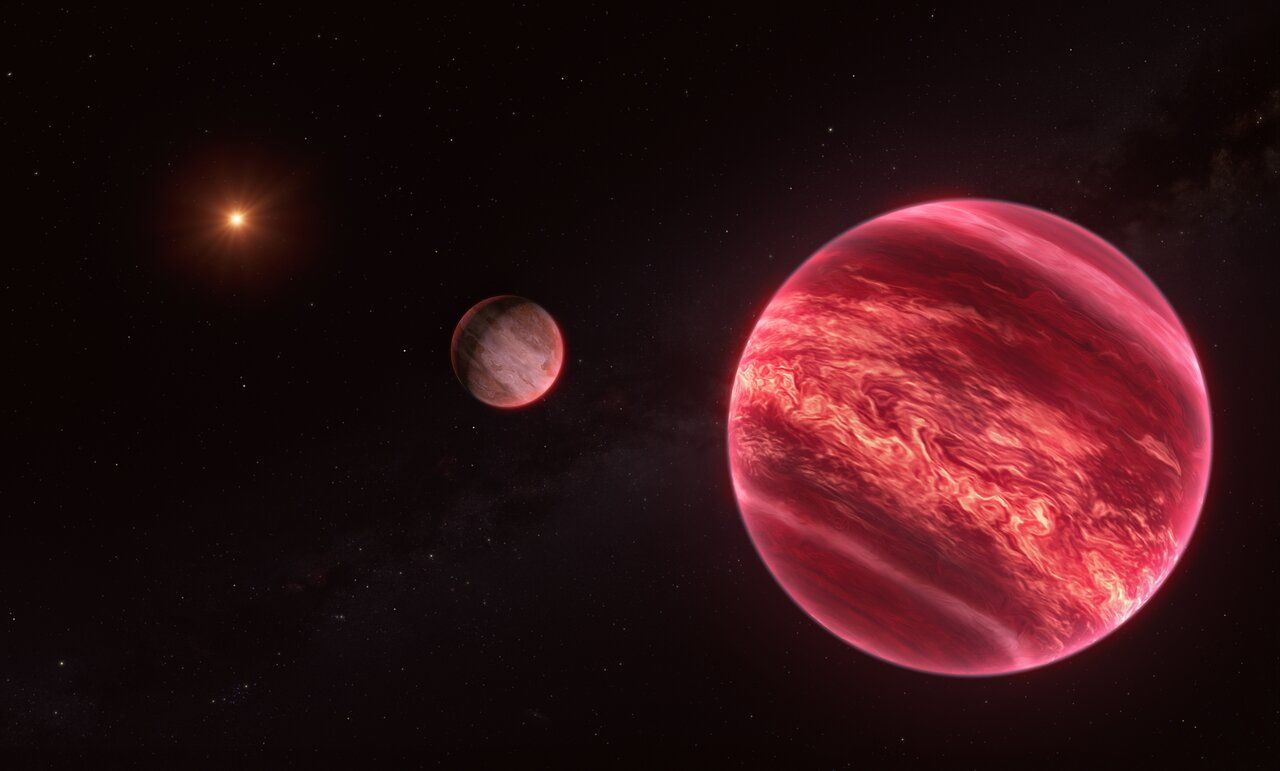
Astronomers have made history by detecting an exomoon for the first time, challenging previous beliefs. An exomoon is a moon that orbits a planet outside our solar system. The groundbreaking discovery was made by focusing on an object orbiting a brown dwarf named CD-35 2722 B, located 73 light-years away. Brown dwarfs are celestial bodies intermediate between planets and stars, lacking the mass to ignite nuclear fusion.
The research team observed CD-35 2722 B over 23 nights between October 2023 and February 2026 using the CRIRES+ infrared spectrograph on the European Southern Observatory’s Very Large Telescope. They employed the Doppler method, measuring how the brown dwarf wobbles due to gravitational influence from a nearby celestial body.
The newly identified celestial body orbits the brown dwarf over approximately 170 days and has a mass at least 0.9 times that of Jupiter. This mass ratio is significantly higher than moons in our solar system, such as Earth and the Moon (approximately 1.2 percent). The study, published in Nature, indicates the brown dwarf’s mass is about 37 times that of Jupiter, and the exomoon accounts for around 2.5 percent of this mass.
To confirm the object was indeed an exomoon, the researchers investigated potential factors like orbital motion, atmospheric conditions, and the brown dwarf’s rotation. They also analyzed the Roche limit and Hill radius to ensure the exomoon's orbit remains stable. This marks the first definitive detection of an exomoon using this method.
Unlike our solar system, where moons orbit planets, the CD-35 2722 system blurs the lines between stars, planets, and moons. Named an "exosatellite" by the researchers, the object's nature remains unclear. While it's uncertain if this exomoon fits future criteria to be called a moon, it marks a significant step toward creating a definitive detection.
The discovery could lead to new theories on planet formation and celestial mechanics, potentially uncovering life-sustaining environments on smaller rocky moons orbiting brown dwarfs. This breakthrough may also impact the search for extraterrestrial life.
Written by urgent.news from Wired's reporting — not their text. Machine-written — may contain errors; check the original before relying on it.