The Bizarre Life Cycle of “Zombie-Ant” Fungus Gets a New Twist
The fungal puppet master has been living a secret life The post The Bizarre Life Cycle of “Zombie-Ant” Fungus Gets a New Twist appeared first on Nautilus .
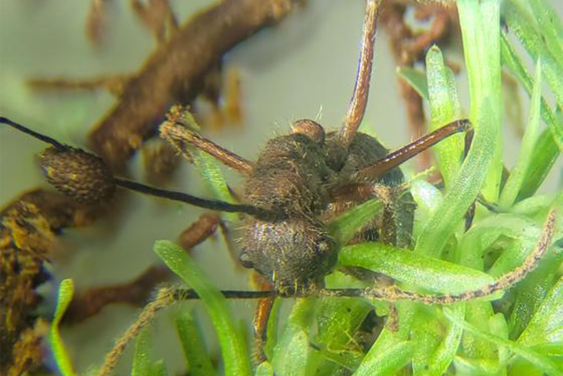
In the dense forests of the Amazon, an ant suddenly starts acting out of character. It's not its own decision, but rather controlled by a fungus that has taken over its brain. This ant will then climb a tree, clasp onto a leaf, and the fungus will emerge from its body, spreading its spores to infect other ants. This phenomenon is not unique to ants – there are over 350 species of "zombie-ant" fungi, predominantly from the genus Ophiocordyceps.
The life cycle of these fungi is as intriguing as it is bizarre. A recent study has revealed a surprising twist to this tale. Brazilian scientists found that the fungus not only manipulates ants but also resides within certain mosses. These mosses were found to harbor Ophiocordyceps, even in areas where no other infected insects were present. This discovery challenges the conventional understanding of the fungus's behavior manipulation, suggesting a more complex relationship between the fungus, its ant host, and the moss.
The researchers are still unsure about the exact role of moss in this dynamic. It could serve as a 'mating ground' where the fungus exchanges genetic material with other fungi, or it could be a secure hiding spot for the fungus when its other hosts are scarce. More research is needed to confirm these hypotheses. Interestingly, this is not the first time Ophiocordyceps has been found in plants.
A similar species, O. sinensis, infecting ghost moth larvae, was discovered in various Himalayan plants by Harvard biologist Zhengyang Wang in 2020.
Written by urgent.news from Nautilus's reporting — not their text. Machine-written — may contain errors; check the original before relying on it.