Rare Fossil Reveals a Three-Tier Food Chain Frozen in Time: a Pterosaur Eaten by an Ichthyosaur Eaten by a Pliosaur
Uncovered in part by amateur fossil hunters in Australia, the fossil preserves a unique look at prehistoric predatory dynamics
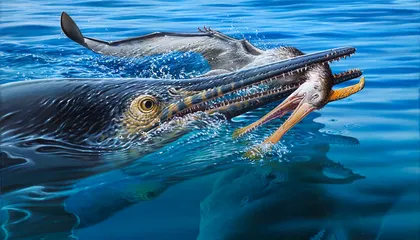
In the outback interior of Queensland, Australia, a trio of fossil hunters discovered several large bones near Richmond in August 2019. The mysterious bones were later donated to the Kronosaurus Korner museum, where they were affectionately nicknamed B.O.B., short for "bag of bones." Three years later, as museum curator Kevin Petersen searched the original fossicking site, he unearthed the remaining skeleton of a massive ichthyosaur, an air-breathing, ocean-dwelling reptile.
The ichthyosaur, a member of the Platypterygius australis species, was estimated to be between 19 and 23 feet long in life. In 2009, scientists recovered the fossilized remains of a pregnant ichthyosaur in Chile, with the CT scan revealing not one but two fetuses. The ichthyosaur fell victim to a pliosaur, a powerful, carnivorous marine reptile with crushing teeth.
The pliosaur inflicted severe injuries on the ichthyosaur, such as split vertebrae, missing ribs, and bones with large bite marks. After the violent attack, the mangled ichthyosaur floated to the seafloor and was preserved in mud for millennia. Nearby, researchers found peculiar, spherical masses inside the ichthyosaur's skull, which, upon 3D imaging, revealed bits of fish, cephalopods, and pterosaur bones.
The discovery marks the first known instance of a pterosaur being consumed by an ichthyosaur, providing valuable insight into the prehistoric creatures and their environment during the Early Cretaceous period.
Written by urgent.news from Smithsonian's reporting — not their text. Machine-written — may contain errors; check the original before relying on it.