Is AI Reasoning Right for the Wrong Reasons?
The idea that artificial intelligence can “reason” is more intuitive than ever. But intuitions can be wrong, and the science is far from settled. The post Is AI Reasoning Right for the Wrong Reasons? first appeared on Quanta Magazine
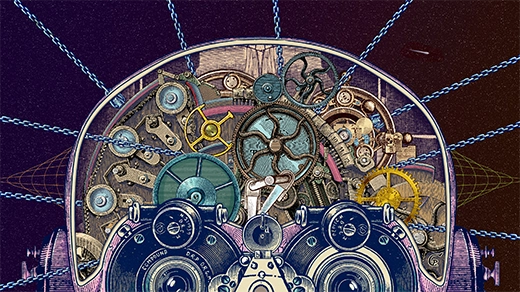
The recent advancements in AI reasoning have scientists and journalists alike questioning the accuracy and reliability of these so-called general-purpose reasoning models, or LRMs. LRMs, trained by large language models (LLMs), have been able to solve complex mathematical problems and even perform better than humans in mathematical Olympiads.
Yet, despite these impressive feats, researchers are finding that the "chains of thought" or intermediate steps that these LRMs generate may not always be accurate or even meaningful. In fact, new research suggests that these steps could simply be "surface-level shortcuts" that the models use to produce correct answers without truly understanding the problem.
This has led to a growing skepticism about the actual reasoning capabilities of LRMs, with some questioning whether what we're witnessing is a mere illusion of thinking rather than genuine reasoning. But what if there's more to this story than meets the eye? While the scientific community grapples with these questions, one thing is clear: the field of AI reasoning is still in its early stages, and we may not have all the answers yet.
Written by urgent.news from Quanta Magazine's reporting — not their text. Machine-written — may contain errors; check the original before relying on it.
This story
This is one outlet's version. Read the fullest account.
- Is AI reasoning right for the wrong reasons? quantamagazine.org