How do supermassive black holes grow? AI finds 7 spacetime-warping 'quasars' that could help solve the mystery
Astronomers found seven rare quasar gravitational lens candidates using AI, providing a powerful new tool for studying black hole and galaxy evolution.
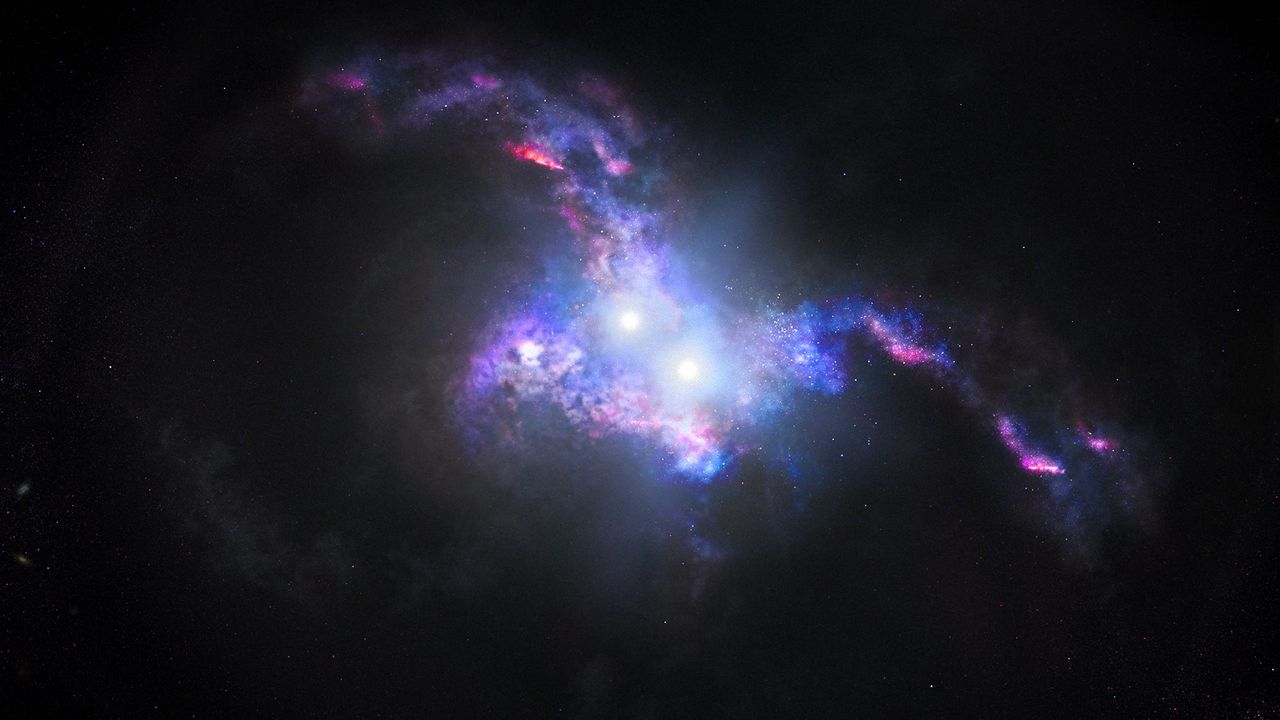
Astrophysicists have discovered seven potential instances of quasars serving as gravitational lenses, according to a study published in The Astrophysical Journal. Quasars, the intensely bright centers of galaxies fueled by actively consuming supermassive black holes, could provide insights into the evolution of these cosmic giants.
Utilizing the Dark Energy Spectroscopic Instrument (DESI) data, astronomers employed artificial intelligence to identify these rare alignments, which amplify the light of distant galaxies. Such gravitational lenses enable researchers to observe both the quasar and the distant galaxy, overcoming the challenge of studying luminous galaxies obscured by their own active cores.
The machine-learning model, trained on simulated examples due to the scarcity of known examples, narrowed the search to approximately 200 candidates before manual verification identified seven new quasar lens candidates. This discovery doubles the number of known systems found through similar survey searches. However, further observations are required to confirm these findings and delve deeper into their properties.
The study underscores the potential of AI in uncovering hidden cosmic phenomena within vast astronomical datasets.
Written by urgent.news from Space.com's reporting — not their text. Machine-written — may contain errors; check the original before relying on it.