Astronomers Measure the Long Reach of a Quasar
There are a number of things in the Universe that could wipe out life as we know it, but — for now, and for Earth — a blast from our galaxy's supermassive black hole isn't one of them. That's not to say that Sagittarius A* doesn't pose a danger. If it wakes up someday and blasts out a strong wind, that definitely could affect Earth. It could well have powered a quasar in the past, and could do so…
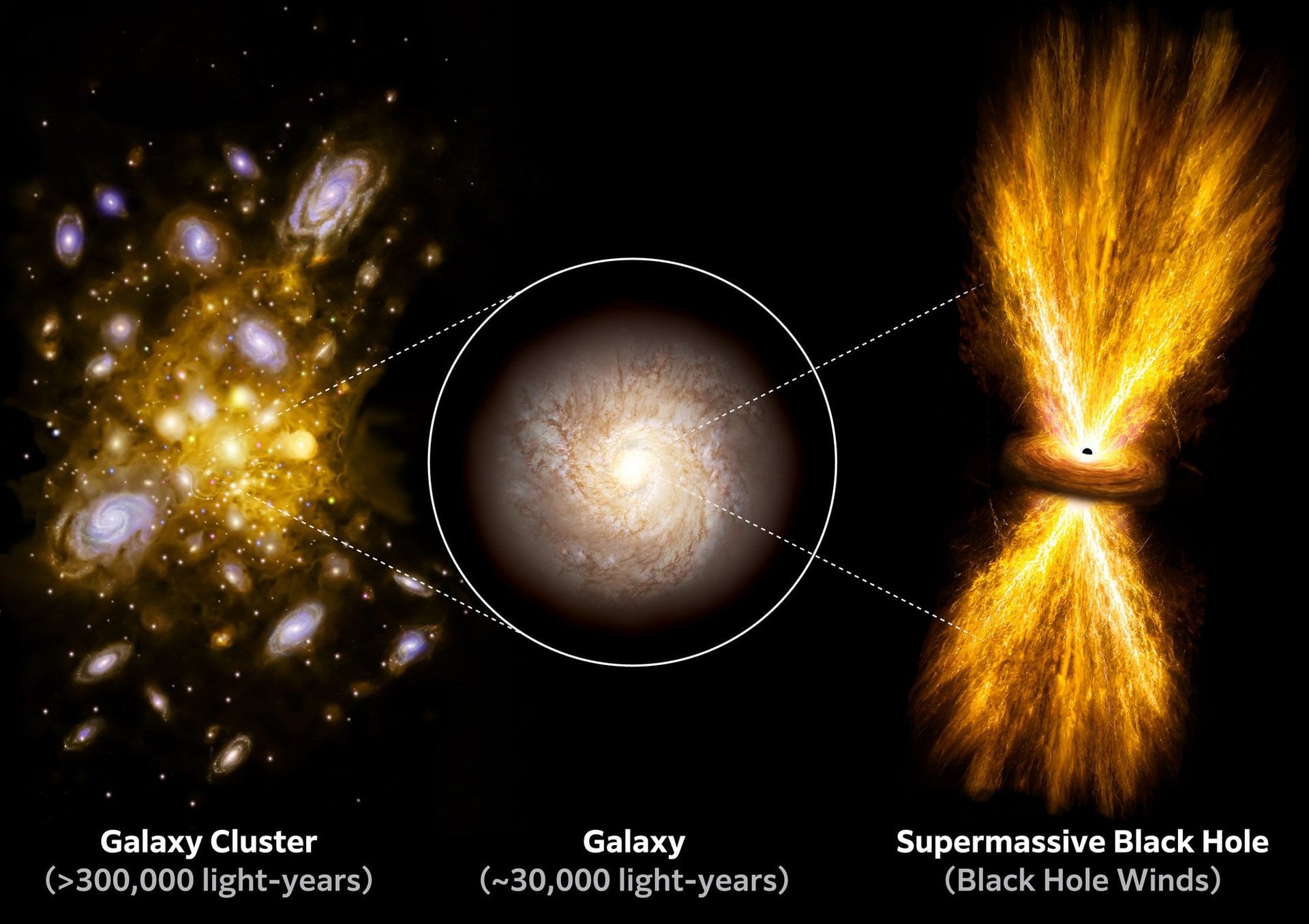
Astronomers have discovered that the explosive winds from a quasar can extend far beyond its host galaxy, reaching out to about 300,000 light-years away. This finding, made by a team from Tohoku University, Tokyo Metropolitan University, and Kanazawa University in Japan, challenges previous beliefs about the influence of quasars on their surroundings.
Quasars are powered by supermassive black holes at the hearts of massive galaxies, and when these black holes consume material, they eject powerful winds. These winds were previously thought to be contained within the galaxy, but the new study reveals that the force behind them is much more extensive than previously thought. The researchers used the XRISM satellite to map the motion of high-temperature gas in the region, finding that it tends to get dispersed across a wide area of space.
This discovery highlights the significant impact that black holes have on the cosmic environment, transporting vast amounts of energy to different regions of the cosmos.
Written by urgent.news from Universe Today's reporting — not their text. Machine-written — may contain errors; check the original before relying on it.