A Computational Framework for Designing Disordered Proteins at Large Scale
Scientists developed a platform, GOOSE, allowing them to design disordered proteins at a large scale, offering a lens through which to investigate how their component sequences affect the cell and how changes in such proteins might drive diseases. The post A Computational Framework for Designing Disordered Proteins at Large Scale appeared first on GEN - Genetic Engineering and Biotechnology News .
Researchers at Washington University School of Medicine in St. Louis and Syracuse University have developed a computational framework to design and study disordered proteins, which play critical roles in various cellular processes and disease mechanisms. These proteins, known as intrinsically disordered protein regions (IDRs), lack a stable three-dimensional structure and are present in 70% of human proteins.
Despite their importance, predicting and designing IDRs has been challenging due to the difficulty in understanding their dynamic behavior and designing synthetic versions for study.
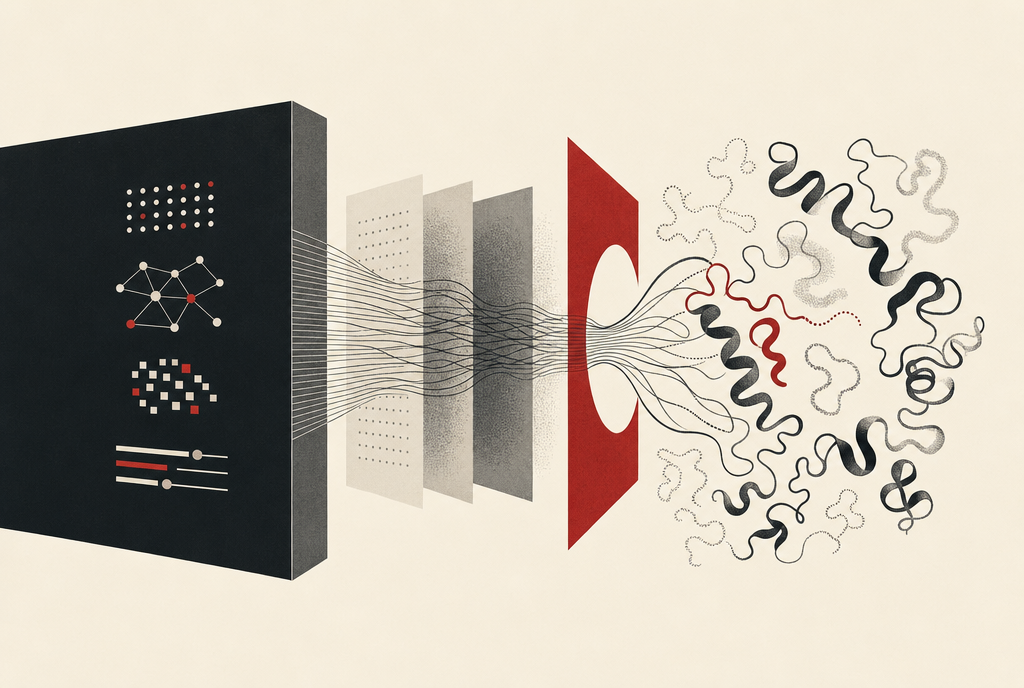
Led by Alex Holehouse, PhD, an associate professor in the Biochemistry and Molecular Physics Department at WashU Medicine, and Ryan Emenecker, PhD, a faculty instructor at the same department, the team created the GOOSE (Generate disOrdered prOtiens Specifying propErties) system. This platform utilizes a large library of protein building blocks associated with specific cell functions and enables the rapid design of de novo synthetic IDRs and variants of provided sequences.
GOOSE can consider various design constraints, including amino acid composition, charge, hydrophobicity, and charge patterning, to generate protein blueprints that can be synthesized in genetically engineered cells.
By manipulating the sequence and structure of IDRs, GOOSE allows scientists to study how these changes affect cellular activities and investigate the potential role of IDRs in diseases such as cancer. Holehouse and Emenecker have already applied GOOSE to improve cancer therapies, such as CAR T cells, by designing better versions of the disordered regions on the surface of these cells that guide their attack response.
They also used GOOSE to generate synthetic proteins capable of responding to drought conditions in yeast cells, with many of these synthetic proteins proving to be more effective than the yeast's natural proteins.
This innovative approach has significant potential for advancing medical research and engineering more environmentally sustainable solutions.
Written by urgent.news from GEN Biotechnology's reporting — not their text. Machine-written — may contain errors; check the original before relying on it.