Planets, Meteors and a Solar Eclipse: August Is Going to Be a Big Month for Skygazing
The planet parade is happening around the same time as Perseids and the upcoming solar eclipse.
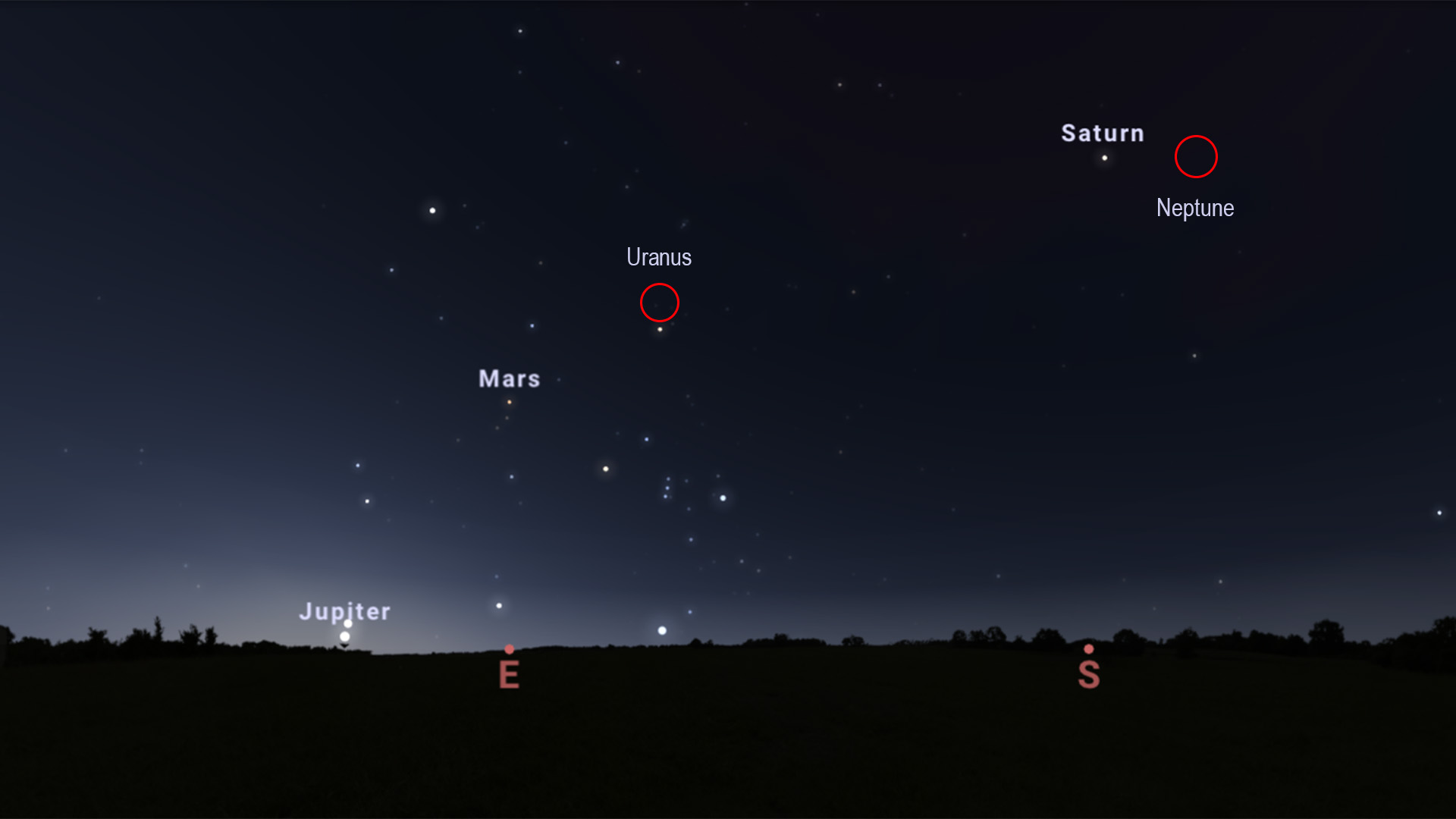
August promises to be a spectacular month for stargazers, with a slew of celestial events lining up. On August 12, an extraordinary planetary parade will unfold, featuring six planets visible simultaneously. This event begins this Wednesday evening and continues until August 17 or 18, depending on your location. The parade includes Mercury, Jupiter, Mars, Uranus, Saturn, and Neptune, which align in a curved pattern, making it easier to spot them all.
The best time to witness this planetary parade is just before sunrise, as Jupiter and Mercury will rise about 15 to 20 minutes before the sun. Binoculars are recommended for observing Mercury and Jupiter, but caution should be exercised due to the proximity to the sun. Mars can be seen high in the eastern sky without visual aids, while Uranus and Neptune require a telescope or high-powered binoculars. Saturn, located at the end of the line, will be visible as a yellowish dot in the southern sky.
The planetary parade is visible across the US and Canada, with early risers having the best chance of seeing it all. Venus will also be visible at night, setting along the western horizon just after sunset. However, viewing all seven planets in one night requires a telescope, as Neptune and Uranus are faintly visible with a good pair of binoculars.
Adding to the excitement, the Perseids meteor shower is expected to peak on the evening of August 12, coinciding with the planetary parade. The Perseids meteor shower is one of the most active of the year, and its radiant point is near Mars and Uranus, allowing for a convenient viewing opportunity. Aug. 12 is also the date of a solar eclipse, with partial coverage visible in certain regions of North America. Proper safety precautions must be taken to avoid eye injuries while viewing the solar eclipse.
Written by urgent.news from CNET's reporting — not their text. Machine-written — may contain errors; check the original before relying on it.
This story
This is one outlet's version. Read the fullest account.