HGCAL keeps its cool in major testing milestone
Ongoing upgrades on the road to HiLumi HGCAL keeps its cool in major testing milestone 28 July 2026 One of the largest structures of CMS’s future High Granularity Calorimeter (HGCAL) has successfully completed a demanding series of tests, marking an important milestone on the road to the High-Luminosity LHC and the next era of particle physics research. HGCAL will replace the existing endcap…
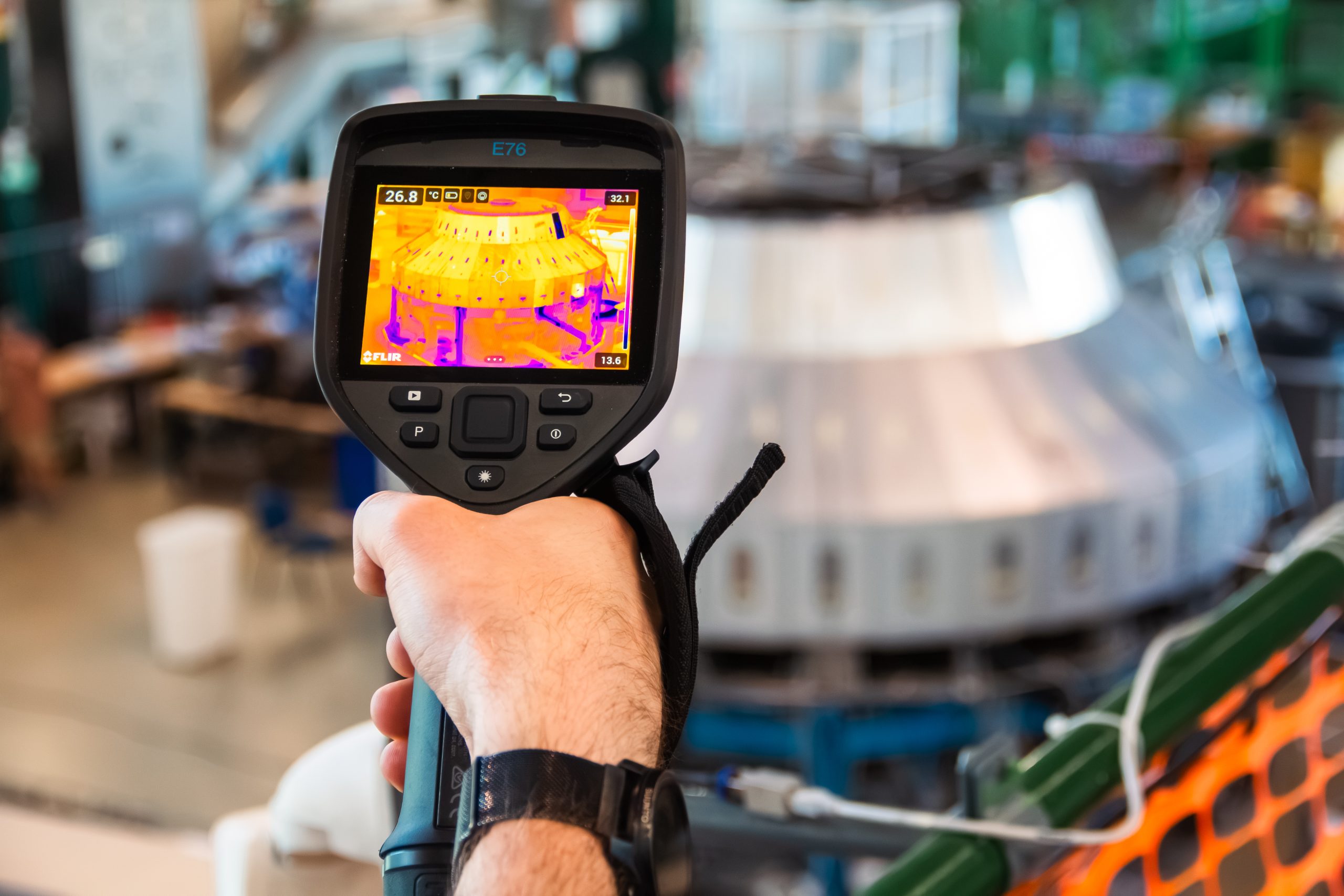
The future High Granularity Calorimeter (HGCAL) of the CMS experiment has successfully passed a rigorous series of tests, marking a significant milestone on the path to the High-Luminosity LHC and the next stage of particle physics research. The HGCAL is set to replace the current endcap calorimeters, allowing for particle showers to be reconstructed with unprecedented detail in the demanding conditions expected at the upgraded collider.
The testing focused on the main supporting structure of the HGCAL, ensuring that it remains cool at -35°C while outside temperatures remain near room temperature. This temperature regulation is crucial for the HGCAL active elements, known as cassettes, which are slotted into large absorber structures made of stainless steel plates.
The cold environment is necessary for the cassettes to function optimally for more than a decade, enabling the HGCAL to deliver the level of detail required for particle physics research in the next era.
This marks the first of two absorber structures to undergo these stringent tests, with more to follow. The successful completion of these cold tests demonstrates the HGCAL's readiness to perform at the highest level in the upcoming High-Luminosity LHC era, promising to push the boundaries of our understanding of particle physics.
Written by urgent.news from CERN's reporting — not their text. Machine-written — may contain errors; check the original before relying on it.