MIT engineers design recyclable elastic yarn
Melt it, spin it, use it again. This new recyclable yarn is as strong and stretchy as spandex-based yarns.
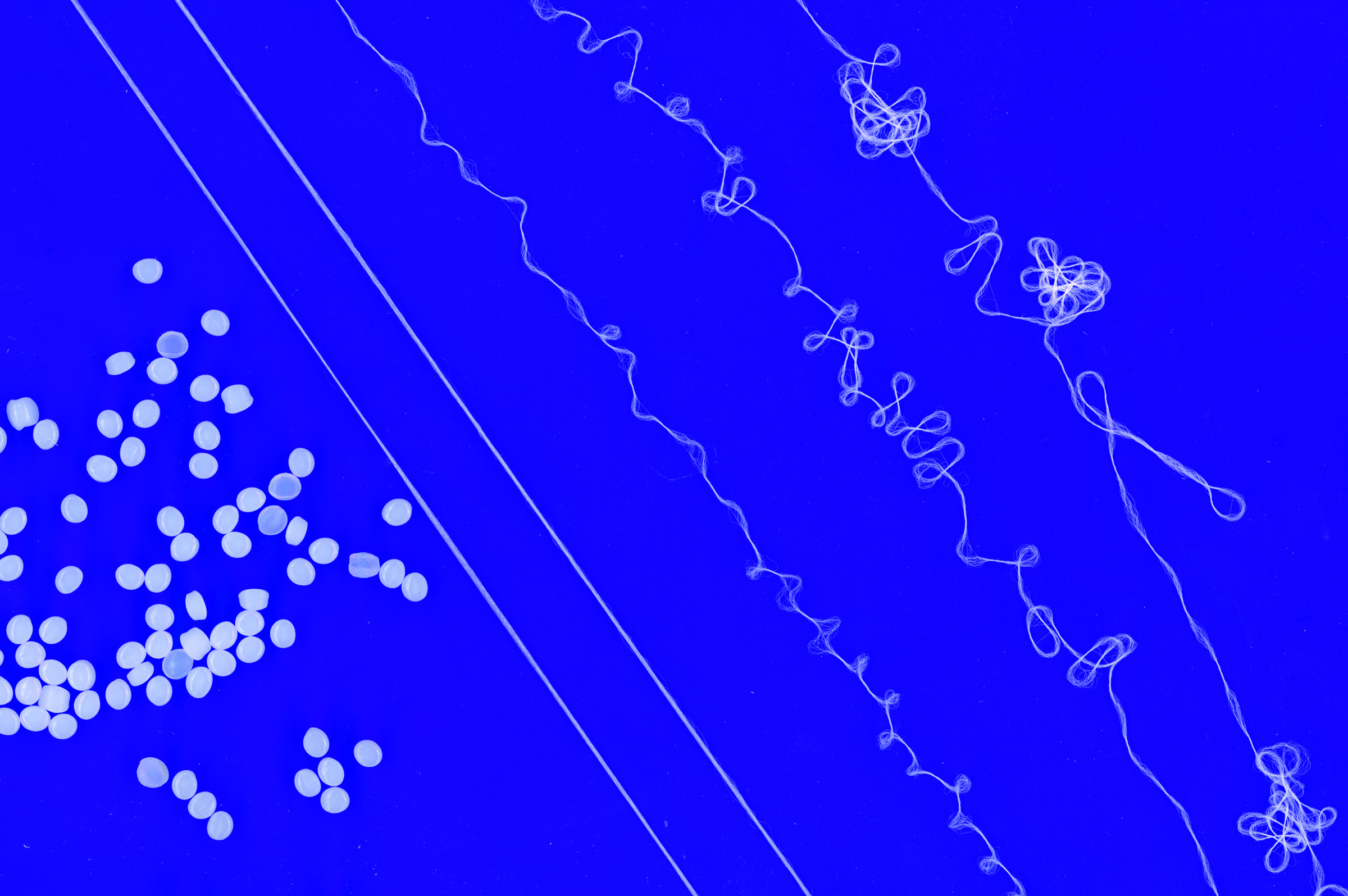
MIT researchers have developed a recyclable elastic yarn made from a form of plastic commonly found in milk bottles and grocery bags. The innovative yarn, which closely resembles traditional sewing thread, can be woven into stretchy and lightweight clothing items. At the end of its life cycle, the garment can be melted down and redrawn into new yarn, which can then be repurposed for various applications such as buttons or belt buckles.
To showcase the recyclability of the yarn, the researchers melted and respun the yarn multiple times, demonstrating that it retained its strength and flexibility even after 10 cycles.
The unique feature of this yarn lies in its composition, which combines a polyethylene-based core with a tougher polyethylene sheath. This specific combination of materials enables the yarn to mimic the stretchy and strong properties of traditional spandex yarns while being easily recyclable. Currently, 80% of textiles in the U.S. market contain some amount of spandex, making them non-recyclable.
Boriskina, a research scientist at MIT's Department of Mechanical Engineering, explains that the lack of a widely adopted technology to recycle textiles into new textiles is a significant hurdle in reducing textile waste.
The core problem lies in the combination of materials used in elastic yarns, which make them challenging to recycle without chemical separation. Boriskina and her colleagues have published their findings in the journal ACS Materials Letters. The study, co-authored by SeongHyeon Kim, Duo Xu, Volodymyr Korolovych, Domingo Flores-Hernandez, Kaniz Moriam, and Daniel Braconnier, highlights the potential of the new recyclable elastic yarn as an alternative to traditional elastic yarns made from a mix of fibers that cannot be recycled together.
Written by urgent.news from MIT News Research's reporting — not their text. Machine-written — may contain errors; check the original before relying on it.