Journal investigating apparent data mismatch in climate study
A leading environmental economics journal is looking into claims that a 2025 study linking national innovation to lower carbon emissions contains data that does not match its source, after an expert in the field requested the paper be retracted. The article appeared in Ecological Economics, the journal for the International Society for Ecological Economics and … Continue reading Journal…
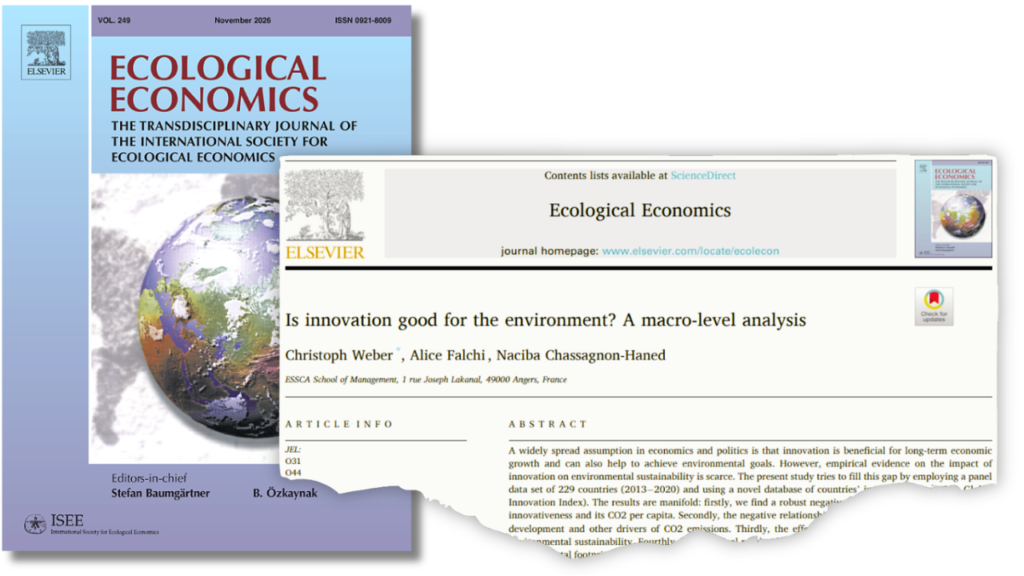
A prominent environmental economics journal, Ecological Economics, is probing allegations of data inconsistency in a 2025 study that purportedly connects national innovation to reduced carbon emissions. The study, authored by three researchers from ESSCA School of Management in Lyon, claimed to analyze data from 229 countries between 2013 and 2020, revealing a negative correlation between a nation's innovation levels and its CO2 emissions per capita.
This paper, which has been cited five times, was published in October 2025. However, three months later, the journal initiated an investigation into discrepancies in the dataset, despite the authors maintaining the integrity of their information. An expert in the field who reviewed the dataset expressed concerns about data reliability, alleging "serious data integrity concerns" and "research misconduct" in an email to Ecological Economics’ editors, seen by Retraction Watch.
The issue stems from discrepancies between the authors' dataset and the Global Innovation Index (GII), which the paper cites. The authors noted that their analysis incorporated 229 countries, yet the GII reports available online only cover 126 to 143 global economies. Roughly 80 additional entries do not align with the underlying GII data, though there is no disclosure of supplementary data usage, which inflates the sample size by approximately 60 percent and distorts the statistical outcomes.
Many of these entries share identical innovation scores for a given year, suggesting intentional manipulation rather than an error. The authors responded to the allegation, stating that no data fabrication occurred, as evidenced by the documentation provided to the editor. Naciba Chassagnon, one of the authors, acknowledged their prompt responses to the journal's inquiries but declined to elaborate on the dataset differences.
Stefan Baumgärtner, co-editor-in-chief of Ecological Economics, announced the start of a "thorough and detailed investigation" in response to the initial complaint. The journal would proceed with actions contingent on the investigation's outcome. The authors were given a chance to provide further clarification, but they declined after learning of the investigation.
They maintained that no data was fabricated. Despite initially agreeing to explain the discrepancy, the authors did not offer additional information once the journal commenced its investigation.
Written by urgent.news from Retraction Watch's reporting — not their text. Machine-written — may contain errors; check the original before relying on it.