Growing underground
A wave of costly failures has humbled vertical farming. Its next chapter is now being written underground, and it looks far more affordable. In July Jacob Nickles and his colleagues lowered themselves 1.1 kilometres beneath England’s North Yorkshire moors, past the dark-matter detectors, and planted a crop. Their farm, in a working polyhalite mine near […] Growing underground was originally…
In July, a team of scientists and researchers descended 1.1 kilometres beneath England's North Yorkshire moors into a polyhalite mine near Whitby. This marks the establishment of the deepest underground farm in the world, led by Jacob Nickles at the University of Sheffield's Institute for Sustainable Food. The team chose this location for its stable temperature and existing ventilation system, which they believe can significantly reduce energy costs that have plagued vertical farming ventures in recent years.
Lord Vallance, the UK's science minister, supported the 12-month trial as a strategy to combat the unpredictable British climate. The concept of repurposing old mine shafts as food hubs in economically disadvantaged areas of the UK is gaining traction. This idea was even adapted into a television series called "Silo" in 2023, which depicted a post-apocalyptic world where survivors farm in a mile-deep bunker.
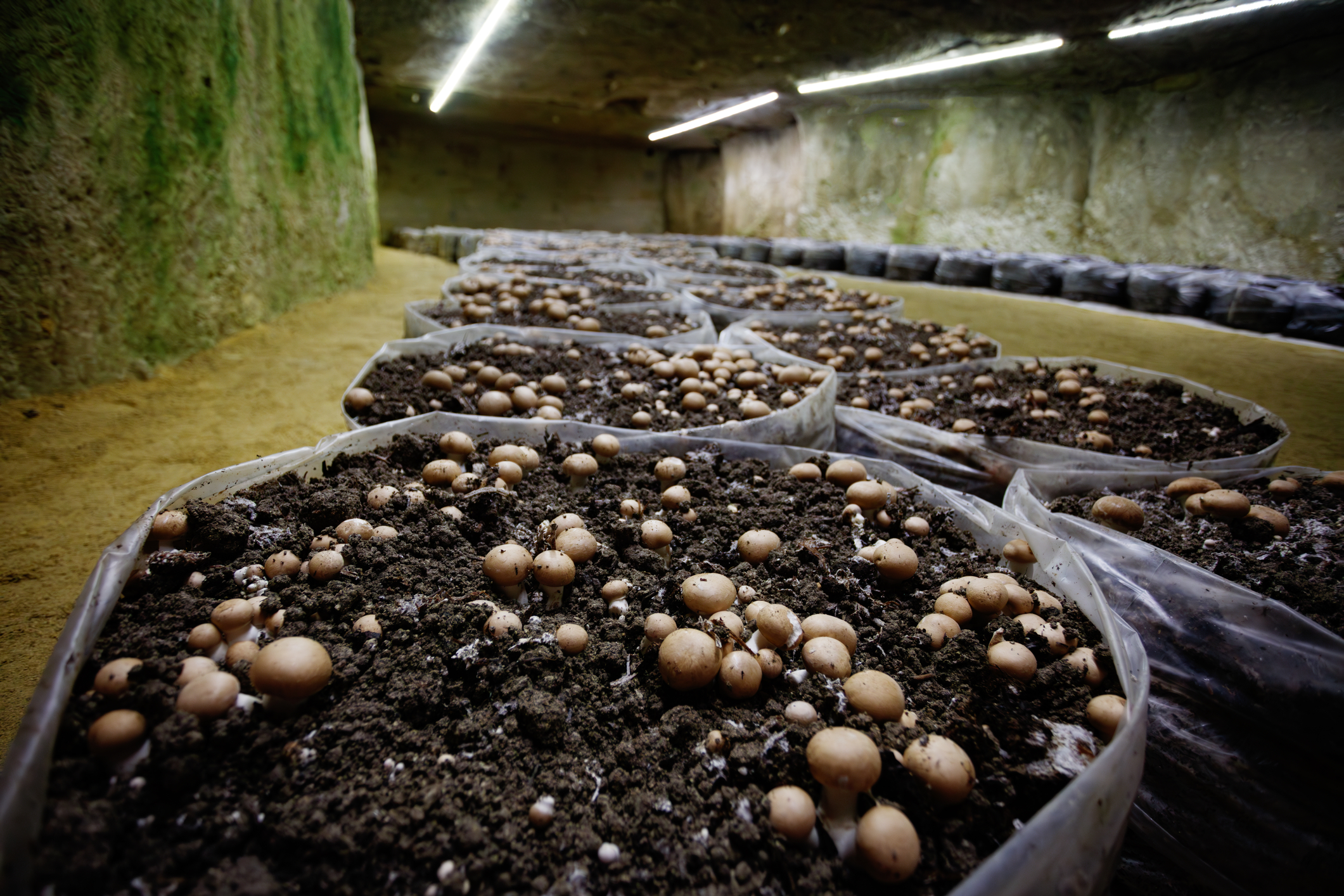
Underground farming is not a new phenomenon; it has been practiced for centuries. In the early 1800s, Parisians grew mushrooms in quarries beneath the city until the construction of metro tunnels forced them to relocate. In the past, high-profile investors like Natalie Portman and Justin Timberlake funded indoor farms, but many of these ventures have experienced significant losses.
By 2025, companies such as Plenty Unlimited, Bowery Farming, AeroFarms, and AppHarvest had all filed for bankruptcy, with some restructured and others folding entirely.
Despite these setbacks, the potential of underground farming is being revisited. Sean Paling, who has been conducting dark-matter research a kilometre below the surface, sees the rock's natural properties as an advantage, providing a stable environment and protection from external elements. Similarly, Jean-Noël Gertz and Théo Champagnat grew mushrooms in a disused Paris car park from 2017 onwards, demonstrating that underground farming can thrive even in challenging urban environments.
In the UK, Growing Underground, now known as Zero Carbon Farms, opened in 2015 beneath Clapham in South London. The farm operates in a wartime air-raid shelter that once housed 8,000 people during World War II, now producing microgreens and salad leaves using 70% less water than traditional farming methods. The business achieved B Corp status in 2021 and supplies Marks and Spencer with its produce, which is grown on renewable power within the tunnels.
As Jacob Nickles gives himself a year to determine the viability of various crops, he remains optimistic about the future of underground farming. Many disused pits across Europe, particularly in towns and cities that have suffered economic decline, could be repurposed to revitalize these areas. When Farm Urban releases the results of its underground experiment next summer, the agricultural world will be closely watching to see if this innovative approach can finally prove its worth.
Written by urgent.news from Emerging Europe's reporting — not their text. Machine-written — may contain errors; check the original before relying on it.