Who benefits most from AI data centers?
New research examines how data center openings affect local jobs, wages, business activity, and electricity prices.
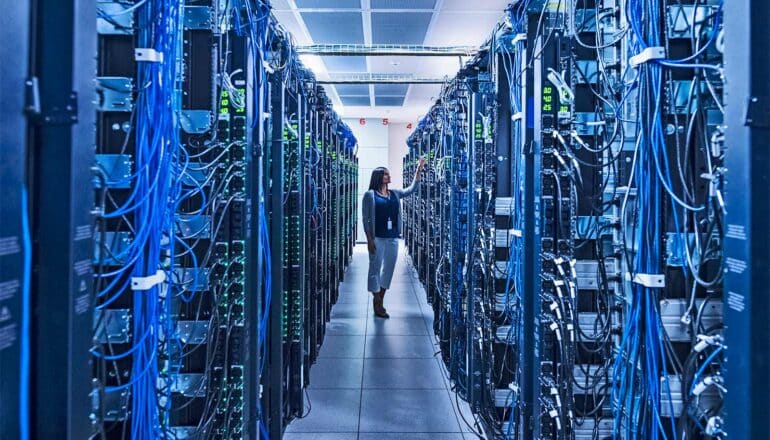
A new study from Georgia Tech Scheller College of Business reveals that while data centers bring economic benefits to certain communities in the United States, these gains are uneven and heavily influenced by local economic conditions and geography. The research, conducted by Daniel Yue and Yiyang Zeng, provides detailed evidence on the impact of data centers on local jobs, wages, business activity, and electricity prices.
On average, the opening of a data center leads to a 0.9% increase in employment, a 1.1% rise in wages, a 1.0% increase in business establishments, and a 0.7% boost in household income within the host county over the first three years. These effects can become even more pronounced after five years, reaching 3.5% in employment, 5.0% in wages, 4.7% in business establishments, and 1.9% in household income.
However, these gains are not distributed evenly between metro and non-metro areas. Metropolitan counties experience more significant increases in employment and business growth due to the agglomeration effect, where the clustering of economic activity facilitates the formation of support networks for data centers. In contrast, rural areas see fewer measurable benefits as the scale of indirect spending from data centers is difficult to achieve there.
One significant trade-off highlighted by the research is the increase in electricity prices, which can rise by about 5% after a data center is established. The distribution of these higher costs among homeowners, businesses, and large industrial users varies depending on state regulations, making each development unique.
The study concludes that the economic impact of data centers heavily depends on the characteristics of the host community, such as labor market depth and existing business networks. Communities should carefully examine factors like tax abatement structures, electricity tariff arrangements, and infrastructure costs before welcoming data center investments.
Written by urgent.news from Futurity's reporting — not their text. Machine-written — may contain errors; check the original before relying on it.