Exploring parental prenatal influences on child health: A multicohort study and data visualisation tool
by Gemma C. Sharp, Deborah A. Lawlor, Kayleigh E. Easey, Sampurna Kundu, Ahmed Elhakeem, Edward Hone, Rosemary R. C. McEachan, Maria C. Magnus, Alexandra Havdahl, Caroline L. Relton Background The Developmental Origins of Health and Disease (DOHaD) hypothesis suggests that early life environmental exposures, especially during pregnancy, can impact long-term health. Research has largely relied on…
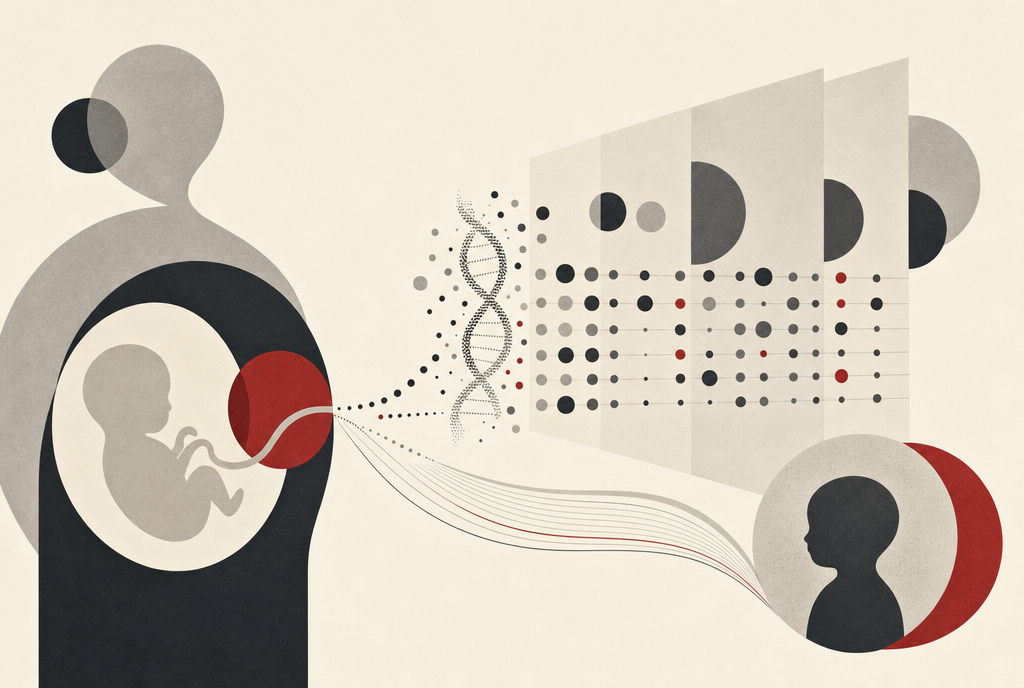
The Developmental Origins of Health and Disease (DOHaD) hypothesis posits that early life environmental exposures, particularly during pregnancy, can significantly influence an individual's long-term health. However, previous research has predominantly focused on maternal factors, while the role of paternal and postnatal influences, as well as broader social determinants, remains underexplored. This could hinder the identification of effective strategies to enhance population health.
To address this knowledge gap, a team of researchers conducted a multicohort study using harmonised data from four population-based longitudinal cohort studies in the UK and Norway, covering births between 1991 and 2008. The study examined the associations between parental prenatal health behaviours, such as smoking, alcohol, and caffeine consumption, and low socioeconomic position (SEP) with 72 child health-related outcomes, including body size and composition, cognitive function, mental health, blood pressure, and allergy-related issues, from birth up to age 11.
The researchers aimed to meta-analyse the cohort estimates, amassing a maximum sample size of 232,139.
To ascertain the causality of these associations, the researchers employed various analytical approaches, including a Mendelian randomisation-informed method using genetic risk scores, negative controls (comparisons between maternal and paternal factors, as well as prenatal and postnatal factors), and dose-response analyses. This extensive set of analyses resulted in over 594,000 effect estimates.
To facilitate the dissemination and exploration of these findings, the researchers developed a web application called 'EPoCH Explorer', designed to visualise and share the results in an accessible manner.
Despite the comprehensive nature of the study, the researchers found limited evidence to support the notion that parental health behaviours have a substantial impact on child health and wellbeing. Only 6% of the analyses yielded a Cohen's D value greater than 0.2, and an FDR-adjusted P value greater than 0.2. Consequently, the study concludes that wider familial socioeconomic conditions may exert a more significant influence on child health outcomes than specific parental health behaviours during pregnancy.
The researchers argue that interventions to improve population health should prioritize the reduction of social inequalities rather than focusing on individual behaviours and mothers specifically. They encourage other researchers to utilize the EPoCH Explorer tool to prioritize associations for further exploration in their own datasets, thereby enabling replication and cross-context comparison to validate and extend the generalisability of their findings.
Written by urgent.news from PLOS Medicine's reporting — not their text. Machine-written — may contain errors; check the original before relying on it.