Can AI beat a goldfish at calling the World Cup?
As chatbots compete to forecast the tournament, an unlikely rival from a Toronto fish tank continues to outperform them.
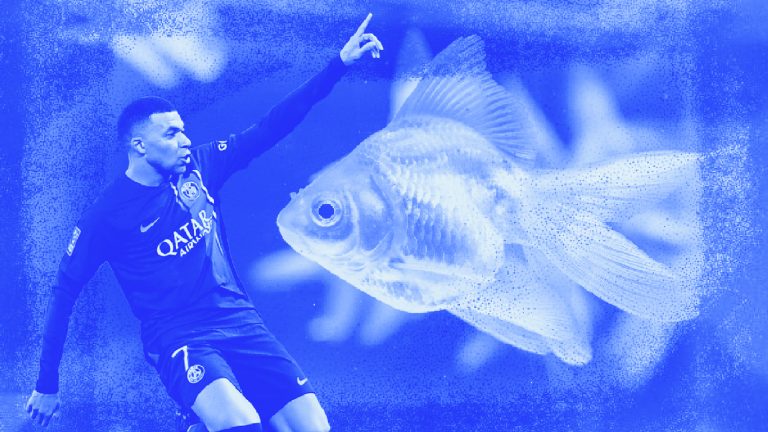
In the race for the Golden Boot at the World Cup, Kylian Mbappé of France and Lionel Messi of Argentina are at the forefront. Experts and algorithms alike are debating who will emerge as the top scorer. However, a goldfish named Swimbappé in a Toronto storefront tank may have an edge, as it correctly predicted 14 out of 18 matches, resulting in an accuracy rate of around 80%. This includes the goldfish's ability to call the semifinals and finals accurately.
In an attempt to compete with the goldfish, five AI programs – ChatGPT, Claude, Gemini, Copilot, and Perplexity – were tasked with predicting the outcomes of 104 matches in the World Cup. Their predictions were marked right or wrong on a public scoreboard, and the ScoreGPT tracker grades each model every matchday morning. Across the tournament, the AI models' match accuracy has ranged between 50% and 60%. None of the AI programs have matched the goldfish's accuracy.
One of the AI tools correctly predicted Spain, France, England, and Argentina as semifinalists, with all four making it to the semifinals. They also predicted Spain to win the final, although the scenario is now dead as Spain and France faced each other in the semifinals. However, when it came to individual match predictions, the AI models failed to accurately forecast several outcomes, including Brazil's round of 16 exit and Germany's defeat to Paraguay.
The goldfish, Swimbappé, has some historical backing in animal predictions at football tournaments. The craze started with Paul the Octopus, who accurately predicted 8 out of 8 matches during the 2010 World Cup. Since then, other animals like Shaheen the camel, Achilles the deaf cat, a hawk in Dubai, and tigers and hippos in Thai zoos have taken up the role of predicting football matches.
The most famous celebrity pygmy hippo, Moo Deng, has made predictions as well, and even chose between watermelons on July 14 to call the semifinals – France over Spain and England over Argentina.
So, the question remains: will the goldfish or the algorithms call the final? While Moo Deng has declared his verdict since July 14, the outcome remains uncertain as the final match approaches on Sunday.
Written by urgent.news from Rest of World Tech's reporting — not their text. Machine-written — may contain errors; check the original before relying on it.