This purple electric Chinese minivan can go up to 559 miles on a charge
Electric minivans could be the ultimate in utility, with room for passengers, gear, and huge batteries. While VW's ID Buzz only gave us 200 miles of real-world driving on a charge in 2023, China's BYD has just announced a flagship purple peoplemover that can go an estimated 559 miles (900 km) on electricity. It's called […]
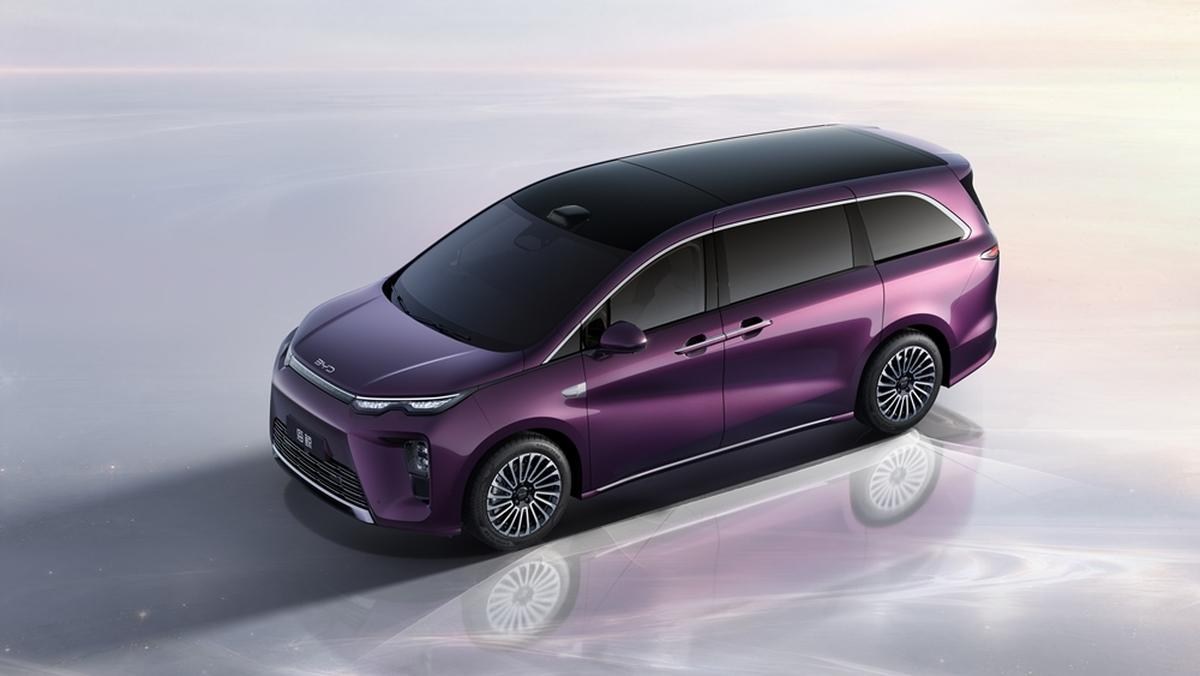
Electric minivans have become increasingly popular due to their spacious interiors, capable of accommodating passengers and substantial batteries. While Volkswagen's ID Buzz managed only 200 miles of real-world driving on a single charge in 2023, BYD has unveiled a flagship minivan called the BYD Whale, boasting an estimated driving range of 559 miles (900 km) on a single charge.
Known for its oversized dimensions, the Whale measures 17.3 feet (5,270mm) in length, 6.5 feet (1,996mm) in width, 6 feet (1,815mm) in height, and features a 123-inch (3,130mm) wheelbase, making it larger than familiar vehicles such as the Honda Odyssey, Chrysler Pacifica, and Toyota Sienna.
With a capacity to carry seven passengers and an additional seven suitcases simultaneously, the exact interior layout has not been revealed. The vehicle is equipped with a prominent sensor cluster resembling a forehead and will incorporate LiDAR technology to facilitate advanced hands-free driving capabilities. While Geely's electric Zeekr 009 minivan also claims a 900 km range, BYD asserts that its Whale can charge its battery from 10 percent to 97 percent in just nine minutes, and from 10 percent to 70 percent in a mere five minutes.
Additionally, the Whale will also be available in a 248-mile (400 km) plug-in hybrid version. The company plans to launch the Whale in China during the first quarter of 2027, priced around 300,000 yuan, which is approximately $45,000. Given the increasing competitiveness of Chinese cars in the global market, it remains to be seen if the BYD Whale will make its way to the United States.
Rewritten by urgent.news; may contain errors — check the original.
Source: theverge.com