Storing wind: Why are we losing renewable energy?
There is no question about the sense of urgency surrounding Ireland's energy situation. The crises driven by the wars in Iran and Ukraine highlighted the country's dependency on fossil fuels.
There is a growing concern in Ireland about losing renewable energy due to storage limitations. Ireland's high electricity prices in 2024 highlight the country's dependency on fossil fuels, despite the need for renewable energy sources to lower costs and increase resilience to global volatility. Ireland's electricity consumption is currently 42% renewable, which is below the EU average and far lower than countries like Austria, Denmark, and Portugal.
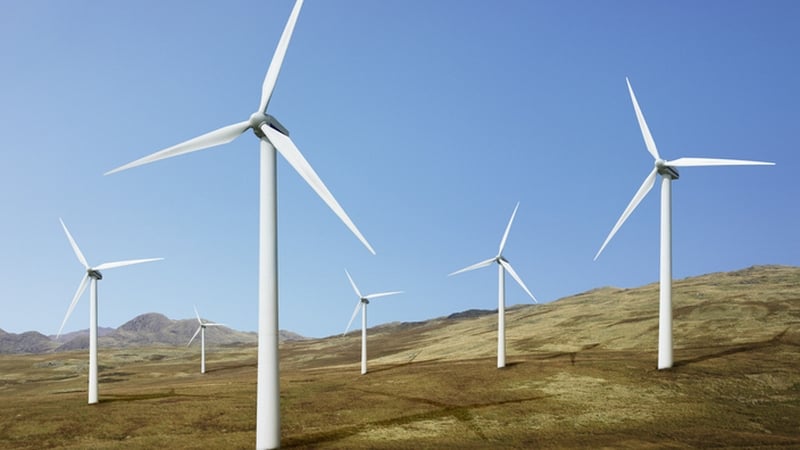
While wind power contributes significantly, with 33% of Ireland's electricity generated from wind in 2023, there are still grid constraints and a lack of storage capacity that limit the use of this power.
In the first nine months of 2024, over 13% of wind and solar power generated was lost, potentially powering nearly half a million homes. Dr Pádraig Lyons, head of the International Energy Research Centre at Tyndall National Institute, explains that there is a technical limit to how much wind energy can be integrated into the grid without storage. Without energy storage, periods of time without enough wind and solar to meet electricity demand could see fossil fuel reliance rise to 93% of all electricity consumed.
Ireland's renewable energy targets aim to double the share of renewables in electricity consumption to 80% by 2030. Wind generation is crucial for these plans, with 5 gigawatts of installed onshore wind capacity and plans to almost double it to 9 GW by 2030. However, there is no offshore wind generation yet, despite the island's vast potential.
The country's only offshore wind farm, Arklow Bank, ceased operations in 2006. Expanding wind generation without increasing storage capacity could lead to a rise in lost electricity, according to Energy Storage Ireland. Currently, Ireland has 1 GW of energy storage capacity, mostly through grid-scale batteries or BESS, with planning permissions granted for 2.3 GW.
While lithium-ion batteries are effective, they are expensive and in high demand. Long-duration solutions like pumped-hydro energy storage are needed, but there are limited locations in Ireland suitable for this technology. Green hydrogen also shows promise, but currently, no commercially operating hydrogen storage facility exists in Ireland.
The energy sector is enthusiastic about these technologies, but the country is behind schedule in meeting its renewable energy targets.
Rewritten by urgent.news; may contain errors — check the original.
Source: rte.ie