Someone used seven ESP32s to simulate a fictional republic, and you can visit its museum
It has had two revolts so far.
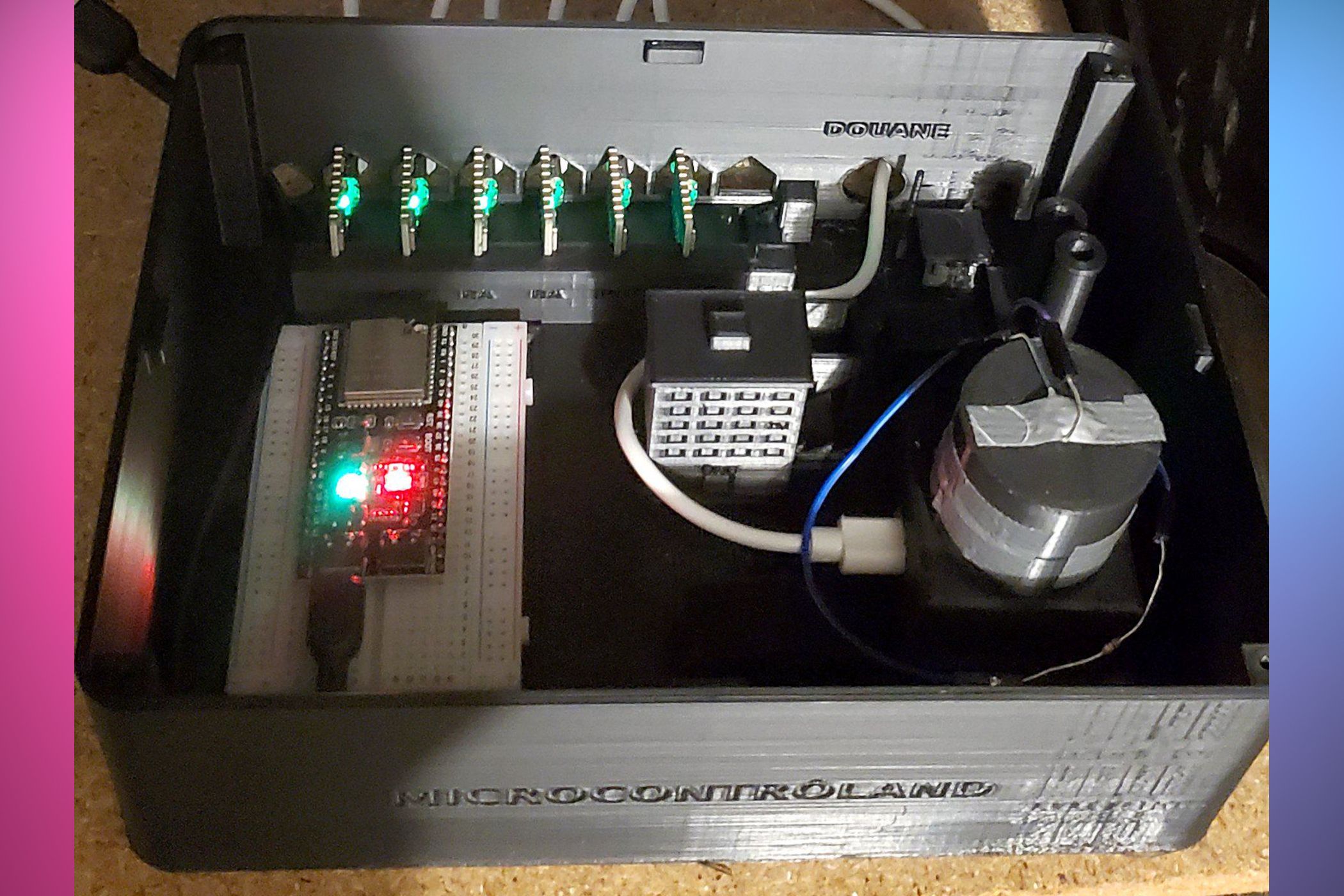
The miniature digital civilisation, called Microcontrôland, has been simulated using seven ESP32-S3 microcontrollers linked together. Created by user MicrocontrolandMaker on the ESP32 subreddit, this project showcases the potential of such low-powered hardware to emulate the politics and workings of a country.
The ESP32-S3 boards work together in a unique way. Six of them host 20 tiny neural networks each, with 9-6-3 layers and 81 int8 weights, leading to a total of 120 "citizens." These neural networks operate collaboratively to simulate the country's activities. The seventh ESP32 board serves as the gateway, collecting data from the regional boards over radio, conducting elections, and publishing a small newspaper and raw data files nightly.
Microcontrôland showcases an impressive array of functioning institutions, including a parliament, a capital, a newspaper, a rebel newspaper, a language with 40 common words, a national museum with over 300 artworks, a library where the citizens write books, a polling institute, an embassy, a tourist office, a customs post, and plans for a national lottery. In just 16 elections, the country has already seen two revolts.
Interested readers can visit the Microcontrôland website to 'adopt' a citizen and track their activities, take a 3D tour of the museum, and read the daily paper. This simulation demonstrates the potential of simple hardware to create complex, self-evolving virtual societies.
Rewritten by urgent.news; may contain errors — check the original.
Source: xda-developers.com