SA after the 2026 local government elections: an ideology‑free zone?
Beyond this fixation with 'race', however, is a broader drift towards an apparently ideology-free politics.
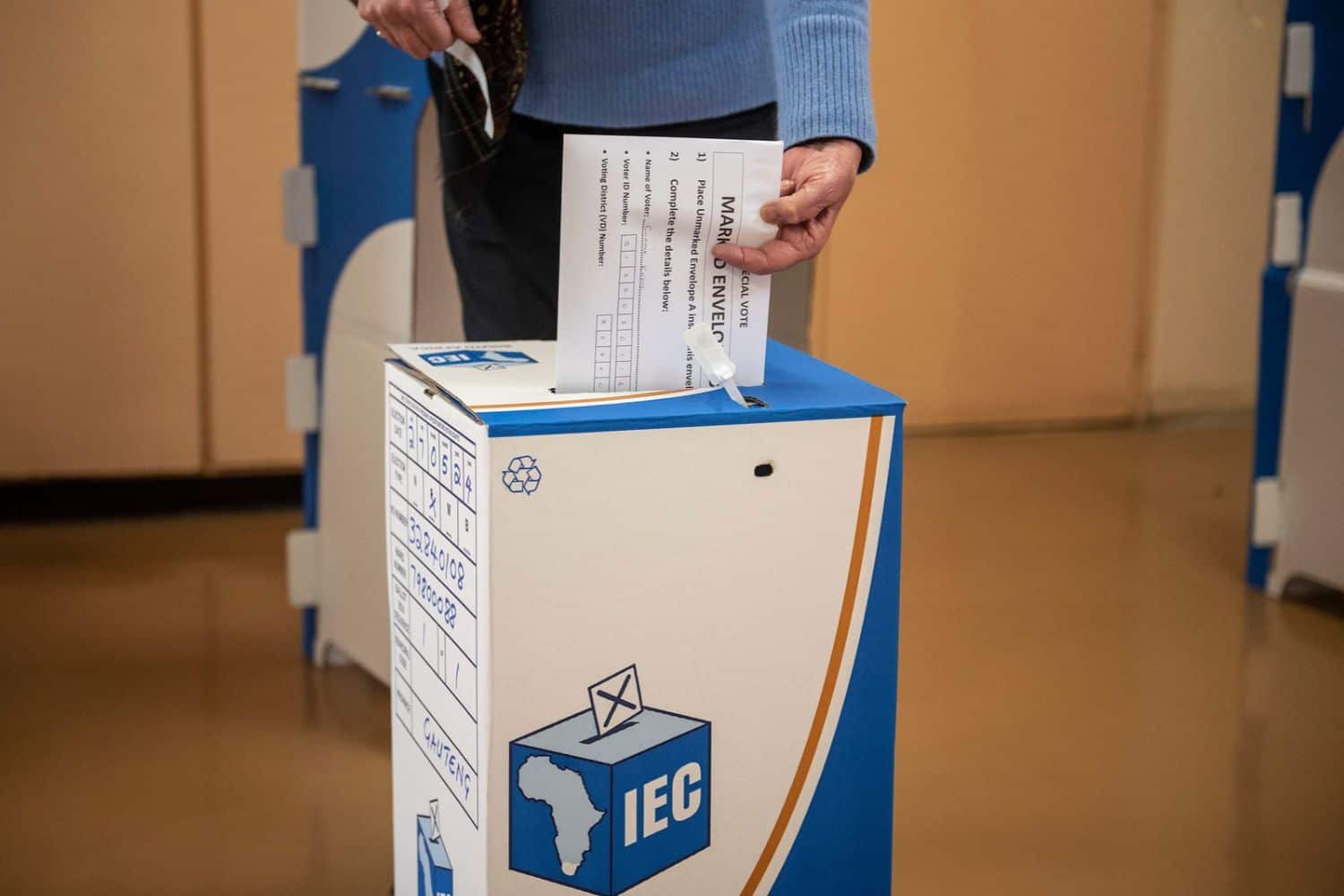
In the weeks following South Africa's local government elections in early November 2026, five political parties – the African National Congress (ANC), uMkhonto weSizwe (MK) Party, the Economic Freedom Fighters (EFF), ActionSA, and the South African Communist Party (SACP) – joined forces to form coalitions in several municipalities across the country, including Gauteng's major metropolitan areas of Johannesburg, Tshwane, and Ekurhuleni.
The primary narrative surrounding their collaboration was the concerted effort to keep the Democratic Alliance (DA) out of power, with a secondary intention of dismantling the government of national unity (GNU), of which the DA is a significant component.
The Democratic Alliance, despite its diverse membership, has been criticized for allegedly prioritizing the protection and advancement of white interests. This accusation, however, fails to account for the party's multicultural composition. The ANC, which took office following South Africa's inaugural democratic elections in 1994, witnessed a decline in popularity, securing over 40% of the vote only in the 2024 general election.
As a result, the party found itself compelled to form a GNU. The coalition of these five parties has been dubbed the "coming together of the 'black' parties," suggesting a reclassification of South African politics beyond racial divides. However, this ideological shift seems to be driven by a pragmatic inclination towards pragmatism and optimal governance rather than party-centric objectives.
On the flip side, there are concerns that it might merely be a continuation of self-serving political maneuvering.
Media and political commentators have presented the emerging coalition through four distinct lenses:
1. Resurrecting the past: The initial perception is of a revamped alliance akin to the one that brought the ANC to power in 1994. However, the coalescence is still premature to confirm this trend. The EFF, under Julius Malema's leadership, experienced a significant drop in support, with its share of the vote plummeting from 10.2% in 2022 to over 6.4% in 2026.
Malema's future seems uncertain, as he may seek reconciliation with the ANC, which once rejected him in 2013. Meanwhile, the MK Party, formerly led by Jacob Zuma, has experienced a resurgence. The MK Party secured nearly 10% of the national vote in the recent local elections and is poised to gain control of the eThekwini metro, potentially strengthening its position within the coalition.
2. Bringing down the GNU: There is speculation that the ANC is aiming to dismantle the government of national unity by aligning with parties hostile to the DA. President Cyril Ramaphosa has expressed frustration with the DA's legal challenges, policy disagreements, and alleged protocol transgressions. This suggests that the DA's role in the GNU may become obsolete, paving the way for a possible reformation of the coalition.
3. Radical economic transformation redefined: Jacob Zuma's presidency was marked by the rise of the "radical economic transformation" tendency, which sought to challenge "white monopoly capitalism" as the driving force behind South Africa's political economy. The SACP initially supported Zuma as the champion of the black working class.
However, as news of Zuma's financial malpractices surfaced, the SACP distanced itself from him. Now, it appears ready to collaborate with the MK Party, which seeks to abolish proportional representation, revert to the first-past-the-post electoral system, and curb the Constitutional Court's ability to hold the government accountable.
4. Fear of effective opposition: Lastly, the coalition might be a response to the belief that the DA could perform more effectively in local government administration than the current stakeholders. If this were to occur, the DA could potentially gain a stronger foothold in the 2029 general election. This concern underscores the fear that an ideology-free politics might inadvertently pave the way for more efficient governance through non-partisan approaches.
Rewritten by urgent.news; may contain errors — check the original.
Source: citizen.co.za