Nuclear Pathfinder Mission To Ceres Would Usher In Era Of Interplanetary Transport
The dwarf planet Ceres, the first object discovered in the Main Asteroid Belt, could play a revolutionary role in opening the outer solar system to a faster, cheaper means of interplanetary transport. Or say the proponents of a new initiative dubbed ‘Project CERES.’
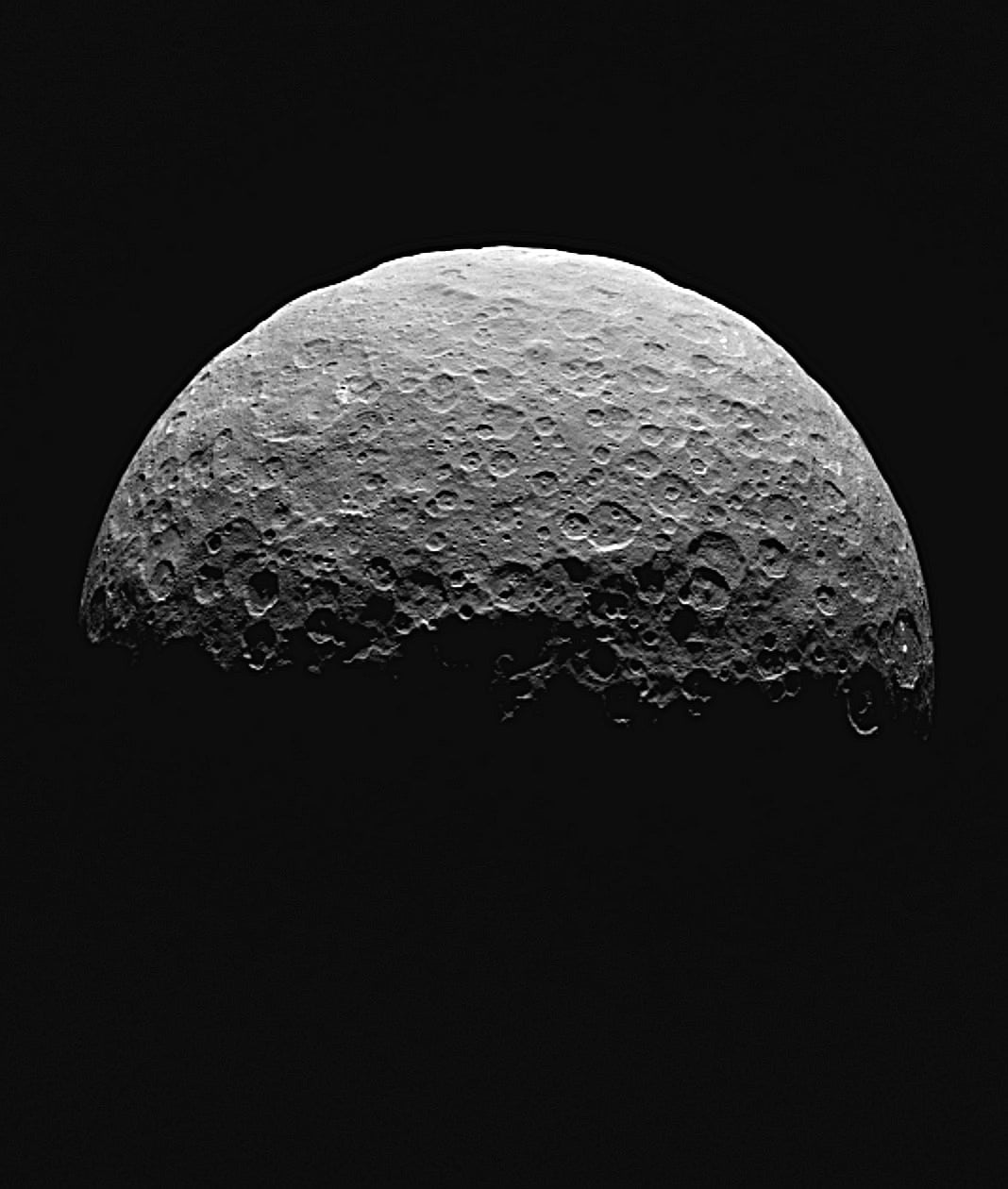
A proposal by aerospace experts envisions a nuclear-powered mission to Ceres, the largest object in the asteroid belt, to establish a transport hub for interplanetary travel. Ceres, which has long been a subject of astrobiological interest, is believed to harbor rich chemistry that could have given rise to ancient microbial life.
The mission, called Project CERES, would involve a Pathfinder spacecraft that would land on Ceres, extract water, and return samples within five years. The Pathfinder would use nuclear thermal propulsion (NTP) to propel itself to Ceres, which is a more efficient and faster method of travel compared to chemical rockets. This would reduce travel time from over a decade to just a year.
The Pathfinder would then use the extracted water to produce propellant, which could be sold to other spacecraft passing through the system. The mission would not only tackle Ceres' astrobiological mysteries but also establish a base for future interplanetary transport. Once the Pathfinder has completed its mission, it would depart for Earth, carrying samples that would be returned in May 2041.
The Ceres return spacecraft would then become available for future missions. The infrastructure built at Ceres, including a surface extraction plant and an orbital tank farm, would make future trips less costly and more efficient. Ceres' abundant water, nitrogen, and carbon resources, along with its low gravity, would make it an ideal location for launching missions to other parts of the solar system.
Rewritten by urgent.news; may contain errors — check the original.
Source: universetoday.com