Millions of pupils attend school without meals, KNBS report shows
NAIROBI, Kenya Nov – Millions of Kenyan children attending day schools may be missing out on meals during the school day, with a new government report showing that more than…
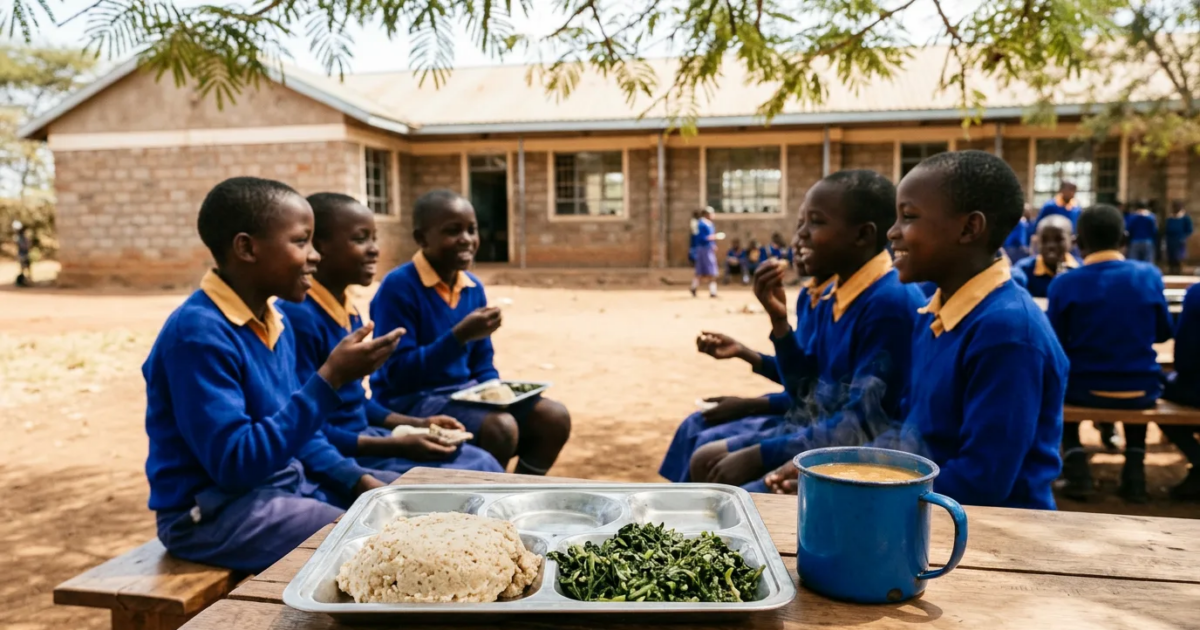
A recent government report, released by Kenya National Bureau of Statistics (KNBS), reveals that over a third of Kenyan schools do not provide meals to their day scholars. The 2024 Kenya School Census showed that only 64.2% of basic learning institutions offered meals to children attending school during the day. This statistic highlights the significant disparities in access to school feeding programs across the country.
The issue is most pronounced in public primary schools, where just 43% of institutions provide meals to day scholars. Private primary schools fare better, with 79.3% offering meals. Nationally, 56.7% of primary schools provide meals to day learners, meaning more than four out of every ten primary schools do not offer meals to their students.
In secondary schools, the situation is slightly more favorable, with 95.9% of institutions providing meals to day scholars. However, access to meals is not equal across school categories. In public secondary schools, 97.8% offer meals, compared to 77.3% in private secondary schools. At the junior school level, 63.4% of institutions provide meals, with public schools at 56.9% and private institutions at 86.6%.
The report also emphasizes the financial burden on parents, who are the biggest contributors to school meal programs. Nationally, parents fund 50.4% of school meal programmes, followed by non-governmental organizations and community-based organizations at 32.7%. The Ministry of Education contributes 18.4% to the funding, while county governments account for 4.5%.
In secondary schools, parents fund 96.1% of school meal programmes, while in junior schools, they cover 80.3% of the costs. The Ministry of Education finances 14.7% of meals in junior schools. Pre-primary schools rely heavily on parents for funding, with 73.9% of meal programs funded by them through various sources captured in the census.
Regional differences are also evident in the funding of school meals. In Mandera, the Ministry of Education funds 98.5% of primary schools' meals, while in Nandi and Kericho, parents are the main source of funding at 98.8% each.
Rewritten by urgent.news; may contain errors — check the original.
Source: capitalfm.africa