How UAE air ambulance operators rose to challenge of regional conflict
UAE's air ambulance companies have revealed how they overhauled their operations after the Iran conflict exposed the risks of relying on regional airspace. When tens of thousands of flights were cancelled in March, medical aviation companies had to find alternative routes. Dubai-based Bluedot Air Ambulance carried out almost 500 medical evacuations in only 17 days during the first weeks of the…
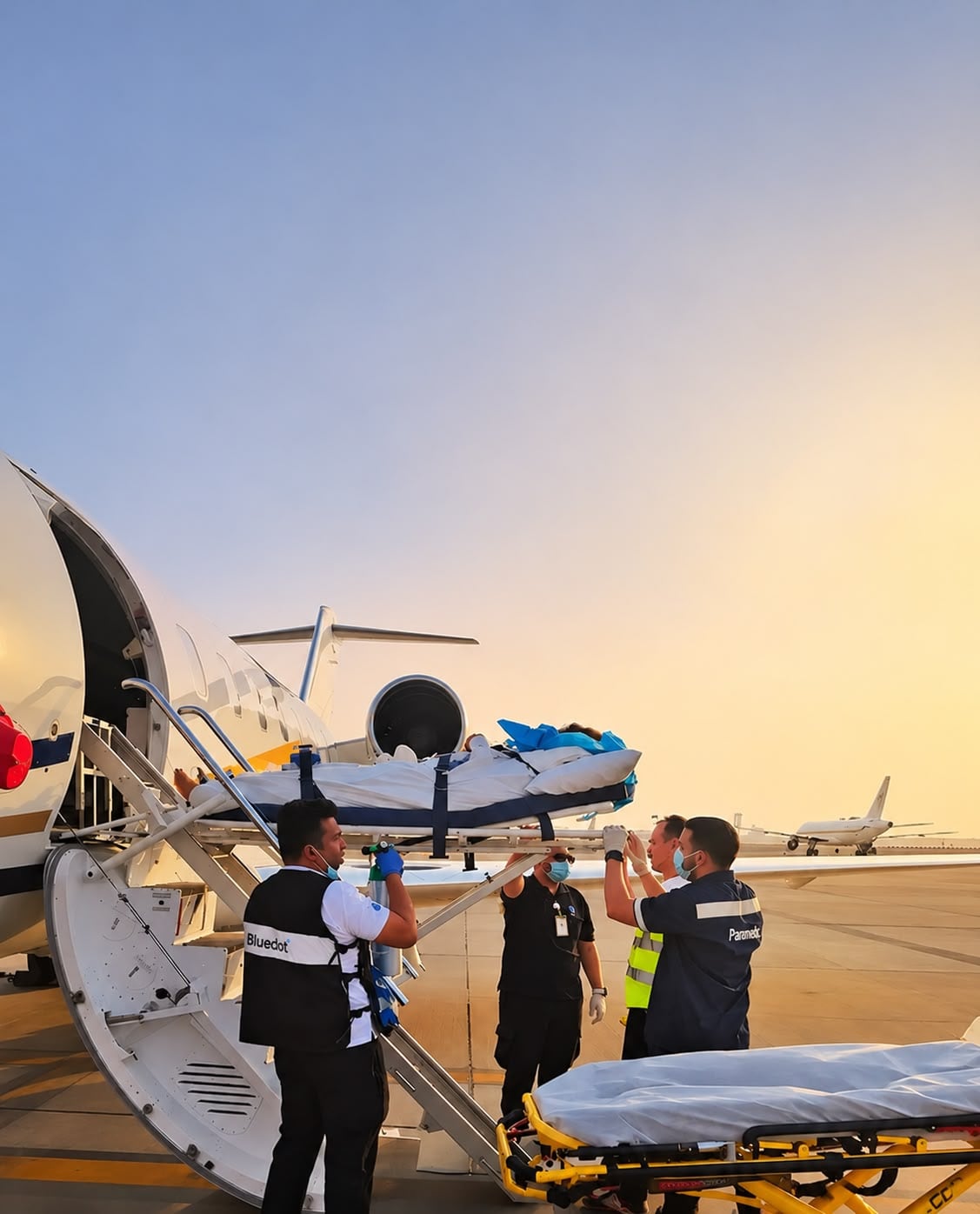
The UAE's air ambulance companies have significantly altered their operations following the Iran conflict, which led to the closure of regional airspace and the cancellation of tens of thousands of flights in March. Dubai-based Bluedot Air Ambulance was particularly affected, conducting almost 500 medical evacuations in just 17 days during the conflict's early weeks.
The company typically handles around 70 medical flights per month, with about 50 of those for critically ill patients. To adapt to the unprecedented situation, Bluedot had to develop alternative evacuation routes, identify hospitals in multiple countries capable of receiving patients quickly, and closely monitor potential airspace restrictions.
Within days of the conflict's onset, Bluedot faced significant challenges due to many of their patients requiring intensive medical care, with nearly 70 percent on ventilators and others relying on life-support medication. The company's chief executive, Vinod Nair, recalled that the uncertainty posed the greatest challenge, forcing them to remain grounded for extended periods before the UAE government began opening flight corridors.
One of the company's most challenging missions involved evacuating a critically ill patient from Doha to London in March. In June, Bluedot also repatriated two UAE residents affected by an earthquake in Venezuela. The UAE was chosen as an operational base due to its proximity to Europe and Asia, and the country's high standards of infrastructure and medical facilities.
After approximately a month of grounded flights, Bluedot relocated its services to Cairo and Munich. However, this relocation brought its own commercial challenges as aircraft and medical crews needed to be repositioned, with costs never considered in the company's commercial packages. The UAE's strategic location made it an ideal hub for medical flights between Europe and Asia, while its robust infrastructure and medical facilities ensured the highest standards of care for patients.
Since 2020, Bluedot has completed over 7,000 medical missions across 186 cities in 97 countries. The company operates two Bombardier Challenger-series private aircraft equipped with medical equipment, typically flying every three days. In addition to private flights, it also offers medically supported travel on commercial airlines, with a doctor, nurse, or paramedic accompanying patients depending on their condition and level of care required.
The conflict has led to increased fuel prices and disrupted commercial flight options, making it more challenging and expensive for air ambulance services to operate. Gerrit Vrieze, the CEO of EMS Ambulance, explained that airspace closures and the conflict have resulted in higher fuel costs, requiring flights to take different routes to avoid certain airspaces.
This change in routes increases fuel consumption for smaller jets, leading to additional refueling stops. Despite these challenges, EMS Ambulance remains one of the few providers capable of flying to high-risk regions such as Israel or the border of Iran. Recently, EMS Ambulance successfully transported a patient with a last wish from the Netherlands to Iran through Turkmenistan by arranging ground transport across the border.
Rewritten by urgent.news; may contain errors — check the original.
Source: thenationalnews.com