7-Eleven Japan’s newest rice balls aren’t made entirely of rice
There’s an unexpected ingredient cosplaying as grains of rice in these convenience store onigiri. If you walk into a 7-Eleven branch in Japan right now and head towards the rice ball/onigiri shelf, you might see the new Tentaremabushi, which went on sale on November 17. “Ten” here is short for tempura, since there are tempura […]
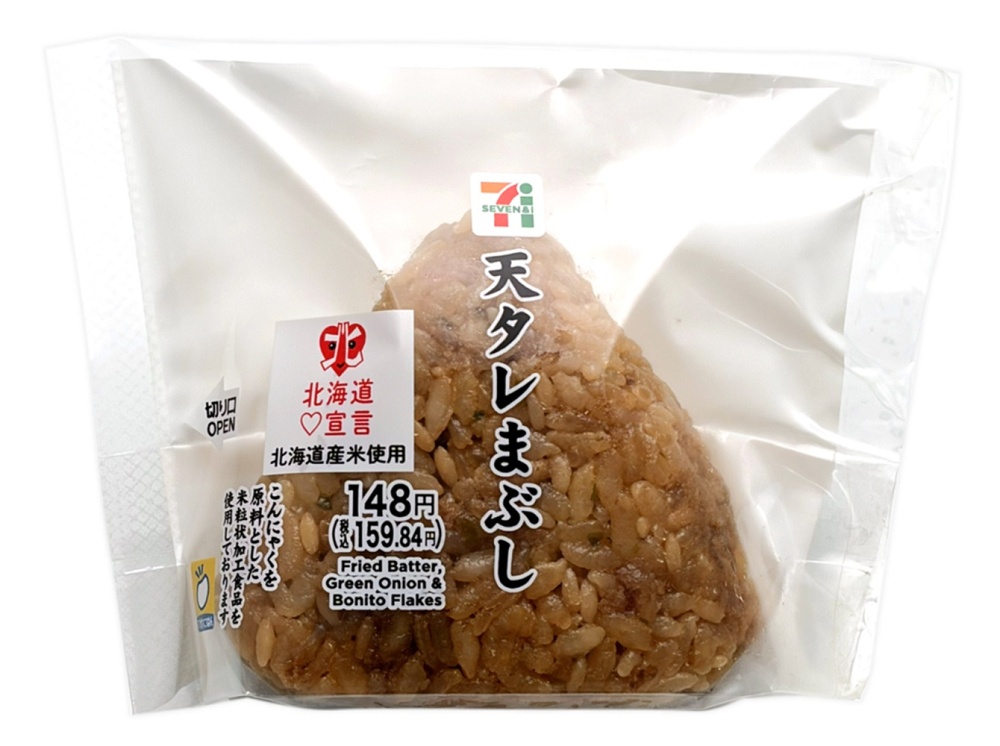
New 7-Eleven Japan product, Tentaremabushi, contains ingredients beyond traditional rice. The convenience store chain's latest onigiri, introduced on November 17, is marketed as "made with Hokkaido-grown rice," but also includes "rice grain-like processed starch" and "konnyaku." Konnyaku, a gelatin made from konjac potatoes, is flavorless and provides a jiggly texture.
The Tentaremabushi’s konnyaku pieces are designed to resemble rice grains, making them visually indistinguishable. While konnyaku is a common dietary component in Japan, it generally doesn’t feature prominently in convenience store rice ball offerings. Given the rise in rice prices, 7-Eleven may be utilizing konnyaku as a cost-saving measure, passing down savings to consumers.
However, despite the use of konnyaku, the Tentaremabushi isn’t a particularly unhealthy option—8.3 grams of fat per serving, compared to 3 grams in the store's Spicy Chicken and Mayonnaise rice ball. The presence of Hokkaido-grown rice is more prominently displayed than the konnyaku ingredient, potentially leading some shoppers to be unaware of the new product's composition.
Rewritten by urgent.news; may contain errors — check the original.
Source: soranews24.com