What Democrats’ Sweeping Midterm Wins Could Mean for the Redistricting Battle
The bitter partisan fight to redraw congressional maps may be dying down—at least for now.
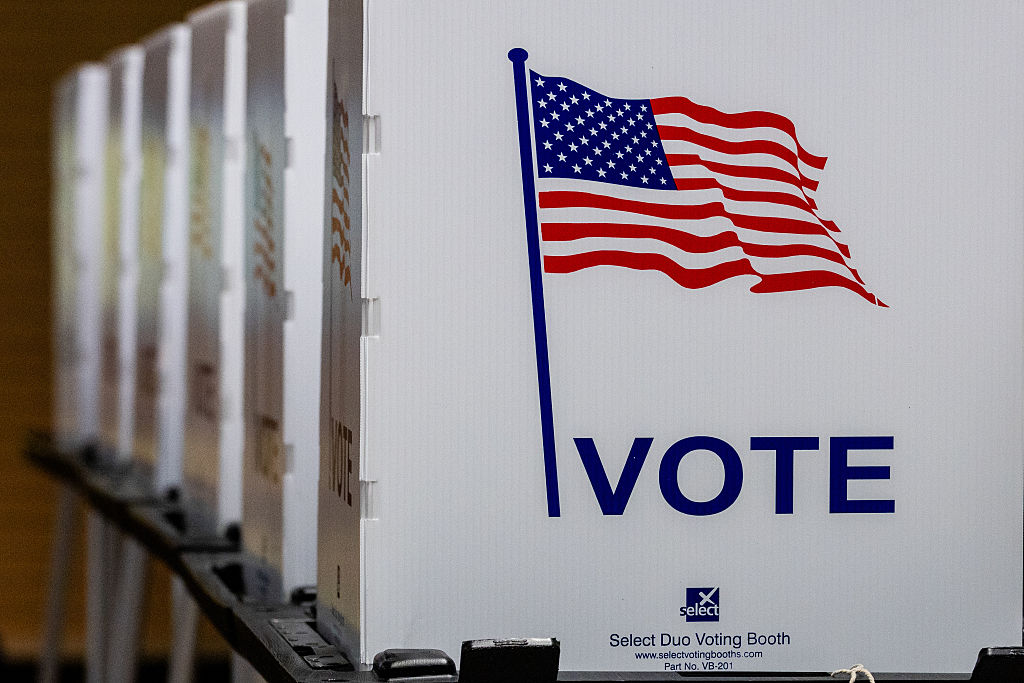
The midterms' Democratic surge could alter the redistricting conflict, according to political analysts. After a contentious effort to redraw congressional maps in favor of their respective parties, the redistricting battle may be cooling down, at least temporarily. Mid-cycle redistricting, typically occurring after each U.S. census to adjust for population shifts, became a contentious issue during the 2025 election cycle.
President Trump encouraged his party to redistrict mid-decade ahead of the 2026 election, as the GOP sought to maintain its narrow House majority. Both Republican and Democratic leaders in various states engaged in redistricting efforts, but the Democrats' sweeping victories in this year's midterms could mark a shift in the redistricting landscape.
Costas Panagopoulos, a political science professor at Northeastern University, believes that Republicans may be less inclined to push for mid-cycle redistricting going forward, as their efforts in 2025 failed to counteract the Democratic gains. In states like Texas, North Carolina, Ohio, Alabama, and Florida, Democratic candidates won multiple districts that had been redrawn to favor Republicans, largely due to the enduring political climate and Trump's historically low approval rating.
Both parties now seem cautious about mid-cycle redistricting, as the 2026 election results suggest that even heavily gerrymandered districts do not guarantee victory. Mark Jones, a political science professor at Rice University, notes that Republicans have already done "pretty much anything" to secure their advantage, and further redistricting efforts may face challenges if their control over state governments is reduced.
Democrats, who advocated for redistricting as a defensive measure, may now prioritize other issues. While some unfinished business, such as Virginia's redistricting ballot measure, could resurface, political experts predict that the "gerrymander arms race" in 2027 will be limited to marginal gains. The Democratic Party, having reluctantly engaged in mid-decade redistricting, is expected to return to conventional norms in U.S. politics.
Despite the lack of urgency, both parties will likely continue to engage in partisan gerrymandering when the next redistricting cycle occurs, after the 2030 census, based on the partisan makeup of state legislatures and governorships at that time.
Rewritten by urgent.news; may contain errors — check the original.
Source: time.com