UN-backed court to rule on Argentina's bid to halt Malvinas oil project
UN-backed international court set to rule bid to block a British-Israeli oil project off the coast of the disputed islands. Leer más
A UN-backed international court will rule on Saturday regarding Argentina's request to halt a British-Israeli oil project located off the disputed Malvinas (Falkland) Islands. This latest disagreement between Argentina and Britain stems from a conflict that occurred in 1982, when the two nations fought a short yet intense ten-week war.
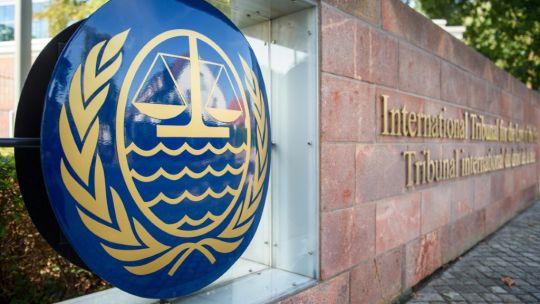
In September, Argentina initiated an arbitration process against the United Kingdom concerning the Sea Lion project managed by Britain's Rockhopper company and Israel's Navitas. Before any decision is made, Argentina has requested the International Tribunal for the Law of the Sea (ITLOS) to impose emergency measures to temporarily suspend the project.
Argentina contends that the plan infringes upon a UN resolution urging both sides to abstain from unilateral actions until their dispute over the sovereignty of the islands is settled. The tribunal has been asked to impose emergency measures and instruct the UK to take necessary steps to prevent new drilling for exploitation and installation of production infrastructure within the North Malvinas Basin.
Additionally, Argentina has urged the court to order the UK to refrain from utilizing the data procured from the exploration of natural resources in the disputed maritime areas. The Hamburg-based tribunal, an independent court established under UN auspices, is scheduled to deliver its judgment at 1100 GMT on Saturday. The Sea Lion oil field is situated around 220 kilometers (135 miles) from the islands, which are located 600 kilometers off Argentina's Patagonian coast and approximately 13,000 kilometers away from the United Kingdom.
Since US President Donald Trump expressed openness to reconsidering Washington's stance on the territory, Argentina's President Javier Milei has reinforced his country's claim over the Malvinas, also referred to as the Falkland Islands by the UK. Island residents endorsed remaining under British rule in a 2013 referendum. However, Argentina disapproves of this decision, arguing that the principle of self-determination does not apply to the population it perceives as having been settled by Britain following 1833.
According to Peter Clegg, a politics professor at UWE Bristol, the key issue is whether the Sea Lion oil project can continue while Argentina's broader case against the UK is being evaluated. While the decision will not settle the sovereignty of the Falkland Islands, the dispute over sovereignty is the basis for the case. Britain has urged the court to dismiss the case, asserting that it is rooted in Argentina's assertions of sovereignty.
London argues that the sovereignty claim falls outside the UN Convention on the Law of the Sea's arbitration process, which is designed to resolve maritime disputes. In a hearing held earlier this month, the UK government's chief legal adviser, Ellie Reeves, informed the judges that the order sought by Argentina would hinder the Falkland Islanders from developing their natural resources, which they are entitled to do.
Reeves stated that this could have devastating economic consequences for the islanders and noted that Argentina's goal is to control those resources for itself. In late October, Britain's Prime Minister Andy Burnham discussed the Sea Lion project with US President Trump during a call. Burnham's office announced that Burnham raised the economic implications of Argentina's coercive measures for the UK and US and emphasized the importance of respecting the islanders' right to develop their natural resources.
Rewritten by urgent.news; may contain errors — check the original.
Source: batimes.com.ar