The Soviets starved Ukraine, then erased the memory: how Stalin’s genocidal famine vanished from one Luhansk family’s story
Olena Zotova grew up hearing her great-grandmother call it holodomor and her grandmother only holod, famine, and understood what that difference held only after Russia's full-scale invasion.
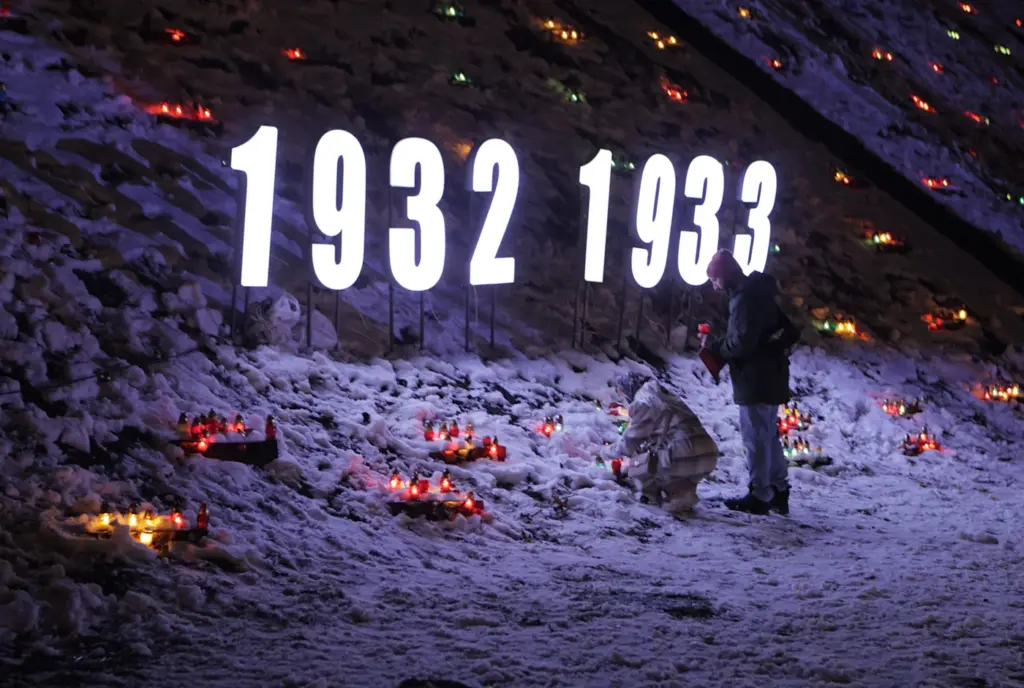
On 28th November, Ukraine commemorates the victims of the Holodomor, a man-made famine orchestrated by Stalin's regime in 1932-33. In Russian-occupied Ukrainian regions, the Holodomor memorials have been removed since 2014. Olena Zotova, a survivor of the famine, grew up in Luhansk, a city occupied by Russia since 2014. She had heard her family's stories about the famine but was unable to grasp their significance due to the silence surrounding the Holodomor during the 1980s.
Zooming into the past, Olena's great-grandmother, Anastasiia, taught her the ritual of holding a slice of bread during meals, though eating it was not mandatory. Olena's great-grandmother's actions stemmed from the traumatic events she experienced during the Holodomor. The memory of her mother, Nona, was warped, often mixing stories of war with famine, and blaming both solely on the Nazis.
Despite this, one story anchored Nona firmly in time, indicating she was five and a half years old when her mother took her to an open-air marketplace in 1932. The dog, Jack, came running at dusk, tugged on the child's dress, and headed home, ensuring she followed him. Jack's missing collar was a mystery that left Anastasiia with more questions than answers.
Rewritten by urgent.news; may contain errors — check the original.
Source: euromaidanpress.com