‘The Moon is Watching’ stages an absurd erotica in the French countryside
Naoko Watanabe attempts to give a subversive feminist reframing to her adaptation of an erotic novel, but ultimately falls flat.
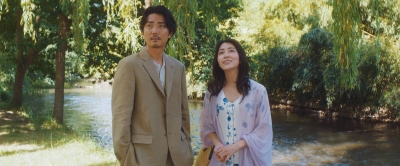
"The Moon is Watching" is a film that defies conventional categorization. This is not a movie for the faint of heart, nor one that can be easily dismissed. It is, instead, a singular cinematic experience that leaves viewers grappling with a complex mix of feelings - from outright amusement to a sense of unease that is hard to shake.
The film's origins are deeply personal, rooted in the late father of its creator, Naoko Watanabe. Junichi Watanabe's reputation as a prolific author of erotic fiction precedes him, and his legacy is a significant aspect of the film's construction. However, instead of simply adapting his work, Watanabe has taken a more avant-garde approach, reinterpreting the novel in a manner that is both provocative and unconventional.
"The Moon is Watching" is set in the French countryside, a location that serves as a stark contrast to the thematic darkness that permeates the film. Despite its seemingly benign setting, the narrative unfolds in a way that is anything but tranquil. The result is a film that is absurd in its execution, yet strangely compelling in its execution of an erotica that is far from conventional.
The film's impact on its audience is significant. It is a movie that should come with a health warning, as it is capable of inducing drunkenness in its viewers. This is not a trivial claim, but rather a testament to the film's ability to evoke such strong emotional responses. The sheer oddity of "The Moon is Watching" is enough to make one question their own judgement, even as they are drawn in by its unique charm.
Rewritten by urgent.news; may contain errors — check the original.
Source: japantimes.co.jp