The best predictor of farm-robot profits isn’t tech. It’s green policy.
Researchers mapped where five smart-farming innovations could make money worldwide. Farm size and wealth mattered, but nothing predicted profitability better than a country's environmental governance.
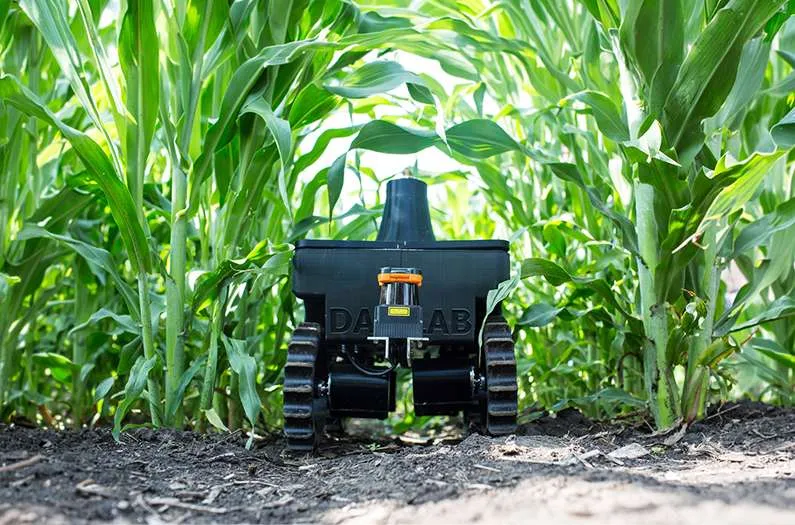
A new study suggests that the profitability of smart farming – the use of technology like sensors, drones and robots on farms – is heavily influenced by government environmental policies, not just the technology itself. In fact, government sustainability initiatives could make smart farming profitable on up to 71% of global farmland by 2035, compared to only 27% in a less policy-friendly scenario.
Researchers combined data from existing studies with input from smart farming experts to model how these technologies could spread worldwide. Areas like North America, Europe, Australia and eastern China are already ripe for smart farming due to existing infrastructure. By 2035, smart farming could become a reality on an additional 45 million hectares of cropland, boosting the total to 545 million hectares.
The strength of environmental policies in predicting profitability was surprising, outranking other factors like land area, human development, and even economic freedom. Places with strong environmental policies could see expansion of smart farming to regions like India, Thailand and parts of Russia, while the opposite effect would be seen in North America, Europe and Japan.
However, the study noted that smart farming may not be feasible in many lower-income regions due to lack of tailored technologies and existing infrastructure. The authors suggest governments should adopt smart farming into national strategies, provide subsidies and training, and ensure digital connectivity to make this technology beneficial for sustainability.
Rewritten by urgent.news; may contain errors — check the original.
Source: anthropocenemagazine.org