Tasmania's cave explorers still finding new worlds underground
A community of dedicated explorers is still finding new passages, vast chambers and caves that have remained hidden for millennia.
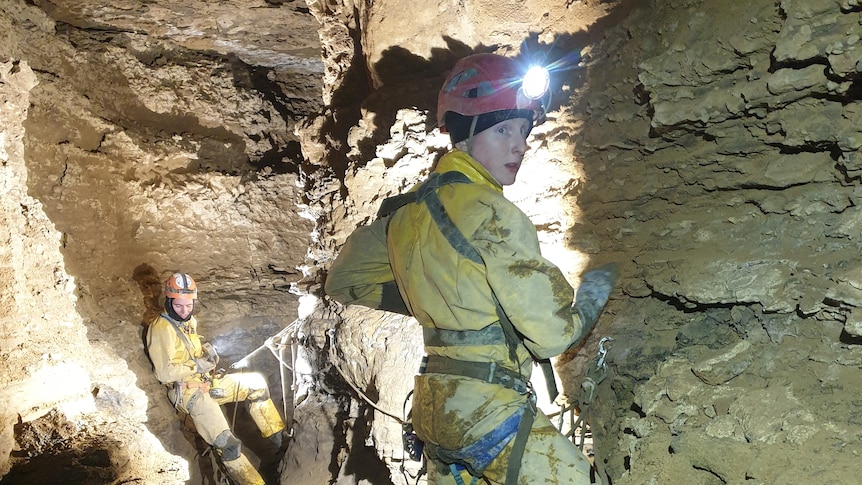
Tasmania is home to extensive networks of underground caves, including its deepest. The Southern Tasmanian Caverneers, Australia's oldest caving club, has been exploring this hidden world for 80 years. Their vice-president, Janine McKinnon, who has been caving for over 50 years and continues to venture underground, has witnessed the evolution of caving through technological advancements and cultural shifts.
McKinnon, who grew up in Melbourne, became interested in caving while living in Canberra in the 1970s and later moved to Tasmania in the 1980s, drawn by the state's renowned caves. The club, founded in 1946, merged with two other caving clubs in 1996 to form the Southern Tasmanian Caverneers.
Caving gear and techniques have evolved significantly since the early 20th century. Early cavers used heavy, rudimentary equipment, navigating vertical drops with flexible metal wire ladders and relying on hemp ropes for safety. Modern techniques, such as single rope technique, allow expeditions to be accomplished by fewer people.
Advances in radio technology, LED head-torches, and electronic survey devices have improved communication, visibility, and mapping capabilities. Rescue training has also become more sophisticated, using modern rope systems to prepare teams for emergencies. Clothing advancements, including semi-waterproof suits and lighter thermal gear, have made caving more comfortable.
McKinnon's caving journey has provided her with personal growth, helping her understand her fears and limitations. While caving initially faced a male-dominated culture, the club has become more supportive and inclusive over the past 15 years. Ciara Smart, the club's secretary, attributes this change to the supportive nature of the club and the increasing number of female leaders.
Despite the challenges, new discoveries continue to be made. The known network of caves in Tasmania, primarily located at Mole Creek, Junee Florentine karst region, and Ida Bay, is still growing. The Delta Variant, the deepest known cave in Australia, was recently discovered in the Niggly Cave system, and the 800th cave entrance in the Junee Florentine karst region was recently found.
Young cavers like 14-year-old Ben Jackson are inspired by the experience and camaraderie of caving, often taking on challenging roles such as "forward probe" to navigate narrow passages.
Rewritten by urgent.news; may contain errors — check the original.
Source: abc.net.au