Take AI to the ‘kampung’ and SMEs, ex-central banker Andrew Sheng tells Malaysia
KUALA LUMPUR, Nov 27 — Malaysia must take artificial intelligence (AI) to the kampung and to small and medium enterprise...
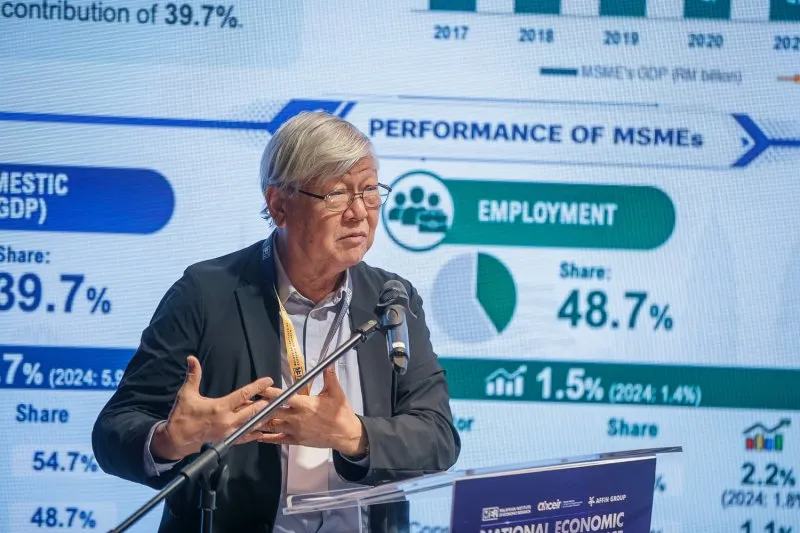
Former central banker Tan Sri Andrew Sheng urged Malaysia to bring artificial intelligence (AI) to rural areas and small and medium enterprises (SMEs) to foster inclusive growth. Currently working as a distinguished fellow at the Asia Global Institute, University of Hong Kong, Sheng criticized Malaysia's current approach of talking about AI without taking meaningful steps.
He argued that Malaysia needed to move beyond top-down development and provide ordinary people with knowledge, financing, and digital infrastructure to participate in the economy.
Sheng noted that AI could overcome language and expertise barriers, but access alone would prove insufficient without education to assist people in utilizing it effectively. During a visit to Nabawan, Sabah, he observed communities without internet access, emphasizing the need for digital connectivity. He highlighted how AI could assist farmers in using government data to predict crop demand, avoid surplus that depresses prices, and manage warehouses and inventory without relying on officials or specialists.
For SMEs, Sheng pointed out that many were still grappling with basic digitalization, with much of their data still on paper. Preliminary research showed that these businesses were generating sales from less profitable products, but their owners lacked digital records and time to recognize this trend. This highlighted the necessity of simplifying regulations and aiding SMEs in their digital transformation efforts.
Sheng questioned whether Malaysia's 17 development finance institutions were doing enough, asserting that distinct targets and application procedures often deterred entrepreneurs from receiving assistance. He proposed more equity-based, risk-sharing Islamic finance alongside zakat (Islamic mandatory annual charity) and waqf (Islamic voluntary endowment) to overcome the "valley of death" many young businesses face due to negative cash flow and lack of collateral for bank loans.
He stressed that equipping young Malaysians with AI skills was crucial to addressing graduate unemployment and skill shortages in sectors like semiconductors. Sheng observed that Penang semiconductor firms were unable to wait for universities to produce skilled graduates for three to five years and were instead retraining their staff. He warned that Malaysia risked losing talent to Singapore, where technology professionals earn higher salaries.
Additionally, Sheng addressed succession challenges, noting that older business owners often resisted change, making it imperative to cultivate young entrepreneurs willing to take risks. He referenced Department of Statistics Malaysia data, which revealed that micro, small, and medium enterprises contributed to 40% of the gross domestic product, half of employment, and 15% of exports.
Sheng argued for replacing fragmented, top-down programs with an approach integrating education, financing, technology, and infrastructure to build resilient communities, young entrepreneurs, and next-generation companies instead of relying on external institutions. "The glass ceiling is not a natural limit. It is the legacy of an obsolete model," he concluded, urging Malaysia to seize the transformative potential of AI.
Rewritten by urgent.news; may contain errors — check the original.
Source: malaymail.com