Syrian master glassblower laments demise of craft in its birthplace
As a nine-year-old boy in the early 1960s, Ahmad Al Hallak accompanied his father through alleyways of Old Damascus, as he walked to jobs at glass factories tucked away in the ancient quarter of Syria's capital. His father, a glassblower who later opened his own workshop just outside Bab Sharqi, one of the old city 's seven gates, wanted his son to learn the craft. Mass-produced glassware was…
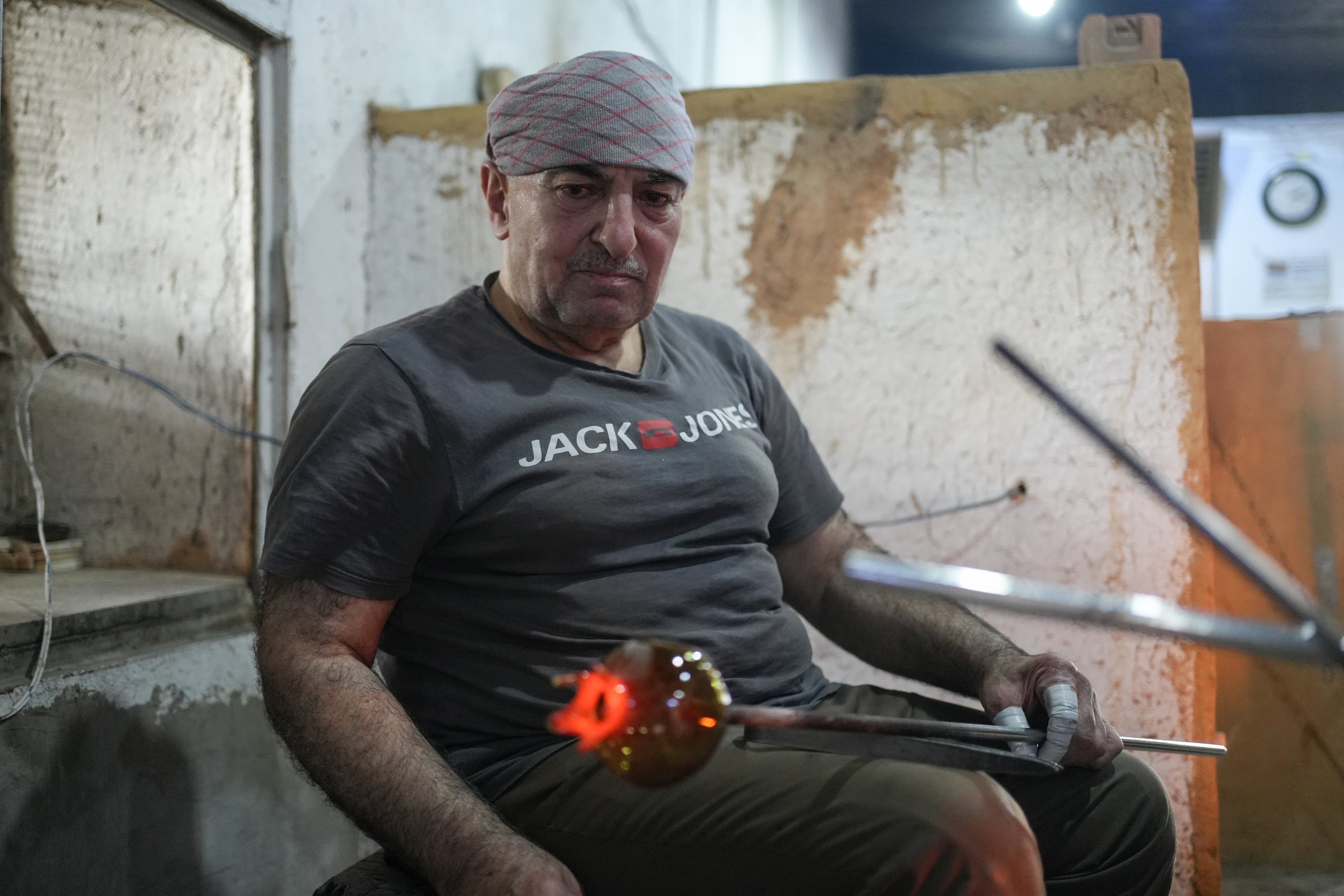
Ahmad Al Hallak, a 70-year-old Syrian master glassblower, laments the decline of this ancient craft in his hometown of Damascus. Growing up in a neighborhood known for its trade and craft families, Al Hallak learned the art of glassblowing from his father, a glassblower who later opened a workshop outside Bab Sharqi, one of Damascus' seven gates. Although there were over a dozen glass workshops in the Shaghour neighborhood where Al Hallak grew up, he may be the last keeper of this tradition.
With the onset of the Syrian civil war in 2011, Al Hallak's workshop became the last one remaining in Damascus. Since then, most of the 15 craftsmen who worked for him have either passed away, emigrated, or retired. Some former employees occasionally return to blow glass for nostalgia, but the knowledge of glassblowing is at risk of disappearing.
Unesco has placed traditional glassblowing in Damascus on its "List of Intangible Heritage in Need of Urgent Safeguarding" in 2023. This craft, which dates back 2,000 years to Syro-Phoenician areas of the Levant, flourished under Syria's Ayyubid and Mameluke rulers, producing renowned cobalt-blue glassware. Al Hallak's work, sold mainly to France, is becoming scarcer due to reduced demand and the global economic crisis.
Al Hallak now works with a smaller, brick-made furnace due to high fuel prices and low demand. His pieces are priced at $3, while the average monthly salary in Syria is $200. The raw materials are sorted glass pieces of various colors. Al Hallak starts with clear glass, followed by smoke grey, honey, green, light blue, and cobalt blue. Once the oven's lifespan ends, Al Hallak builds a new one.
Al Hallak's son, Mahmoud, acknowledges his father's skill but admits he will never match it. Despite his attempts, Mahmoud suffered severe burns while learning the craft. Al Hallak hopes his workshop's presence and recognition, particularly among Syria's diaspora and tourists, will help preserve this cherished tradition.
Rewritten by urgent.news; may contain errors — check the original.
Source: thenationalnews.com
This story
This is one outlet's version. Read the fullest account.
- Syrian master glassblower laments demise of craft in its birthplace thenationalnews.com