Rutschige Straßen: Winterglätte: Mit diesen Tipps bleibt das Auto in der Spur
Jede Jahreszeit hat für Autofahrer so ihre Tücken - der Winter hat es besonders in sich. Von vermeintlich trockenem Asphalt über Reifglätte bis zu Blitzeis und Schnee. Wie Sie trotzdem sicher fahren.
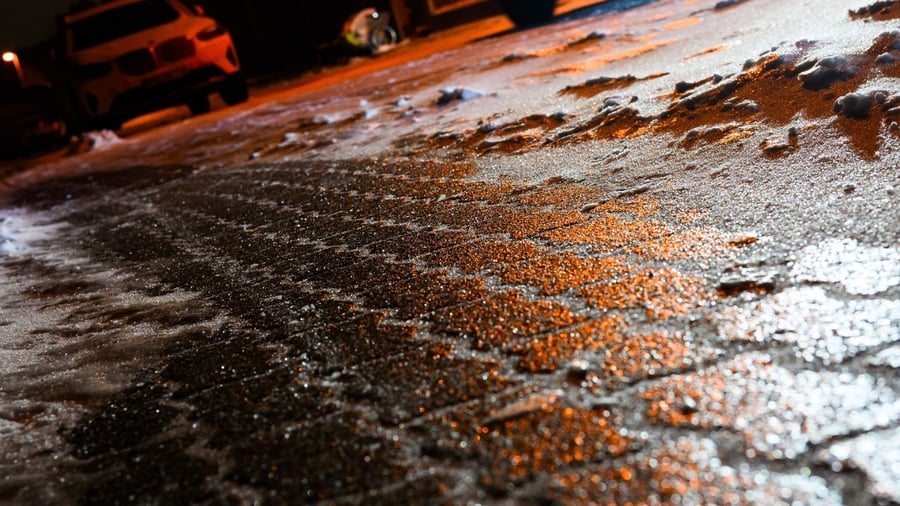
Winter has arrived, bringing with it cold, snow, slush, tire glaze, or even treacherous black ice. For drivers, this means being even more cautious and allowing more time for their journeys. Simply wiping away a bit of frost is not enough; it's essential to maintain a clear head while navigating winter roads, advises the ADAC (German Automobile Club).
It's crucial now to use only winter or year-round tires (bearing the "Alpine symbol"). Driving on these roads could result not only in fines and demerits, as well as issues with insurance, but most importantly, endangering oneself and others. The key rules are to maintain greater distances and take one's foot off the accelerator to avoid skidding altogether.
Especially when experiencing fluctuating temperatures near the freezing point, road surfaces continuously change. At times, a brief braking test is recommended, but only on open roads if there's no risk to oneself or others. This helps drivers get a feel for the road situation and the corresponding braking distance, which can be up to five times longer than on dry asphalt.
Attempting to regain control of the car is necessary, regardless of how many precautions are taken. If on a straight road, "downshift, brake gently, and steer smoothly in the desired direction," advises the ADAC. Electronic Stability Program (ESP) helps stabilize the vehicle. If the car no longer responds, a full brake application is the only recourse.
And since most modern cars have ABS, the wheels don't lock, keeping the vehicle controllable. When sliding in a curve, the ADAC warns against reacting frantically, but instead, "apply the brakes firmly and steadily, remaining as relaxed as possible at the wheel and gently correcting as needed. Often, just a few km/h less is enough to regain control."
A smoother approach to driving is recommended when roads are smooth, and tires adhere better when driving high gears at a lower engine speed. If the car has a manual transmission, the ADAC suggests attempting to start in second gear during extreme glaze. For automatic cars, the ADAC advises against driving in sport mode during winter conditions, as it tends to upshift more often - not ideal on smooth surfaces.
Whether manual or automatic, giving only gentle gas when starting on a smooth surface is crucial. Don't forget: Modern cars usually have traction control via their electronics, but the limits of physics cannot be overcome. Forewarnings of black ice should mean no driving at all. Black ice, often appearing after an ice rain, forms a thin, continuous layer of ice that tires cannot grip.
The ADAC warns that it's nearly invisible and can suddenly appear, especially at temperatures between plus 1 and minus 3 degrees Celsius. Warning signs include sudden loss of spray from preceding cars, freezing windshield wipers, unusually light steering, and a dashboard temperature reading close to the freezing point. Sudden appearance of black ice often occurs on bridges or shaded areas like forests.
If caught off-guard by an ice rain, the best course of action is to pull over and wait for the storm to pass.
Rewritten by urgent.news; may contain errors — check the original.
Source: handelsblatt.com