Reformpläne: Schweitzer kündigt eine der „größten Rentenreformen“ an
Der Arbeitsminister legt vor: Bei der vorzeitigen Rente nach 45 Jahren soll es „harte Korrekturen“ geben, bei einer anderen Frührente höhere Abschläge. Kann das den Rentenstreit lösen?
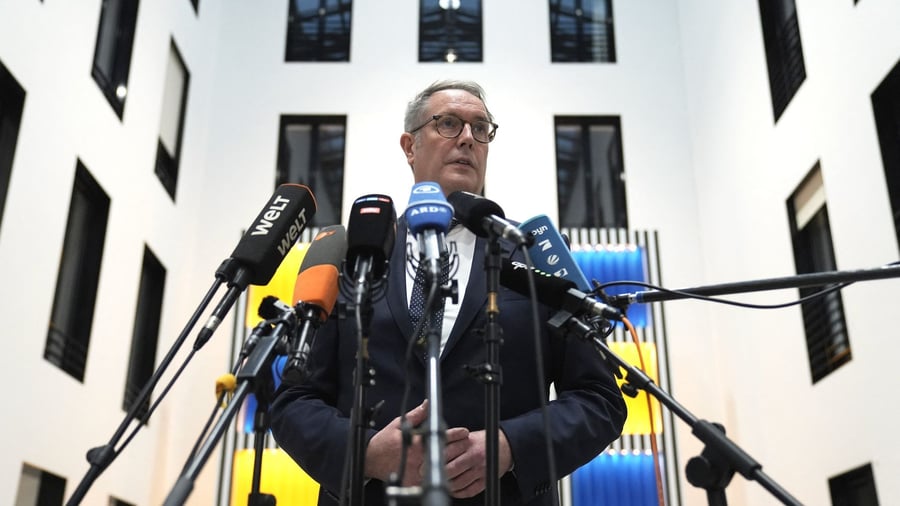
Bundesarbeitsminister Alexander Schweitzer (SPD) has unveiled an extensive pension scheme, aiming to resolve the longstanding dispute within the coalition. "We will witness one of the largest pension reforms in the recent history of our country," Schweitzer declared in Berlin. In the dispute over the age-free early pension, Schweitzer proposes reductions in the 45 required insurance years and trust rules.
The planned capital pension is to be enshrined in law as the central point of the overall package. The 150-page draft, presented to the German Press Agency, cites the proposals of the Pension Commission from June: "The overwhelming majority of the recommendations in it will be implemented by this draft." Schweitzer expressed optimism that his proposal could bring the black-white pension dispute to a resolution.
"My proposal may be suitable for bringing us together here." The proposals concerned everyone "who is thinking about where my personal perspective lies in old age." Before Schweitzer gave a statement on his concept at his ministry, Chief of the Chancellor's Office Nina Warken (CDU) announced that a draft law was coordinated in the early coordination within the federal government.
"There is no agreement on this," Warken told the German Press Agency. Union fraction leader Thorsten Frei (CDU) expressed irritation in the newspapers of Neue Pressegesellschaft over the handling. "We should adhere to the proven procedure and keep the confidential negotiation rounds confidential." The common goal of making pensions generationally fair could not be reached, "by clinging to maximal demands that would financially burden us in the future."
Schweitzer's plan for "pension at 63" Tightens the waiting time rules for the so-called "pension at 63". Times of drawing unemployment benefits, sickness benefits, or employment times with mini-jobs are no longer to be taken into account for the required 45 years. "It's a concentration," said Schweitzer. In government circles, "hard corrections" are being discussed.
Around 27 percent of the entitled could then no longer use the pension type as today. In the middle of the week, several CDU politicians had presented a proposal that would have led to the abolition of the "pension at 63" for 90 percent of the entitled according to SPD. All pension types are to be subject to a trust protection regulation.
Insured born before January 1, 1972 and who have already concluded a retirement or pre-retirement agreement before the expected cabinet decision, can rely on the current age limits. A 0.4-percentage-point reduction in the pension for long-term insured is planned. The reduction for this pension type will increase by 0.1 percentage points from July 1, 2028.
Currently, 0.3 percent of the pension is deducted for each month one retires early - in the future, this deduction will be 0.4 percent for all born in 1965 or later. The retirement age is to be raised for all pension types. The change in life expectancy is to be transferred in a ratio of two to one. According to current assumptions about the average increase in life expectancy, the retirement age could rise to 67.5 years by 2041.
The core of the reform is the capital pension, which will be paid from 2032 onwards. This is the key point of the proposals, as it is intended to stabilize pensions over the long term despite the aging society. With the reform, the pension coverage level in the 40s is to rise to over 50 percent. For this, all insured will have to pay an additional contribution, which will rise from 0.5 percent of gross income from 2028 to 2 percent and then remain constant - financed by employers and insured.
Minijobs will be treated equally from 2028, with the possibility of opting out of the insurance obligation for pension benefits being removed, except for students and employees in private households. Self-employed will also be included in the statutory pension from 2030 - for anyone who becomes self-employed from 2027 onwards. Exceptions will be artists, entrepreneurs in agriculture, and already insured professionals.
Other planned regulations include a significant de-bureaucratization of the pension insurance, facilitation of reintegration at work disability, more prevention and rehabilitation. The government wants to push the digital pension overview and create a comprehensive benefits level.
Rewritten by urgent.news; may contain errors — check the original.
Source: handelsblatt.com