Massenware zum Jahreswechsel: Fakten zum Weihnachtsstern - Hätten Sie's gewusst?
Rund 18 Millionen Weihnachtssterne werden in Deutschland jedes Jahr verkauft - die wenigsten überleben den Winter. Sonderlich nachhaltig ist die Pflanze auch an anderer Stelle nicht.
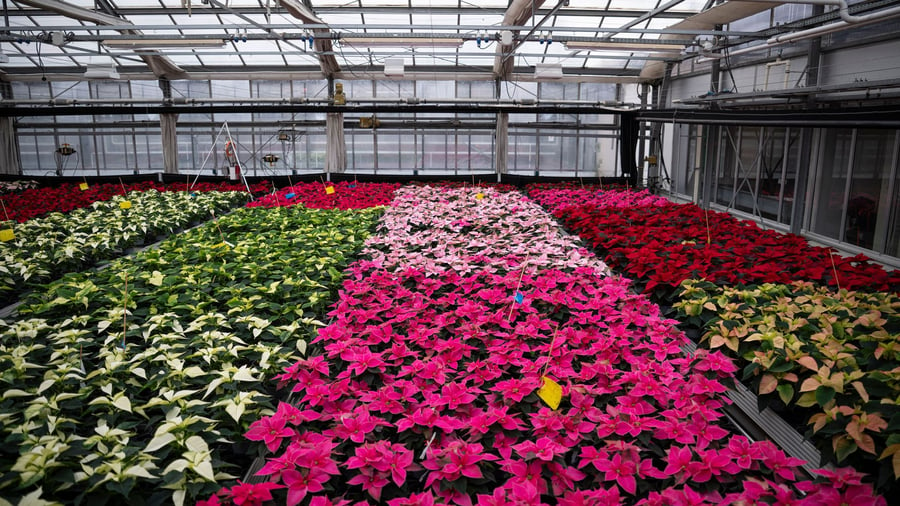
During the year-end rush, the Christmas star (Euphorbia pulcherrima) seems to be everywhere - in supermarkets, garden centers and greenhouses. This classic indoor plant is produced annually in around 18 million units, making up about one in five of all indoor plants in Germany. The Christmas star, originally from Mexico, likely grew wild along the Pacific side of Mexico, from the Sinaloa state down to Guatemala.
The wild form is slimmer and less bushy, and can grow several meters tall. The bright red color on the Christmas star isn't a flower, but colorful bracts that attract pollinators. The actual flowers are the small yellow-green structures in the center. Christmas star plants are primarily used by garden centers in the country, grown in heated and sometimes illuminated greenhouses, which require a lot of energy.
They are often grown in peat-based soil, which releases climate-damaging CO2 when extracted from peat bogs. The unrooted cuttings used to propagate the plants are mostly produced in Africa and flown in, often several thousand at a time in a shoebox. They are then rooted and topped in Germany. However, the Christmas star plant typically has a short lifespan, rarely lasting beyond the festive season or winter months.
It is considered a disposable item, often not surviving the festive period or the winter months. The plant is sensitive to draught, humidity and needs a bright location without direct sunlight. If presented at the supermarket doors, many Christmas stars would be dead before they even reach the customer. While Christmas stars can technically be kept for many years, in Germany they are often discarded after the festive season.
The plants are heavily treated with pesticides in Africa, which can be harmful to beneficial insects, contaminate water, soil and air, and pose health risks to workers who often lack information about the dangers and limited access to protective gear. Another group of substances used is growth regulators, which slow down stem elongation without killing the plant.
Chlormequat, a common growth regulator used in Germany, can be harmful to health if misused or used in high doses, according to the Federal Institute for Risk Assessment (BfR).
Rewritten by urgent.news; may contain errors — check the original.
Source: handelsblatt.com