How digital entertainment is changing the way people spend their leisure time
The way people spend their free time has undergone a fundamental transformation over the past decade. Where leisure once meant gathering around a family television set, attending live community events, or reading physical books, daily entertainment is now overwhelmingly digital, portable, and personalised. Driven by the rapid expansion of smartphone access, affordable high-speed mobile data, and…
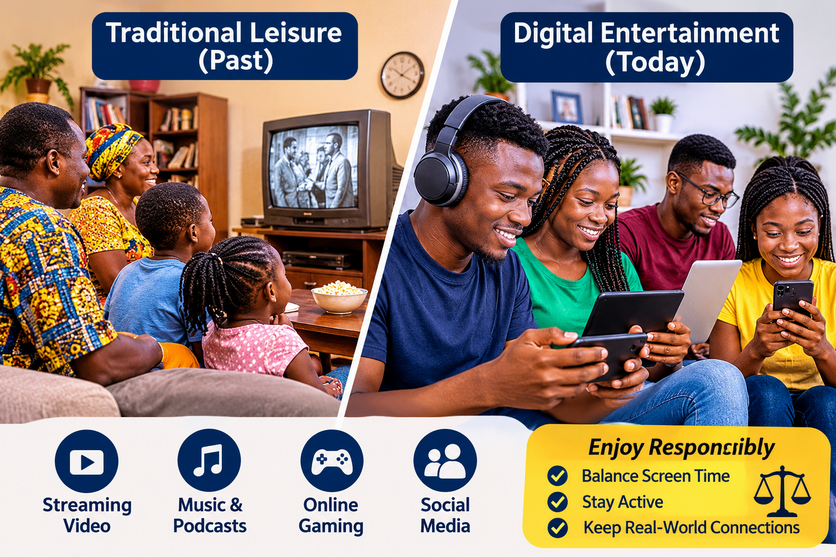
Digital entertainment has fundamentally altered how people allocate their leisure time. In the past, community gatherings, daytime broadcasts, and printed books constituted the bulk of free-time activities. Today, digital platforms are the dominant form of recreation, personalized to individual preferences and accessible on smartphones.
This shift has occurred due to the proliferation of affordable mobile access and high-speed data networks, particularly in developing regions like Ghana. The rise of on-demand video streaming, audio platforms, and social media has supplanted the rigid schedules and location-bound nature of traditional leisure. Smartphones have become the primary conduit for digital entertainment, delivering movies, music, games, and news on a single, portable screen.
This transformation has engendered a world where media is customized to each user's tastes, available anytime and anywhere, and often consumed in isolation. While this digital shift has expanded access to entertainment, it also presents challenges. The constant stimulation and competitive algorithms driving user engagement can lead to excessive screen time, potentially resulting in negative health outcomes like sedentary behavior, sleep disruption, and reduced social interaction.
As such, striking a balance between digital and offline activities is essential for maintaining overall well-being in the age of digital entertainment.
Rewritten by urgent.news; may contain errors — check the original.
Source: myjoyonline.com