Drama ums EU-Geld: Kaum Fortschritte beim EU-Haushalt: Gipfel vorzeitig beendet
Verhärtete Fronten nach Verhandlungen bis Mitternacht: Ein Ende des Streits um den EU-Haushalt ist weit und breit nicht in Sicht. Nun kommt es kurz vor Weihnachten zum Showdown.
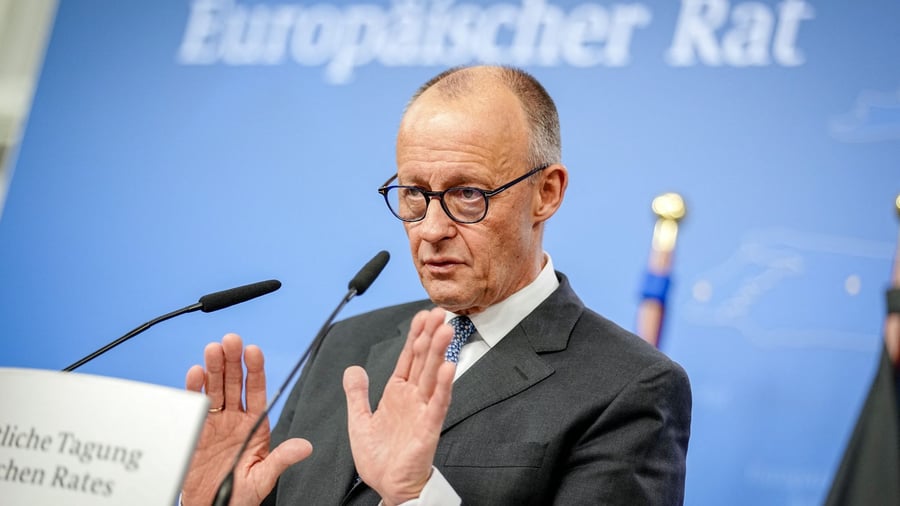
After hours of fruitless budget negotiations, EU leaders prematurely concluded their special summit on financial planning until 2034. The ideas on the size and distribution of funding were still "widely divergent," said German Chancellor Friedrich Merz late in the evening. They had therefore agreed that the meeting would not continue as originally planned on Friday morning.
Merz can now vote on the federal budget. The summit was scheduled for two days by President António Costa to make some progress in the negotiations on the next long-term budget. Merz and the other EU leaders had prepared for the possibility that he might not attend the vote on the 2027 federal budget in the Bundestag. Now, however, he unexpectedly may still be there.
A breakthrough was not expected before the summit, all had prepared themselves for a showdown at a later meeting in December. Both French President Emmanuel Macron and Merz emphasized, however, that an agreement must ultimately come about. If this summit also ends without results, France has threatened to continue negotiations after the French presidential election in April, which could with current polls see nationalist Marine Le Pen win.
That would again make an agreement more difficult. Austrian Chancellor Christian Stocker made it clear that he has no hurry. "I have no urgency here," he said. "I won't be rushed by deadlines or upcoming elections in other countries. There's always some European country right now going to vote while we have to decide on a budget for seven years."
Similarly, Austrian Chancellor Christian Stocker noted that the president had presented a proposal that failed today. "The aim is still to reach an agreement in December," he said. "But I also say openly, I have no urgency here. If the conditions don't match, there can be no agreement." Hungarian Prime Minister Péter Magyar made light of the fruitless negotiations on X. "The EU summit has already lasted twelve hours, with a few short breaks.
So far, there have been no results. At least I learned from the Italian Prime Minister that I need to improve my volleyball skills." Magyar had played volleyball with Ukrainian President Volodymyr Selenskyj during a visit to Ukraine, which quickly went viral - apparently even to Rome. Will the "Virtuous Seven" become the "Glorious Seven"?
There had already been indications from several EU leaders at the outset of the special summit that they would not move away from their positions. Asked whether there had been any progress in the special summit, Merz said that there was movement toward reducing the so-called negotiation box further. This refers to the size of the total budget, which Costa had reduced from 204 to 1,781 billion euros compared to the Commission's proposal before the summit.
"That will not remain at 204," Merz said. He demands a reduction of several hundred billion euros and has joined forces with like-minded colleagues from net contributor states such as the Netherlands, Austria, Sweden, Finland, Denmark, and Belgium to enforce it. They call themselves "The sensible Seven" - "The sensible Seven". They clearly want to convey that a too large EU budget would be unreasonable in their view.
Whether the "Virtuous Seven" will become the "Glorious Seven" as in the eponymous Western remains to be seen in December. Meloni is "lightyears" away from agreement Many EU countries have made it clear at the outset of the special summit that they would not budge from their positions. Especially in southern and eastern Europe, several countries are net recipients of EU funds and defend high EU spending for underdeveloped regions and agriculture.
Furthermore, criticism comes from countries such as France and Italy, which are also net contributors, but want to avoid losses for their farmers and regions. "We are not ready to sign a budget in which we pay more to receive less," Italian leader Meloni made clear. It is still "lightyears" away from agreement. EU President António Costa tried in a so-called "Confessional Chamber" method to narrow the differences between the very different camps.
However, there was initially no discernible movement in the entrenched deadlock situation, despite confidential talks with individual interest groups to gauge compromise readiness.
Rewritten by urgent.news; may contain errors — check the original.
Source: handelsblatt.com