Arbeitsmarkt: Arbeitsmarkt schwächelt - tun die Arbeitsagenturen zu wenig?
Die Zahl der Arbeitslosen in Deutschland ist im November saisonal bedingt leicht gesunken. Zeichen für eine Wende am Arbeitsmarkt ist das aber nicht. Auch die Arbeitsvermittler stehen in der Kritik
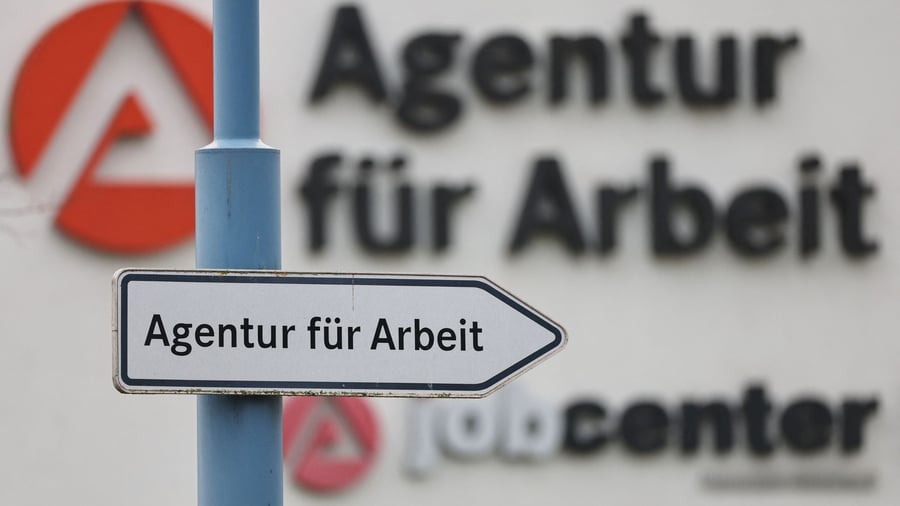
Germany has been in a post-recession economic slump for five years, with the job market weakening steadily and growing criticism of the Federal Employment Agency as the central hub for job placement. In November, the number of unemployed people only fell by 19,000 compared to the previous month, reaching 2,936 million. The unemployment rate increased by 0.1 percent to 6.2 percent, up from 6.1 percent the previous year.
However, the number of unemployed people rose by 51,000 compared to November 2025, according to the Federal Employment Agency's monthly statistics. Carsten Maschmeyer, a businessman, revealed that the job placement rate of the employment agencies was only 4.5 percent, while 87,000 people were placed in jobs last year. The German Employers' Association (BDA) regularly calls for the Federal Employment Agency to focus on its core task, which is to mediate job placements for the unemployed.
The employment agencies insist they are working efficiently, stating that the mentioned figure only covers a small part of the actual placement work. Digital offerings, which are standard in today's internet age, are not even captured in these statistics. Additionally, improvements in qualifications are not visible in the statistics.
Terzenbach emphasizes that there are significantly more unemployment applications for unskilled labor than for skilled workers or experts. The shortage of skilled workers has become a brake on economic growth. Experts from KfW Research confirm that the shrinking pool of skilled workers has become a brake on the German economy. The aging of baby boomers and the insufficient number of new generations are also contributing factors, as well as the negative migration balance with the European Union.
The German Trade Union Confederation (DGB) warns that the Federal Employment Agency needs support from the federal government due to its heavy financial losses and the post-crisis recession. The DGB member Anja Piel states that the Federal Employment Agency needs to become financially solvent, either through subsidies or loan guarantees.
The next year's budget deficit for the Federal Employment Agency is estimated at 8.2 billion euros, funded only by a loan from the federal government so far. Piel emphasizes that employees must have confidence that their unemployment insurance will support them. Terzenbach still attributes the primary reasons for the weak job market to short-term economic factors.
"Even though there is a mild economic recovery, it does not lead to the activation of the job market in November," he said. Apart from seasonal effects, demand from the economy for labor remains weak. In November, 646,000 job vacancies were reported by the employment agencies, 23,000 more than a year earlier. The number of unemployed people receiving basic income was 1,068,000, 84,000 more than a year earlier.
The number of people eligible for basic income in November was 3,646,000, 162,000 fewer than a year earlier. 6.7 percent of all people of working age in Germany were in need of assistance. However, not all eligible people are unemployed - many supplement their income with benefits to reach the minimum subsistence level. Jobseekers' allowance in Germany remains higher than in previous years.
As of September, 113,000 people received jobseekers' benefits, 68,000 fewer than a year earlier. Schwerly disabled people are particularly affected by the economic situation. Terzenbach advocates for various instruments such as employment assistance programs to help severely disabled people enter the workforce. Currently, out of the 8 million disabled people in Germany, 192,000 are unemployed.
Unemployment among this group remains higher than the overall unemployment rate, partly due to employers' reluctance to hire them. "We want to create meeting places," Terzenbach said. Many tools are not yet known enough to create a positive impact on society and the economy.
Rewritten by urgent.news; may contain errors — check the original.
Source: handelsblatt.com