Amenaza el PAN con retirarse de las elecciones
La advertencia del coordinador de los senadores panistas, Ricardo Anaya, sobre la eventual no participación del PAN en las elecciones intermedias de 2027, si el Instituto Nacional Electoral no corrige los criterios de asignación de diputaciones plurinominales que aplicó en 2024.
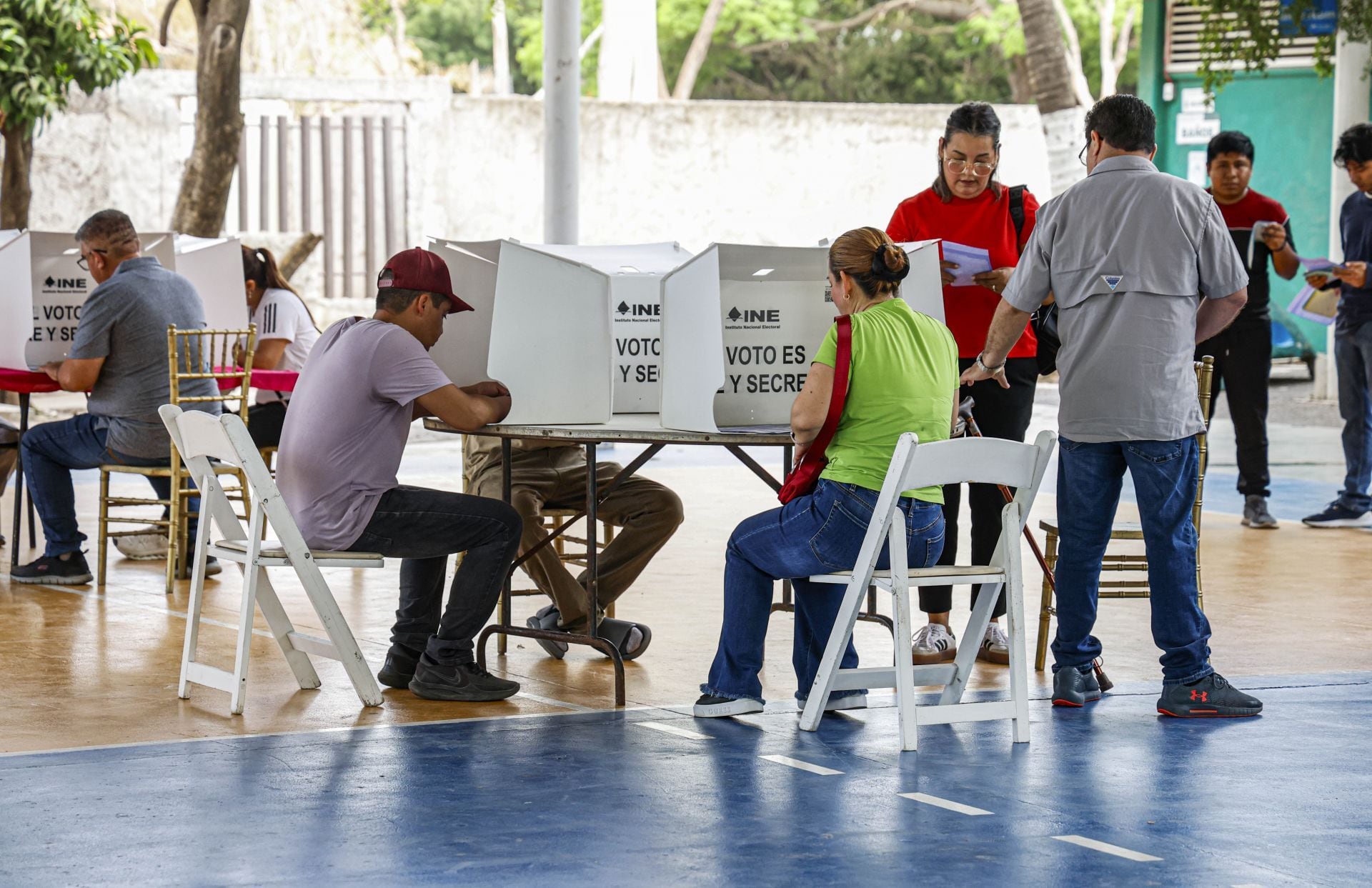
The coordinator of PAN senators, Ricardo Anaya, has warned that the party may not participate in Mexico's 2027 mid-term elections if the National Electoral Institute (INE) does not correct its method for assigning plurinominal deputy seats, as applied in 2024. This issue highlights a fundamental problem in Mexican democracy: the distortion of popular will in legislative integration.
The controversy extends beyond Acción Nacional and other opposition parties, as it concerns the alignment between voter preferences and the political representation they receive. In the 2024 elections, Morena, the Green Party, and the Workers' Party received around 55% of the votes for the Chamber of Deputies and ended up with nearly 73% of the seats, a difference of about 18 percentage points.
This allowed them to achieve a qualified majority, which they did not win directly in the polls. The INE's interpretation, supported by the Judicial Electoral Tribunal and the Supreme Court judges Mónica Soto and the two Felipes, was to apply the constitutional limit of 8 percentage points of overrepresentation to each political party individually, rather than considering the parties together as part of a coalition.
The legal debate centers on whether Article 54 of the Constitution sets this limit per political party or whether the opposition's concern is valid when various political organizations compete as a coalition and later act as a legislative bloc. If this criterion remains in place for 2027, there is a risk that a coalition could gain a qualified majority in San Lázaro without the support of two-thirds of the voters.
This is a significant issue given the implications for the balance of powers within the Union. Anaya's warning takes on greater relevance in light of the numerous constitutional changes promoted by 4T, particularly those related to the Judicial Power, the disappearance of autonomous constitutional bodies, and the redistribution of attributions among the institutions of the State.
From the critical perspective of the opposition, there is a risk that the Magna Carta could stop functioning as a tool to restrain public power and become an instrument at the service of the political project of those who happen to be governing the country. However, the legitimacy of a government does not cancel the need for institutional checks and balances.
Constitutional democracy is not exhausted by the regular holding of elections; it requires effective limits on the exercise of power, judicial independence, political plurality, and guarantees for those who do not belong to the governing majority. The PAN's potential withdrawal from the contest also raises a political contradiction, as their absence would reduce electoral alternatives for millions of citizens and potentially facilitate what they aim to prevent.
Anaya's threat should be understood, for now, as a measure of pressure to place the issue of overrepresentation on the electoral agenda. The INE has the responsibility to explain with absolute transparency the criteria that will govern the assignment of deputy seats in 2027, although a fundamental solution might also require legislative or constitutional changes to eliminate ambiguities and prevent the coalition system from producing distortions in popular representation.
The debate should not be reduced to a confrontation between the left and the right. Electoral rules should offer the same guarantees regardless of who governs, because a provision that benefits Morena today could favor any other political force tomorrow. The challenge of the 2027 mid-term elections is to preserve political competition and ensure that the plurality expressed in the polls has an effective reflection in the Congress of the Union.
For one thing is to win an election, and quite another to have the Constitution as the private property of the ruling party. The Magna Carta belongs to all Mexicans, including those who did not vote for those who hold power.
Rewritten by urgent.news; may contain errors — check the original.
Source: elfinanciero.com.mx