A tiny deep-sea fish eaten 42 years ago has now been named a new species
A new-to-science species of deep-sea fish has been described from a single specimen found in the stomach contents of a predatory fish that ate it in 1984. The specimen sat in a Tokyo museum collection for 42 years until it was examined by museum staff and volunteers. The newly described deepwater cardinalfish (Epigonus masamunei) has […]
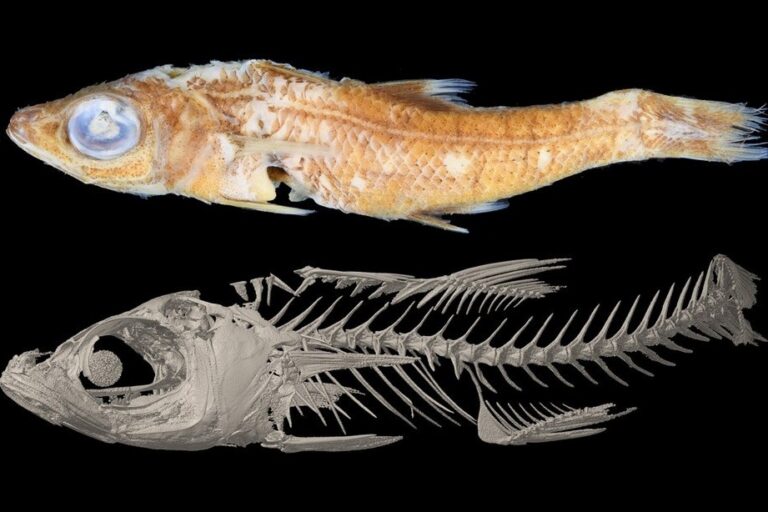
A new species of deep-sea fish has been discovered, identified from a single specimen found in the stomach of a predator caught in 1984. The specimen, a deepwater cardinalfish (Epigonus masamunei), remained in a Tokyo museum collection for 42 years before being examined by museum staff and volunteers. The new species is characterized by its large eyes, a trait common in fish that inhabit the dark depths of the ocean, and it measures approximately 8 centimeters (3 inches) in length from snout to tail base.
The species' name pays homage to Masamune, a renowned medieval Japanese swordsmith, due to the resemblance of the fish's curved spine to the swords he crafted. Study author and fish taxonomist Makoto Okamoto expressed his excitement upon discovering the new species, describing the moment as "extremely thrilling". Unfortunately, no one has ever observed the species alive, and thus the coloration of the fish remains unknown.
The predator responsible for eating the cardinalfish was a beardfish (Polymixia japonica), another deep-sea fish that typically reaches lengths of about 20 cm (8 inches). In July 1984, a research vessel off Kita-iwo Island in Japan's Ogasawara Islands, in the western Pacific Ocean, caught the beardfish at an estimated depth of 370-450 meters (1,210-1,480 feet).
The specimen's damaged belly, skin, and fin spines suggest that the beardfish may have regurgitated the deeper-sea fish. The discovery of new species, especially in such a remote and little-explored environment, is a rare occurrence, highlighting the vast potential for discovery in our planet's oceans.
Rewritten by urgent.news; may contain errors — check the original.
Source: news.mongabay.com