Tuobodom tomato farmers cry for fair market as harvest season bites again
By Samuel Ayammah It is that time again in Tuobodom, a farming community in the Techiman North District of the Bono East Region, when the reward for months of hard work turns into worry. After defying erratic rainfall, the high cost of inputs, pests and diseases, and the rising cost of labour to cultivate tomatoes, […]
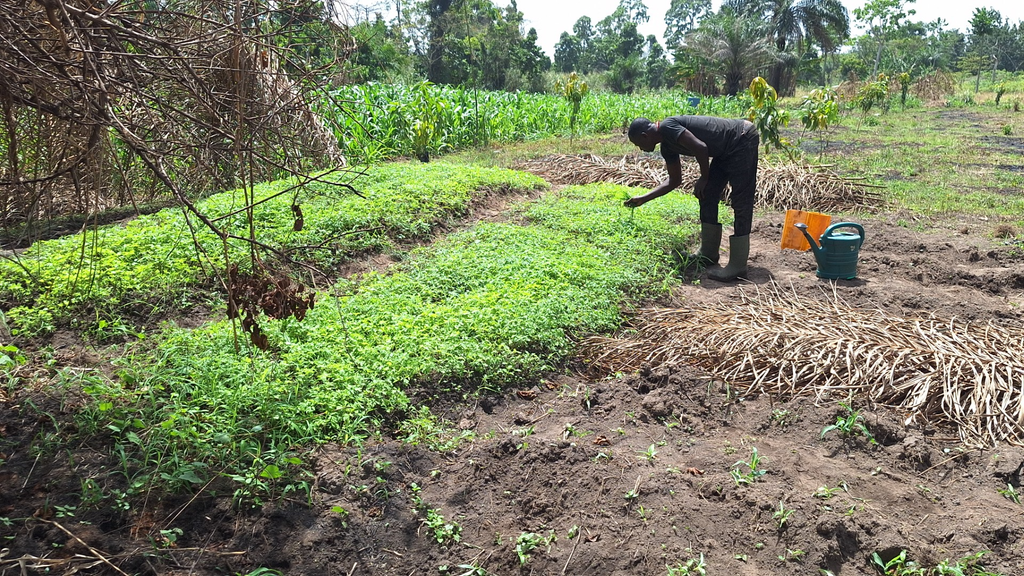
In the farming community of Tuobodom, located in the Techiman North District of Bono East Region, tomato farmers are facing challenges as harvest season approaches. After overcoming difficult growing conditions, including erratic rainfall, high costs for inputs, pests, and diseases, and the rising cost of labor, farmers now struggle to find a reliable market for their produce. Despite the bounty of fruit in the fields, many families in Tuobodom are experiencing anxiety and frustration.
Trucks that once arrived regularly to purchase tomatoes in bulk have become scarce, and when they do arrive, traders dictate prices even after initial agreements. This leaves farmers with little bargaining power and forces them to accept low prices or risk losing the entire harvest. A box of the improved tomato variety sells for between GH¢1,500 and GH¢1,700, while the local variety sells for between GH¢300 and GH¢500, creating a significant disparity in prices.
Farmers are eager to transition from the local tomato variety, known as "power," which is affordable but watery and has a poor shelf life, to the improved variety, called "peto." The peto variety is more durable, has a better taste, and can be transported and sold more easily. However, the high cost of the improved seed, which is GH¢1,300, is prohibitive for most farmers who are already struggling to afford fertilizer, chemicals, and labor costs.
George Ayiti, a tomato farmer, laments the lack of control over prices during harvest. He explains that while prices are agreed upon before harvesting, traders often change them upon arriving at the farm. Ayiti emphasizes the farmers' investment in the crop and their right to fair treatment at the point of sale. He states, "We suffer to grow it, we suffer to harvest it, and at the end, we are the ones who lose. That is not fair."
Similarly, Emmanuel Ankomah expresses concern over the unpredictable weather patterns affecting tomato farming in Tuobodom. He notes that irregular rainfall has disrupted planting, growth, and harvesting, leading to losses for many farmers. Ankomah believes that access to irrigation would provide a steady income and reduce the pressure of the glut season. He states, "With water, we can plan. Without water, we are always gambling."
Kofi Baffoe, another tomato farmer, shares his experience of investing everything into this season's tomato farm. He highlights the rising costs of fertilizer, chemicals, and labor, while the prices offered by buyers have decreased. Baffoe asks, "I invested everything I had in this farm. I borrowed some money too, hoping to pay back after harvest.
Now the buyers are offering a price that cannot even cover my cost. How do I pay back?" He emphasizes that farmers are not seeking charity but simply a fair and agreed-upon price for their labor.
Philip Dorwin, a farmer from Adutwie, proposes the establishment of a tomato processing factory near Tuobodom. He believes such a factory would create a permanent market for tomatoes, eliminate the yearly glut and waste, and generate employment opportunities for the youth. Dorwin explains, "If there is a factory here, our tomatoes will not rot.
The factory will buy them and process them. Every year, we watch our tomatoes go waste because there is no buyer. A factory will end that." He also points out that the factory would benefit the youth by providing jobs, preventing them from leaving the community in search of work.
Nana Agyei Kyeremeh, a farmer, acknowledges that Tuobodom has the necessary land and farmer labor to become a leading tomato-producing center. However, he stresses that farmers require the right support to achieve this goal. Kyeremeh suggests that subsidized improved seeds and affordable chemicals would allow farmers to produce high-quality tomatoes that fetch better prices. He believes that providing these resources to farmers would enable them to thrive and continue farming in the future.
Rewritten by urgent.news; may contain errors — check the original.
Source: gbcghanaonline.com