Trump's threat on AI data centres could be an opportunity for the Gulf
US President Donald Trump's threat to penalise American companies building data centres overseas could accelerate home-grown AI development in countries such as Saudi Arabia and the UAE, where billions of dollars are being invested in infrastructure. Recent turmoil at Nvidia and growing scrutiny of American chip exports have also highlighted the global implications of US technology policy…
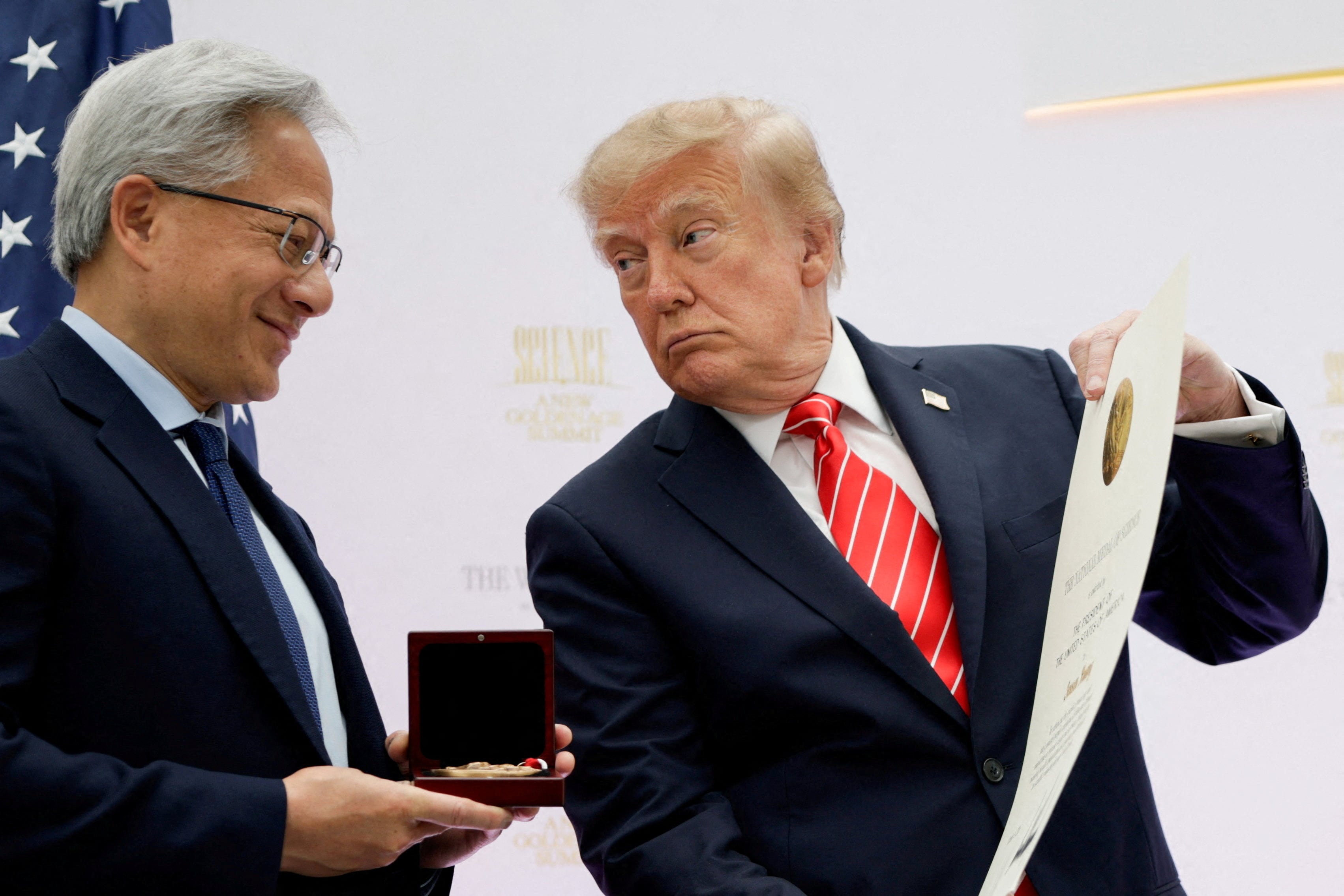
President Donald Trump's recent threat to penalise American companies building data centres overseas may spur the development of AI in nations like Saudi Arabia and the UAE, as these countries invest billions into infrastructure. This uncertainty in US technology policy has global implications. Last Friday, Trump announced he would impose taxes on American companies constructing data centres overseas, prompting Nvidia CEO Jensen Huang to return to his role following Trump's intervention.
Both events underscore Washington's impact on who builds AI infrastructure and who can access the technology powering it. Nvidia contributes to roughly 40% of capital spending by major cloud providers and around 80% among other AI infrastructure operators. In Abu Dhabi, a planned five-gigawatt UAE-US AI campus, expected to cost over $30 billion, will house Stargate UAE, a one-gigawatt computing cluster involving G42, OpenAI, Oracle, Nvidia, Cisco, and SoftBank.
In Saudi Arabia, AI company Humain, owned by the Public Investment Fund, recently expanded its partnership with Nvidia, aiming for an 84-megawatt AI computing project. The company targets more than six gigawatts of data centre capacity by 2034. Recent export restrictions by the US Department of Commerce aim to prevent companies from evading chip controls via overseas data centres.
Democrats' anticipated control of Congress in January may bring more scrutiny of AI regulation. The UAE, which joined the US-led Pax Silica initiative in January, is among nine US partners pledging to safeguard sensitive AI technology. Assistant Professor Chiara Spina of Insead notes that the UAE's competitive advantage lies in investing in safe data centres.
Business school president David Bach of IMD believes the unpredictability in US policy is a risk, but also a tremendous opportunity, as businesses regionalise digital services much like they did physical supply chains to mitigate trade disruptions. For instance, Saudi geothermal cooling company Strataphy, collaborating with Humain, could benefit if restrictions apply to American infrastructure providers overseas, as it could boost Strataphy's market share.
While not expecting such restrictions, Strataphy's CEO Ammar Alali suggests that reduced US competition could be advantageous. Tighter chip export controls could delay data centre projects and affect Strataphy's cooling efficiency. However, switching to chips requiring lower coolant temperatures could reduce cooling cost savings from 65% to about 50%.
Demand for digital sovereignty has been increasing as companies seek greater control over their technology infrastructure. Companies like Aleria, based in Abu Dhabi, enable governments and businesses to run AI within their own infrastructure while retaining control over their data. While Aleria remains committed to Nvidia-based technology, it is expanding its partnership into Europe, deploying 3,000 Blackwell Ultra graphics processing units in Switzerland alongside US data storage company DDN.
The UAE's investment in AI infrastructure could lower barriers for entrepreneurs lacking capital to build their own computing facilities.
Rewritten by urgent.news; may contain errors — check the original.
Source: thenationalnews.com
This story
This is one outlet's version. Read the fullest account.
- Trump's threat on AI data centres could be an opportunity for the Gulf thenationalnews.com