They were in high school when ChatGPT arrived and in college when their friends got accused of cheating. Now their AI software polices 40 colleges
Four Purdue students built Syntax, which records how an essay gets written. Teachers get the evidence. Students can buy it for $9.99.
When OpenAI launched ChatGPT on November 30, 2022, two high school seniors, Derin Suzener and Nikita Kravcenko, were already considering careers in artificial intelligence (AI). Both were unaware that their future venture would involve helping universities combat accusations of AI-assisted cheating. Nikita's teachers had started warning students about potential misuse of new AI technology, while Derin simply experimented with ChatGPT during his university studies.
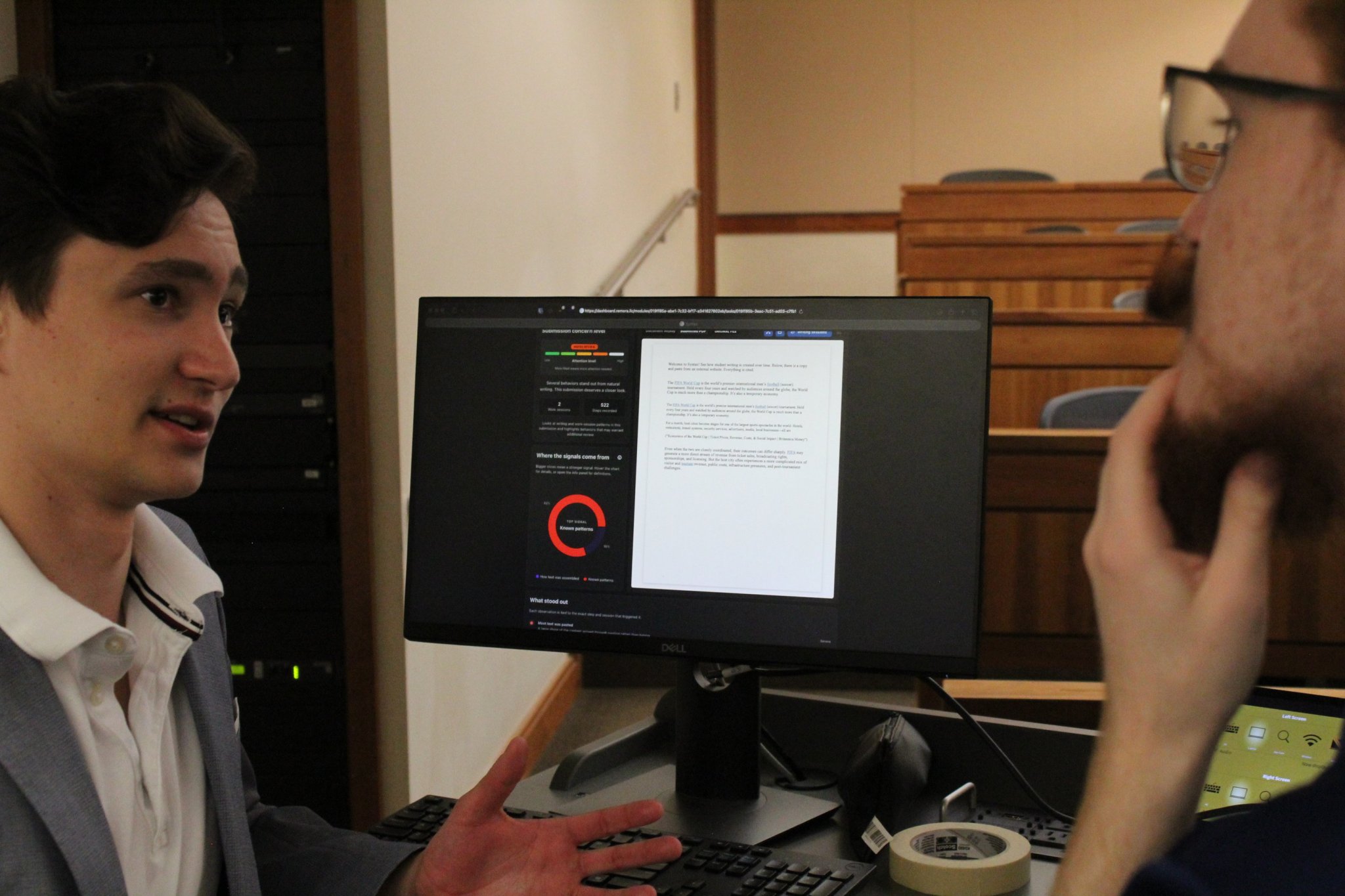
Upon arriving at Purdue University, both students found numerous instances of their peers being falsely accused of AI cheating. This prompted a collaboration with two classmates to create a solution to prove academic work's authenticity. The result was Syntax, a document editor that tracks a student's writing behaviors, such as typing speed, cursor movement, and what they paste into the document, and alerts teachers to any irregularities that could suggest AI involvement.
It is currently in use at over 40 colleges and universities, with plans to expand to four more institutions next semester.
The company's mission is to protect students accused of cheating when they have done no wrong and to provide a defense mechanism for those who are innocent. In a UK student poll, 52% of respondents mentioned the stress of being accused of cheating when they had not committed any wrongdoing.
Syntax's developers, Suzener, Kravcenko, and their other co-founders, describe the software as an alternative to traditional AI detectors, which only examine the final product. Instead, Syntax analyzes the entire writing process, providing teachers with a more comprehensive view of how a student's work was created. This method enables the software to differentiate between human and AI-generated work, catching instances where students might unintentionally plagiarize or exhibit suspicious patterns while writing.
Rewritten by urgent.news; may contain errors — check the original.
Source: fortune.com