The defence tech revolution is changing how we innovate
Military technology companies are bypassing traditional procurement programmes to deliver low-cost, rapidly adaptable technology. That has important implications for innovators, investors and broader society, say experts
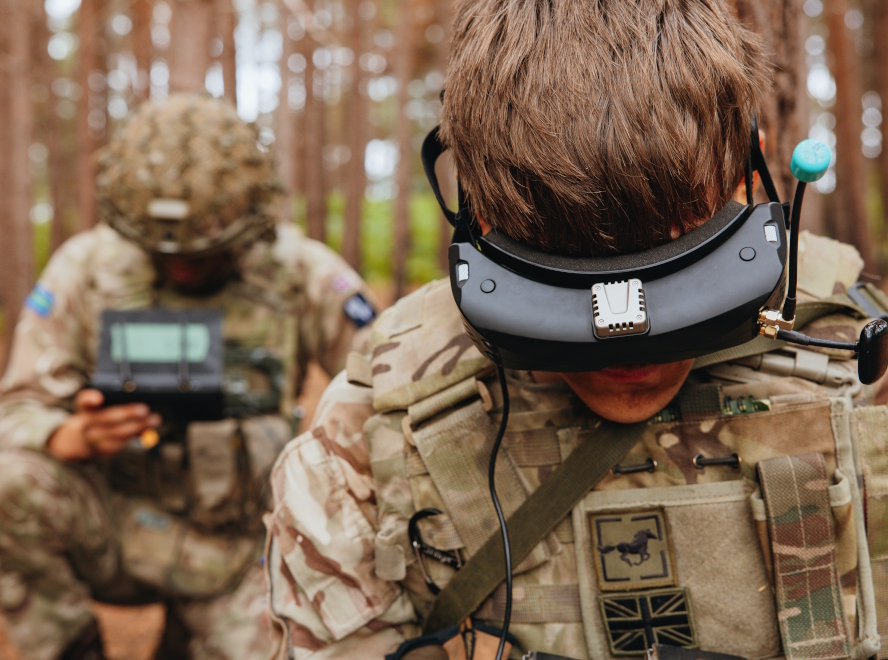
Five years ago, defence technology start-ups had to wait for government funding to build and test their creations, often in lengthy multi-year programmes. However, the invasion of Ukraine in 2022 has drastically accelerated military innovation timescales. Air Vice-Marshal Ola Fashade from the Royal Air Force explains that Ukraine is functioning as a real-world lab for military innovation, with an unprecedented pace of adaptation.
The technology that works well at the beginning of a conflict becomes less relevant as time progresses, highlighting the need for constant adaptation or risk of having an ineffective defensive system.
Sponsored by BAE Systems, the New Scientist CoLab event in September 2026 brought together industry, military, and academic experts to discuss the factors driving this accelerated innovation and lessons that could be applied to other industries. The investment for this step change comes from military prime contractors and various venture capital companies worldwide.
For instance, BAE Systems' Launchpad incubator facilitates technology transfer from defence start-ups into the front line or into spinouts before they run out of funding.
One notable neoprime, Cambridge Aerospace, a British air defence start-up, reached a $3.4 billion valuation despite lacking battlefield data or a product. They successfully delivered their Skyhammer air defence missile and are set to release Starhammer, a solid-rocket-motor-powered ballistic missile interceptor, in 2027. Another example is Kraken Technology Group, which raised $175 million from venture capital firms to develop uncrewed surface vessel and drone technologies for various users, including the MoD and NATO.
To thrive in this environment, military tacticians must accept the use of imperfect battlefield technologies, such as minimum viable products with relatively few safeguards. Amelia Gould, chief technology officer at Kraken, emphasizes the importance of cultivating a culture that actively nurtures iterative speed to ensure battlefield systems stay ahead of emerging countermeasures.
Among potential spinoffs from this new way of refining technology, one area of interest is clean energy. BAE Systems' Director of Defence and Security, Mark Westwood, believes that the low-cost technologies behind smartphones and consumer drones – artificial intelligence, mobile connectivity, satellite positioning, cloud storage, digital design systems, and 3D printing – could lead to significant advancements in clean energy, drawing parallels to the post-World War II innovation that led to the commercial air transport market.
Rewritten by urgent.news; may contain errors — check the original.
Source: newscientist.com