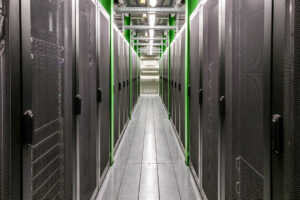
The data centre trap — big investments, few jobs and little domestic value

Data centres are all the rage these days, with construction projects facing increased opposition in numerous local communities. The recent midterm elections led to the Democratic Party gaining control of 30 governorships and 24 state legislatures, which could result in stricter regulations at the state and local levels. As a result, data centres may seek other locations to export "compute" resources needed for AI models.
Argentina has expressed interest in making Patagonia a data centre hub, with tax breaks and regulatory support in the pipeline. Similar moves are likely to follow suit in other countries.
India must avoid falling into the data centre trap, as documented challenges with land, power, and water availability. The capital-intensive nature and limited export potential of data centres raise concerns about their contribution to domestic value-add and the balance of payments. For instance, a 200 MW AI data centre in the US costs around $8 billion to build, creating temporary construction jobs and around 50-100 permanent positions in the steady state.
In contrast, a similar $8 billion investment in non-AI sectors in the US could generate approximately 10,000 permanent jobs.
In developing economies, where the capital stock per worker is lower, data centres become even more capital-intensive. In Malaysia, a comparable $8 billion investment yields 150,000 jobs outside the AI sector, while India sees 400,000 jobs associated with a similar investment due to a lower capital stock per worker. Consequently, data centres would be 4,000 times more capital-intensive than the rest of India's economy.
While proponents argue that data centres can boost the balance of payments through FDI and exporting compute, the argument overlooks their high import intensity and ownership structure. Imported high-end chips and servers make up more than 70% of a typical AI data centre's capital expenditure, and rapid depreciation leads to a 90% recurring investment import share. Profits are often repatriated due to substantial foreign ownership, making any gain in the balance of payments illusory.
The pushback against data centres also extends to their potential to create local jobs. The capital required for building and maintaining these facilities is imported, and the profits are typically repatriated. The immediate justification for data centres citing strategic reasons for physical presence within India may be valid if used for developing and training India's sovereign AI models. However, in most cases, the compute is often exported to hyperscalers abroad.
Government intervention in the form of subsidies, land, power, and tax exemptions may appear attractive. However, the lack of a clear market failure or positive externality raises questions about the need for such support, especially considering the capital-intensive nature of data centres. Instead, fiscal resources should be directed towards education, skilling, and health to better prepare the workforce for an AI-driven future.
Finally, even if domestic data centres can help alleviate foreign exchange pressures by reducing the import bill, the benefits are likely to be minimal due to foreign ownership and the repatriation of profits. India should focus on creating a more skilled and educated workforce to better adapt to the AI landscape, rather than investing in capital-intensive data centres.
Rewritten by urgent.news; may contain errors — check the original.
Source: indianexpress.com