Sheinbaum presenta reforma para agilizar adopciones y divorcios; busca proteger a infancias y víctimas de violencia vicaria
La Presidenta planteó una reforma al Código Nacional de Procedimientos Civiles y Familiares para alcanzar "justicia inmediata"
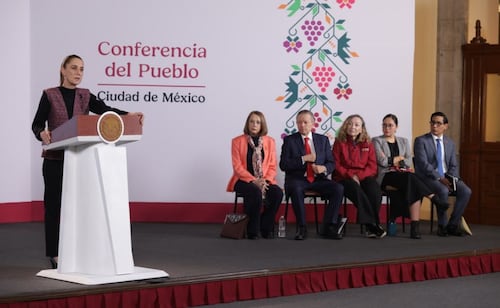
President Claudia Sheinbaum Pardo unveiled a reform to the National Code of Civil and Family Procedures on Thursday, November 26, aiming to ensure immediate justice for girls, boys, adolescents, and women. During a morning press conference at the National Palace, Sheinbaum explained that the reform has been in development for several months in order to reduce the duration of family trials and facilitate the adoption of minors.
Arturo Zaldívar, the President's policy and government coordinator, highlighted five key issues that need to be resolved promptly: children's welfare in care centers, divorce as hostage, unpaid alimony, vicarious violence, and children without a voice. Sheinbaum emphasized that the judicial proceedings for abandoned children are lengthy and bureaucratic, with fragmented rules in each state, and lacking a secure delivery method.
The reform proposes a special trial for abandonment, simplification of adoption and voluntary safe delivery.
Regarding divorce and alimony, the reform seeks to prevent divorce from becoming a hostage to one's property and instead benefits women. For vicarious violence, the proposal aims to protect children from being used to harm their mothers. This includes 24-hour protection, suspending cohabitation, and returning children; secure listening for the aggressor with their own representative; safe hearing for the victim; joint evaluation of evidence; and restraining multiplex claims used to harass the mother.
In relation to protecting girls, boys, and adolescents, the reform seeks to grant children a voice and specialized defense, as well as the annulment of child marriages. Sheinbaum stressed that justice must be immediate for girls, boys, and women, as they cannot continue to wait for these reforms. She noted that family justice is the most frequently used in Mexico, with nearly a million family cases in 2024 alone.
Rewritten by urgent.news; may contain errors — check the original.
Source: eluniversal.com.mx